

spot_img
Thursday, April 16, 2026
More
    spot_img
    Home Blog Page 24

    Sask. request for COVID-19 help a surprise to feds

    0

    Public Safety Canada and the Canadian Armed Forces were caught off guard by a request for help from Saskatchewan during the height of the fourth wave of the COVID-19 pandemic.

    Documents obtained under freedom of information laws show employees in the federal departments were surprised when Saskatchewan Health Minister Paul Merriman sent a letter in October 2021 to then-federal health minister Patty Hajdu requesting help.

    “Unforeseen (request for assistance) for (Saskatchewan) came into Ottawa through (Minister) Hajdu,” said an email from Maj.-Gen. Paul Prevost, who runs the military centre called the Strategic Joint Staff on Oct. 18.

    “(Government of Canada), as us, are surprised by this,” said another email from Lt.-Col Dave Morency.

    Story continues below advertisement

    It was unexpected because Merriman had turned down an offer of federal support and, emails show, there was no indication a formal request would be on the horizon.

    The Saskatchewan government has not responded to a request for comment.

    The 50 pages of emails that are partially redacted show that near the end of September 2021 and early October, the two federal departments were tracking an increasing number of infections, hospitalizations and pressures on intensive care units in Saskatchewan.

    Saskatchewan was reporting record-high numbers of people in hospital and front-line health-care workers were voicing their concern that it would get worse. Surgeries and tests were being cancelled and staff were redeployed to COVID-19 wards.

    Prevost said in an email on Sept. 29 that the situation is “getting worse; worse than Alberta in some parts of the (province).”

    Related Videos

    Story continues below advertisement

    “We continue to discuss with (Saskatchewan) but there are no mentions of (request for assistance),” Prevost wrote.

    Alberta was also facing significant pressures at the time with soaring hospitalizations and infections after it lifted COVID-19 public health orders over the summer. Then-premier Jason Kenney faced significant backlash when he walked back his “best summer ever” comments, tightening restrictions and asking the federal government for assistance.

    The Saskatchewan government was watching what Alberta was doing, emails show.

    Maj. Dave Fedoruk wrote on Oct. 5 that Saskatchewan was possibly interested in a federal response such as Alberta’s, but the province did not have its own information available during a recent meeting to “speak meaningfully” to what was needed.

    The email added that Saskatchewan participants in the meeting “stated they do not have authority to submit a (request for assistance) at this time.”

    However, at the time the Saskatchewan government was reaching out to several places in the United States for assistance.

    Saskatchewan Public Safety Agency president Marlo Pritchard would later say the province reached out to members of the Northern Emergency Management Assistance Compact, through the International Emergency Management Assistance Memorandum of Understanding, and to the Pacific Northwest Emergency Management Agreement, which connects the province with possible help from member states, including Illinois, Montana, Indiana, Michigan, New York, Minnesota, Ohio, North Dakota, Pennsylvania and Wisconsin.

    Story continues below advertisement

    No state helped.

    Hajdu said she had urged the province to take federal support in the weeks before they finally reached out. She said in an interview with The Canadian Press at the end of September 2021 that if the province needed nurses, respiratory therapists or doctors, the federal government needed to know sooner rather than later.

    “I really stressed to Minister Merriman the best plan is the one we make ahead of time, and we need to work together to make sure we can adequately understand what Saskatchewan needs might be,” Hajdu said.

    A few weeks later, a request for urgent assistance would come to Hajdu’s office.

    “Saskatchewan is reaching a critical point in our response to the fourth wave of the COVID-19 pandemic, and we are in need of external support to manage patient care in a safe and sustainable manner. We have an immediate need for assistance from the federal government,” said Merriman’s letter to Hajdu on Oct. 18, 2021.

    Public Safety Canada and the Canadian Armed Forces quickly began emailing each other about how to best respond to the unexpected request.

    “Perhaps we should discuss this fairly urgently,” said an email from James Gulak with Public Safety Canada. “Caught everyone by surprise and originated in the political realm.”

    Story continues below advertisement

    Generally, a formal request for assistance is submitted to Public Safety Canada, the lead co-ordinator of the federal response to these operations, outlining how much help is needed and in what areas.

    Even Saskatchewan front-line workers emailed they were not expecting the request.

    “My apologies, I was only made aware of it in the last five minutes,” Kim Olsen, director of intergovernmental relations with Saskatchewan Public Safety Agency, said in an email about the request.

    Jessica Lamirande, with the federal Department of National Defence, said in an email that the Canadian Armed Forces monitor trends to evaluate possible requests for support.

    The Canadian Armed Forces responded to the 2021 request with aircraft assistance and personnel to fly patients from Saskatchewan to Ontario. They also provided critical care nurses to help at Regina General Hospital and other nursing supports.

    “Given the unpredictable nature of the pandemic, we were prepared for situations to quickly change, and ensured that the Canadian Armed Forces remained ready to help provinces and territories that required assistance,” Lamirande said.

    &copy 2023 The Canadian Press

    Saskatchewan underestimated need for rapid tests: emails

    0

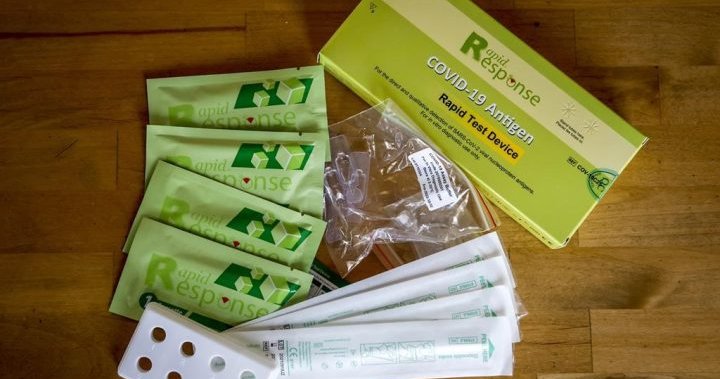
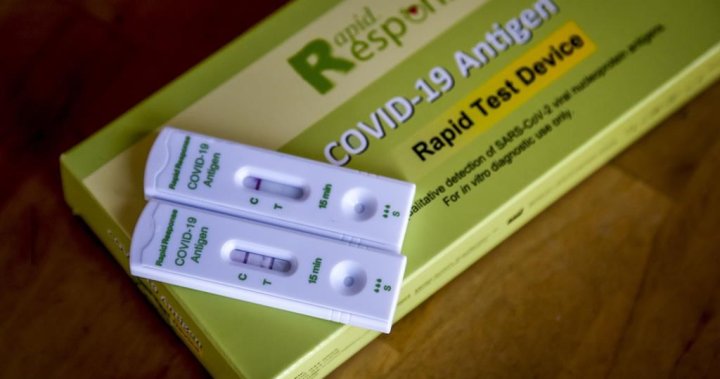
    SASKATOON — Saskatchewan underestimated how many rapid antigen tests were needed during the height of the fourth wave of the COVID-19 pandemic, while also touting the tests as a key part of its plan to halt transmission of the virus, internal emails indicate.

    Documents obtained under freedom of information laws show the province emailing Health Canada in September and October 2021 asking for millions more tests than were originally requested.

    “Our warehouse has just confirmed that they have shipped over half of the 500,000 tests that were received last week, and orders for test kits are coming in faster than anticipated from all corners of the province,” said an email from the province on Sept. 20.

    Story continues below advertisement

    The 120 pages of emails that are partially redacted show correspondence between Health Canada staff and Saskatchewan government and health authority employees regarding COVID-19 assistance in late 2021 as the province faced surging infections, hospitalizations and pressures on intensive care units. All names of provincial employees have been redacted.

    Saskatchewan’s Ministry of Health says the province anticipated strong public demand for rapid antigen test kits, and took measures as early as May 2021 for them to be used by individuals for self-testing.

    “As a sufficient supply of tests was secured from the federal government, the province opened wider public distribution channels, eventually resulting in over 600 locations where the public could access tests,” the ministry said in a statement.

    The province said as of last Friday, Saskatchewan has distributed over 25 million rapid tests, including 11.8 million tests directly to the public.

    At the start of September, provincial health authority staff initially emailed Health Canada saying one million tests would be sufficient for at least two months — and suggested to Ottawa the province could receive them in biweekly batches of 250,000.

    Related Videos

    Story continues below advertisement

    Saskatchewan had just announced an at-home testing pilot for students under the age of 12, along with their families. Emails show there was also increasing demand for workplace screening across the province.

    A little more than a week later, the authority emailed Health Canada to say its warehouse was empty and requested a scheduled delivery of tests be expedited.

    “With your warehouse out of supplies, does that change your demand of 500,000 tests in September and 500,000 in October?” Sebastien Poirier with Health Canada asked in an email on Sept. 11.

    The province reassured the federal department its original order was enough.

    “The total of (one) million tests arriving in September and October is forecast to meet our needs,” said an email from the province on Sept. 12.

    The next day the province issued a new provincial emergency order. A week later, emails showed, it became clear that number of rapid tests would not be enough.

    The province requested an additional one million tests for October — on top of the 500,000 it had already ordered. The federal department responded in an email that it was “juggling a few urgent requests” and had limited inventory.

    Story continues below advertisement

    Saskatchewan was reporting record-high numbers of people in hospital from the wave fuelled by the Delta COVID-19 variant and front-line health-care workers were voicing their concern that it would get worse. Surgeries and tests were being cancelled and staff were redeployed to COVID-19 wards.

    Parents were posting on social media how there weren’t enough tests for the at-home testing pilot for students. The Saskatchewan Teachers’ Federation issued a public call for the government to improve measures to help keep children from getting COVID-19.

    By the end of September, Saskatchewan asked for two million tests for the next month. That bumped up even more in October.

    “If 3.5 (million) is available, we would take them. Just wanted to make sure that this request is in addition to what we have requested for the October allocation,” an email from the province said.

    At that time, Saskatchewan was also urging universities and businesses with more than 200 employees to contact the federal government for a program that distributed COVID-19 screening kits.

    Emails show that Health Canada employees usually redirected educational institutions back to provinces to get the COVID-19 tests and it was worried about what Saskatchewan’s demands would do to the overall supply.

    Story continues below advertisement

    “In my view, with the public health situation in (Saskatchewan), we should assist,” wrote Angie Barrados, with Health Canada, in a Sept. 28 email.

    Saskatchewan Health Minister Paul Merriman had declined federal support at the end of September as COVID-19 pressures mounted on the province. The federal government was caught off guard when Merriman requested urgent help only a few weeks later.

    Demand for the rapid test kits came from across Canada and some leaders criticized the federal government for a lack of supply. Without an abundance of tests, provinces and territories were rolling out different plans for distribution, most erring on the side of caution that there may not be much access to tests.

    Emails showed Health Canada was sharing information with Saskatchewan about upcoming test procurements and the possibilities to support that province.

    By mid-October, Saskatchewan was preparing to hand out 1.3 million rapid self-test kits to the public at fire halls, local chambers of commerce and health authority testing centres.

    “Starting the week of Oct. 18, Saskatchewan households will be able to take home a COVID-19 rapid antigen test kit to support asymptomatic testing,” Premier Scott Moe posted on social media.

    Access was expanded further in November and they were available to libraries and Co-op grocery stores.

    Story continues below advertisement

    Saskatchewan has received a total of 31,760,783 rapid tests from the federal government as of Jan. 25.

    This report by The Canadian Press was first published Feb. 8, 2023.

    &copy 2023 The Canadian Press

    Ottawa stops sending rapid COVID-19 tests to provinces as millions set to expire

    0

    The federal government has stopped shipping rapid COVID-19 antigen tests to provinces as millions are set to expire within the year, and experts say the once-essential tool has lost its importance in the pandemic.

    There are 90 million rapid tests in the federal inventory, Health Canada said in an email. About 80,000 of those are set to expire within six months and 6.5 million within the year. The rest expire within two years.

    “Canada has robust inventories and is well prepared for COVID response,” Anne Genier, with Health Canada, said in an email.

    Ottawa has ordered more than 811 million rapid tests since the beginning of the pandemic with a price tag of about $5 billion. About 680 million of those went to provinces and territories.

    Story continues below advertisement

    As the fourth wave of the pandemic gripped the country near the end of 2021, every region was trying to get as many of the tests as possible. Hospitals were overwhelmed in many provinces and the rapid antigen tests became a critical part of the response.

    Mahesh Nagarajan, a professor at the University of British Columbia’s Sauder School of Business, said it’s a different situation two years later.

    “I don’t think we should be buying any more of them right now,” Nagarajan, whose focus area is on supply chains, said in a recent interview.


    Click to play video: 'First at-home combination test for COVID and flu approved in U.S.'


    First at-home combination test for COVID and flu approved in U.S.


    Nagarajan said Canada now has several qualified and dependable suppliers for the tests. The government has established standing offers with the companies for the supply and delivery on an as-needed basis

    Health Canada said the decision to end shipments at the end of January was made in collaboration with provinces and territories, as the regions have enough supply.

    Story continues below advertisement

    On top of the federal stockpile, provincial health authorities said theyhave millions of tests.

    British Columbia has 28 million tests, with more than four million to expire within six months.

    Quebec has 63 million tests, Alberta has 47.5 million, Saskatchewan has 6.4 million, Manitoba has 11 million, Nova Scotia has about 8 million and Newfoundland has about 2.5 million.

    Nearly every region said they have so far not destroyed or repurposed their rapid antigen tests, because Health Canada extended the expiration date for many brands. They did not explain an expected cost or strategy if the tests expire before being used.

    The time frame left for the tests differs depending on the brand,but Health Canada has approved 19 extensions of shelf life ranging from six months to two years.

    The chemical components in the tests degrade over time, Nagarajan said, so he has concerns.

    “Rapid antigen tests to begin with are not the most accurate,” Nagarajan said. “Now you are extending their lifespan?”


    Click to play video: 'Quebec pharmacists set to stop handing out free COVID-19 rapid tests in March'


    Quebec pharmacists set to stop handing out free COVID-19 rapid tests in March


    Nagarajan said every country has stockpiles, but it’s important Canada learn from the pandemic procurement process.

    Story continues below advertisement

    A lack of co-ordinated policies across the country made it hard to estimate how many tests would be needed. It was a “recipe for high inventories,” Nagarajan said.

    Nazeem Muhajarine, a professor of epidemiology at the University of Saskatchewan, said he estimates that for every five tests given out by provinces and territories during the pandemic there are two tests sitting in a warehouse.

    He said Canada needed to procure as many tests as it could when they were available.

    “We have to have a plan _ that’s key.”

    Muhajarine said it is difficult to know how important the rapid antigen tests will continue to be, because there is very little communication now about COVID-19, let alone government plans to address challenges the pandemic may still bring.

    “That communication has really fallen off precipitously,” he said. “Nobody is talking about COVID, certainly not talking about where to get tests if they need one.”

    Having large stockpiles of rapid antigen tests may not be useful, especially if the virus shifts and becomes less detectable on the devices, said Dr. Anna Banerji, an infectious disease specialist at Dalla Lana School of Public Health and Temerty Faculty of Medicine at the University of Toronto.

    Story continues below advertisement

    “Even at the best of times there are limitations on the testing,” she said.


    Click to play video: 'Ontario government sitting on hundreds of millions in COVID-19 funding'


    Ontario government sitting on hundreds of millions in COVID-19 funding


    What is important is the ability to quickly produce or procure them, she added.

    Banerji said, in her opinion, people are using rapid antigen tests less because there is no longer a public health strategy to deal with COVID-19. She said people aren’t wearing masks and, in most instances, there is no isolation policy if someone actually tests positive.

    If you know you have COVID-19 and don’t do anything about it, there’s no point, she said.

    “Right now, there is no strategy. We are not looking at numbers. We don’t know how much COVID is out there,” she said.

    “What difference is (testing) making now?”

    &copy 2023 The Canadian Press

    Ontario growing pharmacists’ prescribing powers, eyes further expansion

    0

    Ontario is giving pharmacists additional prescription powers, and is considering allowing them to administer certain treatments and medications through injection.

    Two months after regulatory changes allowed Ontario pharmacists to prescribe treatments for 13 common ailments, Ontario announced Thursday in its budget that it is planning a further expansion.

    Health Minister Sylvia Jones had asked the Ontario College of Pharmacists earlier this month to draft regulations that would allow pharmacists to prescribe for mild to moderate acne, canker sores, diaper rash, yeast infections, pinworms and threadworms, and nausea and vomiting in pregnancy.

    The budget confirmed that the government would be giving pharmacists prescribing powers for those ailments.

    The Ontario College of Pharmacists said the minister had also asked the college’s minor ailment advisory group to explore adding even more ailments to the list and to prepare recommendations for this fall.

    Story continues below advertisement

    Justin Bates, the CEO of the Ontario Pharmacists Association, said prescribing allowed this year for the 13 common ailments, such as pink eye, hemorrhoids and urinary tract infections, has been a “fantastic success.”

    There have been 86,000 assessments and more than 70,000 prescriptions generated across the province so far, “which is much higher than we thought would be the case,” Bates said in a recent interview.

    “We’ve got the majority of pharmacists performing them and the public accepting that and using it as it was intended.”

    Even with the 13 common ailments, pharmacists in Ontario are still only allowed to prescribe for the smallest number of conditions, Bates said. Saskatchewan and Prince Edward Island have a list of 32 conditions, he said, and Alberta pharmacists have prescribing authority for all medications that aren’t controlled substances.

    “We are looking forward to an expanded list now that we’ve demonstrated the capacity of our sector to be able to do it and I think the acceptance of the public as well, as an additional channel to receive community-based care,” Bates said.

    A spokesperson for Jones said earlier this month that the government was considering expanding the scope of what certain health professionals, such as nurses, can do in periods of “high patient volumes.”

    Story continues below advertisement

    That list of health professionals also includes pharmacists, and spokeswoman Hannah Jensen said the ministry is looking at allowing pharmacists to administer certain substances by injection or inhalation.

    “Maximizing professional scopes to increase flexibility is a lesson learned from the COVID-19 pandemic and a key part in building a health-care system that is easier to navigate and provides Ontarians with access to faster, more convenient care, when and where they need it,” she wrote in a statement.

    The pharmacists’ college had actually submitted draft regulations to the minister in 2019 that would allow for the expanded injection scope, but they weren’t approved at the time.

    Bates said such injections would be shots other than immunizations, such as vitamin B-12 shots, or certain injectable antipsychotic medication, rheumatoid arthritis and osteoporosis drugs and birth control.

    &copy 2023 The Canadian Press

    Raccoon euthanized after it was brought to Maine pet store for nail trim

    0

    A juvenile raccoon in Maine was euthanized and tested for rabies after a woman brought it into a pet store for a nail trim and some customers kissed it, state wildlife authorities said.

    The raccoon tested negative for the disease, and there is no rabies risk to the public, Maine Department of Inland Fisheries & Wildlife spokesperson Mark Latti said Sunday. However, raccoons are one of the most common carriers of rabies in the state, and bringing the wild animal into a pet store constituted an unnecessary risk to public health, Latti said.

    The woman, who has not been identified by authorities, brought the raccoon into an Auburn pet store on Tuesday, the wildlife department said. She was seeking to get the animal’s nails trimmed, which is a service the store does not provide to raccoons, the department said.

    It is illegal to keep wildlife, including raccoons, as pets in Maine.

    Story continues below advertisement

    Several different people handled the animal, and some kissed it, the wildlife department said. The store’s manager then asked the woman to leave and contacted the Maine Center for Disease Control and Prevention, the department said.

    The raccoon was then tested for the disease, which came back negative, but necessitated euthanizing it, Latti said. There is no nonlethal test for rabies in animals, he said.

    Rabies is almost always fatal in humans once symptoms appear, and potential sufferers need to seek treatment immediately. Wildlife is best left alone, though animal control authorities can also be notified if the animals appear to be in distress, Latti said.

    “When they lose their fear of people they are more likely to become a nuisance or be run over by a vehicle,” Latti said.

    The wildlife department said store customers who touched the animal should still contact their health care providers as a precaution. Raccoons are capable of transferring other diseases along to humans and other animals as well.

    The pet store, a Petco location, did not immediately respond to a request for comment on Sunday. A representative for the local store referred a request on to the company’s corporate office in San Diego.

    The Maine Department of Inland Fisheries & Wildlife is currently searching for the unidentified woman who brought the raccoon to the pet store. The agency reminded Maine residents that it is illegal to possess wildlife and that they should never try to handle, feed or move a wild animal.

    Story continues below advertisement

    “If you care, leave them there,” the department wrote.

    It is illegal in Canada to keep a raccoon as a pet. In this country, 25 people in six provinces (Quebec, Ontario, Alberta, Saskatchewan, Nova Scotia and British Columbia) have died of rabies since 1924.

    — With files from Global News’ Sarah Do Couto.

    &copy 2023 The Canadian Press

    Dauphin mayor says outpouring of support appreciated

    0

    The mood remains sombre in Dauphin, Man., as area residents learn more details of the highway crash that killed 15 people and injured 10.

    Mayor David Bosiak says people are sad and the effect on the city and surrounding area will be multi-generational.

    He adds residents appreciate the support and condolences that have come in from across Canada, including from Prime Minister Justin Trudeau.

    The provincial health authority says 10 patients remain in hospital. Six are in critical care.

    A moment of silence was held ahead of the Canadian Football League game Friday night between the Winnipeg Blue Bombers and the Saskatchewan Roughriders.

    Bosiak says he expects a decision will be announced Monday on whether a formal vigil or other public event will be held.

    Story continues below advertisement

    A support centre for families of those involved in the crash will continue to run over the weekend at the community’s curling rink.

    RCMP are still investigating the fiery crash Thursday between a transport truck and a minibus that was carrying seniors from the Dauphin area to a casino near Carberry, Man., about two hours away.

    The truck was travelling east on the Trans-Canada Highway when the southbound minibus crossed at an intersection, RCMP said Friday.

    Investigators have not yet spoken with the driver of the bus, who remains in hospital.


    Click to play video: 'Manitoba crash: RCMP, provincial medical examiner offer update on crash investigation'


    Manitoba crash: RCMP, provincial medical examiner offer update on crash investigation


    &copy 2023 The Canadian Press

    Canada’s Indigenous women forcibly sterilized decades after other rich countries stopped

    0

    Decades after many other rich countries stopped forcibly sterilizing Indigenous women, numerous activists, doctors, politicians and at least five class-action lawsuits allege the practice has not ended in Canada.

    Senate report last year concluded, “This horrific practice is not confined to the past, but clearly is continuing today.” In May, a doctor was penalized for forcibly sterilizing an Indigenous woman in 2019.

    Indigenous leaders say the country has yet to fully reckon with its troubled colonial past — or put a stop to a decades-long practice that is considered genocide.

    There are no solid estimates on how many women are being sterilized against their will, but Indigenous experts say they regularly hear complaints about it. Sen. Yvonne Boyer, whose office is collecting the limited data available, says at least 12,000 women have been affected since the 1970s.

    Story continues below advertisement

    “Whenever I speak to an Indigenous community, I am swamped with women telling me that forced sterilization happened to them,” Boyer, who has Indigenous Metis heritage, told The Associated Press.

    Medical authorities in Canada’s Northwest Territories sanctioned a doctor in May for forcibly sterilizing an Indigenous woman, according to documents obtained by the AP.

    Dr. Andrew Kotaska performed the 2019 operation to relieve an Indigenous woman’s abdominal pain. He had her written consent to remove her right fallopian tube but not her left one, which would leave her sterile.

    Despite objections from other medical staff during the surgery, Kotaska took out both fallopian tubes.

    The investigation concluded there was no medical justification for the sterilization, and Kotaska was found to have engaged in unprofessional conduct. Kotaska’s “severe error in surgical judgment” was unethical, cost the patient the chance to have more children and could undermine trust in the medical system, investigators said.

    The case was likely not exceptional.

    Thousands of Indigenous Canadian women over the past seven decades were coercively sterilized, in line with eugenics legislation that deemed them inferior.

    The Geneva Conventions describe forced sterilization as a type of genocide and crime against humanity and the Canadian government has condemned forced sterilization elsewhere, including of Uyghur women in China.

    Story continues below advertisement

    In 2018, the U.N. Committee Against Torture told Canada it was concerned about persistent reports of forced sterilization, saying all allegations should be investigated.

    In 2019, Prime Minister Justin Trudeau acknowledged that the murders and disappearances of Indigenous women across Canada amounted to “genocide,” but activists say little has been done to address ingrained prejudices against the Indigenous, allowing forced sterilizations to continue.

    In a statement, the Canadian government told the AP it was aware of allegations that Indigenous women were forcibly sterilized and the matter is before the courts.

    “Sterilization of women without their informed consent constitutes an assault and is a criminal offence,” the government said. It acknowledged that bias in the health system “continues to have catastrophic effects” on Indigenous people.

    Difficult to say how common the practice is

    Indigenous people comprise about five per cent of Canada’s nearly 40 million people. The more than 600 Indigenous communities across Canada, known as First Nations, face significant health challenges compared to other Canadians.

    Until the 1990s, Indigenous people were mostly treated in segregated hospitals, where there were reports of rampant abuse.

    It’s difficult to say how common sterilization — with or without consent — happens. Canada’s national health agency doesn’t routinely collect sterilization data, including the ethnicity of patients.

    Story continues below advertisement

    In 2019, Sylvia Tuckanow told the Senate committee investigating forced sterilizations about how she gave birth in a Saskatoon hospital in July 2001. She described being disoriented from medication and being tied to a bed as she cried.

    “I could smell something burning,” she said. “When the (doctor) was finished, he said, ‘There: tied, cut and burnt. Nothing will get through that,’” Tuckanow said, referring to her fallopian tubes. She said she hadn’t consented.

    In November, a report documented nearly two dozen forced sterilizations in Quebec from 1980 to 2019, including one woman who said her doctor told her after bladder surgery that he had removed her uterus at the same time — without her consent.

    The report concluded that doctors and nurses “insistently questioning whether a First Nations or Inuit mother wants to (be sterilized) after the birth of her first child seems to be an existing practice in Quebec.”

    Some women were not even aware they were sterilized.

    Morningstar Mercredi, an Alberta-based Indigenous author, was sterilized as a 14-year-old, but didn’t find out until decades later when she sought help after being unable to conceive.

    “I went into a catatonic stage and had a nervous breakdown,” Mercredi wrote in her 2021 book, Sacred Bundles Unborn.

    Story continues below advertisement

    She said the impact of forced sterilizations on First Nations people was “staggering,” describing the generations of lost Indigenous lives as a “genocide.”

    The Senate report on forced sterilization made 13 recommendations, including compensating victims, measures to address systemic racism in health care and a formal apology.

    In response to questions from the AP, the Canadian government said it recognized “the pressing need” to end forced sterilization. The government said it had invested more than $87 million to improve access to “culturally safe” health services, one-third of which supports Indigenous midwifery initiatives.

    Last year, the government allocated $6.2 million to help survivors of forced sterilization.

    Power imbalance

    Dr. Alika Lafontaine, the first Indigenous president of the Canadian Medical Association, recalls times when it was unclear whether Indigenous women had agreed to sterilization.

    “In my residency, there were situations where we would do C-sections on patients and someone would lean over and say, ‘So we’ll also clip her (fallopian) tubes,’” he said. “It never crossed my mind whether these patients had an informed conversation” about sterilization, he said, adding he assumed that had happened before patients were on the operating table.

    Dr. Ewan Affleck, who made a 2021 film, The Unforgotten, about the pervasive racism against Canada’s Indigenous people, noted an ongoing “power imbalance” in health care. “If you have a white doctor saying to an Indigenous woman, ‘You should be sterilized,’ it may very likely happen,” Affleck said.

    Story continues below advertisement

    Class actions

    There are at least five class-action lawsuits against health, provincial and federal authorities involving forced sterilizations in Alberta, Saskatchewan, Quebec, British Columbia, Manitoba, Ontario and elsewhere.

    May Sarah Cardinal, the representative plaintiff in the Alberta case, said she was pressured into having her tubes tied after having her second child in 1977, but the doctor never explained the procedure was irreversible.

    “The doctor told me: ‘There are hard times ahead and how are you going to look after a bunch of kids? What if your husband leaves?’” Cardinal told the AP. “I didn’t feel like I had a say.”

    In the case against Kotaska, documents show an anesthetist and surgical nurse became alarmed when he said during the surgery to remove the woman’s right fallopian tube: “Let’s see if I can find a reason to take the left tube as well.”

    Kotaska said he was “voicing his thought process out loud” that removing both tubes would lessen the woman’s pelvic pain.

    Describing Kotaska’s actions as “a violation of his ethical obligations,” investigators suspended Kotaska’s medical license for five months and ordered him to take an ethics course. The woman is suing Kotaska and hospital authorities for $6 million.

    There was no suggestion in the documents that Kotaska was motivated by racism. He declined to comment to the AP.

    Story continues below advertisement

    “People don’t want to believe things like this are happening in Canada, but cases like this explain why entire First Nations populations still feel unsafe,” said Dr. Unjali Malhotra, chief medical officer of the First Nations Health Authority in British Columbia.

    Mercredi said she continues to suffer from being sterilized without her knowledge.

    “No amount of therapy or healing can reconcile the fact that my human right to have children was taken from me,” she said.


    Click to play video: 'Senator says forced or coerced sterilizations are ‘happening today as we speak’'


    Senator says forced or coerced sterilizations are ‘happening today as we speak’


    Lack of B.C. transplant surgeons means donated kidneys are sent elsewhere, say doctors

    0

    Sukinder Mangat has been waiting 11 years for a kidney transplant while enduring dialysis three times a week as part of a routine that leaves him exhausted, worried and unable to work.

    “I have not gone on holidays in the last 11, 12 years,” Mangat said before a four-hour appointment at a Richmond, B.C., community dialysis unit where his blood will pass through a machine to be cleaned of waste products and excess fluid because his kidneys can’t do that job.

    “Basically, I just come home, have dinner and just go to bed,” the 59-year-old said.


    Click to play video: 'B.C. doctor shares concerns about kidney transplant challenges'


    B.C. doctor shares concerns about kidney transplant challenges


    Mangat is on a wait list for a second kidney transplant after his first donated kidney failed because of a viral infection.

    Story continues below advertisement

    But getting a compatible kidney could be a challenge because patients awaiting a second transplant are considered “highly sensitized,” meaning their immune system, primed with a high level of antibodies after the first transplant, could more easily reject a new kidney.

    However, there’s a bigger problem for everyone waiting for a kidney in British Columbia, where only four surgeons do all the transplants at two Vancouver hospitals. Kidneys that can’t be used are getting shipped to other provinces.

    BC Transplant, the provincial agency responsible for organ transplants, said 56 kidneys were sent elsewhere last year.

    “To honour the wishes of our deceased donors and their families, every effort is made to ensure suitable organs are successfully transplanted,” it said in an emailed response.

    By comparison, the Ontario Ministry of Health, which has seven transplant sites, said 10 kidneys from that province were shipped to other provinces last year. Ontario has 25 kidney transplant surgeons, the Ontario Medical Association said of the province with triple the population of B.C.

    Dr. David Harriman, a kidney transplant surgeon at Vancouver General Hospital, said between eight and 10 surgeons are needed in B.C. so residents waiting for a kidney can benefit from the organs that were donated in the province.

    “We have fewer surgeons doing the volume of work we’re doing than other jurisdictions,” said Harriman, adding that kidney donations have risen while the number of transplant surgeons has not changed in B.C. “It’s not a sustainable situation here,” he said.

    Story continues below advertisement


    Click to play video: 'Woman sues Interior Health over improperly stored transplant tissue'


    Woman sues Interior Health over improperly stored transplant tissue


    The B.C. Health Ministry said the province had six kidney transplant surgeons in 2018.

    BC Transplant, a program under the Provincial Health Services Authority, did not respond to questions about efforts to recruit more surgeons.

    However, Harriman said the doctors have been working with health authorities and government representatives to try and attract the specialists.

    “Anybody coming into our landscape and situation is immediately going to be thrown to the wolves, so to speak,” he said of the long hours. “We’ve already lost two potential hires to other jobs that were looked at more favourably than the work we have here in Vancouver.”

    Doctors of BC, the province’s medical association, echoed Harriman’s concerns. It said each of the four B.C. surgeons does more transplants and works on call more often than their colleagues elsewhere in Canada.

    Story continues below advertisement

    In 2020, for example, each B.C. surgeon transplanted 70 kidneys and was on call every other day, the association said.

    By comparison, surgeons in Calgary transplanted 27 kidneys each and were on call every third day and surgeons at Toronto General Hospital transplanted 37 kidneys each but were on call every eight days, it added.

    “As it stands, the four remaining surgeons have had to take on increased workloads. They are understandably overworked, frustrated, and tired,” Doctors of BC said in an emailed response.


    Click to play video: 'Health Matters: Australia’s 1st uterus transplant patient pregnant'


    Health Matters: Australia’s 1st uterus transplant patient pregnant


    Data from the Canadian Institute for Health Information (CIHI) show 288 kidney transplants were done in B.C. last year, a rate of nearly 55 per million people. That’s compared to 730 transplants in Ontario, or 49 organs per million people.

    Data from CIHI also show 37 transplants were done in Saskatchewan last year, at a rate of 31.4 per million people. However, that province has three transplant surgeons, the Saskatchewan Health Authority said.

    Story continues below advertisement

    Dr. John Gill, a nephrologist at St. Paul’s Hospital, said 10 kidneys were not recovered last year from older donors because there were not enough surgeons to transplant them, but the organs could not be shipped to other provinces because they were more fragile and would not travel well.

    “Those opportunities for transplants just didn’t happen,” Gill said.


    Click to play video: 'B.C. to send some cancer patients to Bellingham for treatment'


    B.C. to send some cancer patients to Bellingham for treatment


    B.C. also could not recently accept two kidneys for “highly sensitized” patients, such as Mangat, from a national program run by the Canadian Blood Services, he said.

    “This is probably their only shot at a transplant because they’re very, very hard to match. We couldn’t accept those kidneys because we had no one to implant them,” Gill said. “That’s the human toll of what’s transpired because of this surgical crisis.”

    Gill said patients who are waiting for a kidney stay on dialysis instead of getting a life-saving transplant that would improve their quality of life and allow them to work. Those of child-bearing age could also have children after a transplant.

    Story continues below advertisement

    “What we should all be concerned about from a societal perspective is that each transplant, compared to treatment with dialysis, results in health-care savings of over $500,000 (over a decade).”

    Canadian Press health coverage receives support through a partnership with the Canadian Medical Association. CP is solely responsible for this content.


    New COVID shot provides ‘boost in protection’ against new variants: doctors

    0

    Public health officials say the number of COVID-19 infections is climbing again — just in time for respiratory virus season in the fall and winter, when respiratory syncytial virus and influenza also come on the scene.

    Health Canada recently authorized an updated mRNA COVID-19 vaccine, manufactured by Moderna, that targets the XBB.1.5 Omicron subvariant circulating now. The federal government is sending the new vaccine out to the provinces and territories, which are in charge of rolling it out to the public.

    “I think the timing is going to be good,” said Dr. Jeffrey Pernica, head of the division of infectious disease at McMaster University in Hamilton.

    “The incidence of COVID-19 has started to creep back up.”

    But it’s clear that many Canadians are tired of getting COVID-19 vaccines — according to the Public Health Agency of Canada, only 22 per cent of people five years and older got the bivalent booster dose, which offered protection against the Omicron variant in addition to the original coronavirus strain.

    Story continues below advertisement

    So why should Canadians roll up their sleeves again? Here’s what doctors and scientists say you need to know.

    Which updated COVID-19 vaccines are available in Canada?

    Moderna’s Spikevax mRNA COVID-19 vaccine, updated to target the XBB.1.5 subvariant of Omicron, is approved for people aged six months and older.

    But Health Canada is also reviewing updated versions of two more COVID-19 vaccines.

    One is Pfizer-BioNTech’s Comirnaty vaccine, which was designed to target XBB.1.5 and was approved by the FDA in the U.S. earlier this month.

    The other is a non-mRNA option. Novavax has updated its protein subunit vaccine to target XBB.1.5 as well. The company is still waiting for FDA approval in the U.S.

    How the new vaccine works

    The updated vaccines specifically target the coronavirus subvariants that are circulating right now, which are “pretty different from the original recipe,” said Angela Rasmussen, a virologist at the Vaccine and Infectious Disease Organization at the University of Saskatchewan.

    Story continues below advertisement

    The last boosters were bivalent formulas that targeted both the original strain of coronavirus and BA.1 or BA.5, which are subvariants of the Omicron variant.

    But the XBB subvariants, which are the main strains appearing in Canada right now, are derivatives of Omicron BA.2 — and that subvariant wasn’t targeted by the prior bivalent booster, Rasmussen said.

    So even if you got the bivalent booster, it’s still worth getting the new shot targeted to XBB.1.5, she said.


    Click to play video: 'What you can do to prepare for cold and flu season'


    What you can do to prepare for cold and flu season


    “That’s going to provide people with two things. It’s going to provide them with a temporary boost in protection against infection,” Rasmussen said. “That’s going to be antibodies that booster elicits that are going to be more specific than the ones they already have from the vaccines they’ve had so far.”

    More importantly, the vaccine will provide longer-lasting “additional protection against developing severe disease,” she said.

    Story continues below advertisement

    Dr. Lawrence Loh, executive director of the College of Family Physicians of Canada, agrees.

    “The thing is that the variants have changed. So it’s best to get this one to be up-to-date with what’s happening … right now,” said Loh, who is also a family physician and the former medical officer of health for Peel Region, west of Toronto.

    But what if I got infected this year? Do I still need the vaccine?

    It’s true that many people may have some hybrid immunity (dual protection from a combination of vaccination and infection) to COVID-19, doctors say.

    But immunity wanes over time — so if it’s been six months or longer since you were last infected or boosted, then getting the updated vaccine is a good move to bring your protection back up this fall and winter, said Dr. Theresa Tam, chief public health officer of Canada, in a Sept. 12 news conference.

    Story continues below advertisement

    In addition, the immunity-boosting effect of infection varies from person to person, said Rasmussen.

    “If you got infected in the last year, you probably did get infected with one of the XBB subvariants. But for some people that will act like a booster (shot), but for other people it might not. And you don’t know which one you’re going to be,” she said.

    “Getting that booster guarantees that you are going to have that extra protection.”

    What about the flu and RSV?

    In addition to the COVID-19 vaccine, flu shots will be available across the country this fall.

    Like the updated COVID shot, the flu vaccine is formulated to be the best possible match for the strains of the virus that are expected to be circulating. Even though some people may still get the flu if they’re vaccinated, it still protects against severe illness, doctors say.

    Story continues below advertisement

    It is safe to get both the COVID-19 booster and the flu shot at the same time, the Public Health Agency of Canada said.

    Getting both vaccines won’t affect their immunological effectiveness, Rasmussen said, noting that health-care providers may give one shot in each arm just to minimize soreness.

    Health officials are hoping that the convenience of getting the two shots at the same time will increase uptake of both vaccines.


    Click to play video: 'Manitoba top doctor urges vaccination as flu and virus season nears'


    Manitoba top doctor urges vaccination as flu and virus season nears


    “I think what we sort of leave out when we think about why people don’t get vaccinated is logistics,” said Dr. Kumanan Wilson, chief scientific officer at the Bruyere Research Institute in Ottawa and an immunization researcher. “Make access as easy as possible.”

    Health-care professionals are hoping to avoid the  “tripledemic” that overwhelmed hospitals and doctor’s offices last fall.

    Story continues below advertisement

    However, there is currently no RSV vaccine available for children, who were hit hard by the virus last year. There is a new RSV vaccine called Arexvy, manufactured by GSK, available this year for adults 60 years of age and older. But it’s not yet clear how widely available that will be.

    When can I get the shots?

    The exact timing varies between the provinces and territories, but both the flu shot and the updated COVID-19 vaccine are expected to be available in most of the country sometime in October.

    Some provinces and territories, including Ontario, Saskatchewan and Northwest Territories, are first vaccinating high-risk populations, including seniors living in long-term care and retirement homes, before making the COVID and flu shots available to the general public.

    Doctors and scientists agree that it’s especially critical that vulnerable populations like these are prioritized for vaccination.

    Doctors should normalize questions about drinking habits, guideline says

    0

    Many doctors are on board with new guidelines urging them to ask patients about alcohol use, but they also note hurdles – people lose track of how much they drink, some lie, and many don’t know what constitutes a single serving.

    Dr. Ginette Poulin, a general practitioner specializing in addiction medicine in Manitoba and Ontario, said it’s important for doctors to normalize these conversations because early detection of high-risk drinking is key to preventing serious health problems, the same as routine screening for diabetes or high blood pressure.

    “If people disclose to you, ‘I drink about two drinks in the evening,’ you could probably safely double what is said as a practitioner to gauge where their drinking is really at because we know people feel shameful,” she said.


    Click to play video: 'Doctors should make alcohol screening routine, clinical guideline suggests'


    Doctors should make alcohol screening routine, clinical guideline suggests


    Patients often minimize the amount they drink, perhaps because they don’t realize that a nine-ounce glass of wine amounts to nearly two standard drinks, said Poulin, one of nearly three dozen authors of a clinical guideline document published last week in the Canadian Medical Association Journal.

    Story continues below advertisement

    The guideline for family doctors encourages them to ask patients how often and how much they drink to determine potential excessive drinking patterns. That includes asking female patients how often, in the last year, they have had more than four drinks on one occasion, and asking male patients how often they have had more than five drinks.

    The guideline recommends doctors could also delve deeper by asking four questions from the so-called CAGE questionnaire – whether the patient has ever considered cutting down, is annoyed by criticism of their drinking, feels guilty, or takes an early-morning drink to start the day.


    Click to play video: 'Non-alcoholic drink market on the rise in Canada'


    Non-alcoholic drink market on the rise in Canada


    The Canadian Centre on Substance Use and Addiction released separate guidance earlier this year saying more than two drinks per week are related to escalating health risks. An estimated 57 per cent of Canadians aged 15 and older exceed that recommendation, the guideline notes.

    Story continues below advertisement

    Hospital admissions related to alcohol use, including from injuries and seizures, suggest people should be asked about consumption, Poulin said. A form that patients complete when registering with a new doctor could include questions about alcohol use for discussion with them later, she added.

    “We have more hospitalizations in Canada per month related to alcohol comparatively to heart disease, and we still don’t throw the dollars and the evidence-based approaches into alcohol. We need to do a better job, and that is the whole purpose, I think, of these guidelines.”

    The guideline document, co-developed by the Canadian Research Initiative in Substance Misuse and the BC Centre on Substance Use, says doctors could discuss ways that patients can cut back, prescribe medication, or refer people to get help with safely withdrawing from alcohol.

    It also urges clinicians, including nurse practitioners, to avoid using terms such as “alcohol abuse” to reduce stigma, introduce the topic of alcohol use in a conversational way and to ask for patients’ consent before posing screening questions to foster trust. An example includes asking: “How does alcohol fit into your life?”

    Poulin said there is ongoing stigma around addiction, including in the medical profession, and many doctors do not know they can prescribe medications, including naltrexone, acamprosate and disulfiram, to curb alcohol cravings.


    Click to play video: 'Drinking in Toronto parks could soon become a reality'


    Drinking in Toronto parks could soon become a reality


    A study published in July in the journal Addiction by researchers at the University of British Columbia and the BC Centre on Substance Use says that between 2015 and 2019, fewer than one quarter of people in the province who met the criteria for alcohol use disorder were prescribed medications. It notes less than five per cent of patients with a moderate to severe addiction received medications for the minimum recommended time of three months.

    Story continues below advertisement

    Lindsay Sutherland Boal of Toronto said talking about her “dangerous” heavy drinking helped her realize she wasn’t alone in her daily battle with booze. She decided to stop drinking on Jan. 24, 2020, after downing two bottles of wine the night before.

    The latest guideline is a valuable tool to help people start conversations about drinking for the sake of their health, she said.

    “People who overdrink do not know that their (general practitioner) can help them. They don’t know that it’s dangerous, oftentimes, not to talk to them because of the withdrawal,” Sutherland Boal said of debilitating symptoms such as a rapid heart rate and sweating from abruptly quitting alcohol.

    “We’re afraid that we are either somebody with no problem at all or we’re totally on the other end of the spectrum and a full-blown alcoholic,” she said.

    “The majority of people, when asked how much they drink, they lie because they don’t want their GP to think they’re an alcoholic.”


    Click to play video: 'Sober curiosity: A movement away from alcohol'


    Sober curiosity: A movement away from alcohol


    Sutherland Boal, who launched a group called She Walks in January 2022 to support women like her through online gatherings and walking events, said having the freedom to talk openly about alcohol helps to destigmatize a major societal issue.

    Story continues below advertisement

    “I got sober by walking and talking. I had to start talking. But I couldn’t walk very far because I was so overweight and so out of shape and my body was falling apart,” said Sutherland Boal, who added that ditching alcohol helped her get physically fit as she started paying more attention to her health and well-being.

    Dr. Peter Butt, a recently retired general practitioner with a specialty in addiction medicine, said patients who seek care for insomnia, depression and anxiety should be asked about alcohol use because all of those conditions could be related to booze, especially among binge drinkers.

    “It’s about their relationship with alcohol, what they get out of it, what’s problematic and their interest in pursuing different options to address it,” said Butt, associate professor in the department of family medicine at the University of Saskatchewan.

    “Broadening the conversation is important, normalizing the conversation is important,” said Butt, who also co-chaired the expert panel that developed Canada’s low-risk alcohol guidance, released in January.

    “Why should the conversation be more fraught around alcohol than it is around tobacco or cannabis or anything else? We should have regular conversations around substance use to monitor it and see if people are running into difficulty and where they’re at with regards to perhaps changing their level of use, or maybe stopping it altogether.”