Saskatchewan’s provincial auditor followed up on recommendations made back in 2019 to health-care facilities in Saskatoon and the surrounding area, noting that only a couple of the ten recommendations were implemented, and that maintenance was needed for worsening conditions.
The auditor’s report, which was released Tuesday, said two recommendations were implemented, seven were partially implemented, and one recommendation had no progress made as of July 2022.
It noted that the Saskatchewan Health Authority (SHA) reported regularly to senior management about maintenance activities, and that facility conditions are formally assessed, with the last formal assessment in 2020, and a Building Operations Maintenance Plan was in development.
But the report said the formal assessment indicated that facility conditions overall in the Saskatoon and surrounding area were in critical condition, and worsening.
Story continues below advertisement
“Not completing timely maintenance increases the risk that an asset may fail and cause harm to residents, patients, visitors, or staff,” the report read.
According to the SHA annual report, the organization spent $75.1 million on repairs and maintenance expenses in 2021-22, with an additional $126.8 million spent on additions to buildings and improvements, as well as in-progress construction.
The report said there are at least 50 health-care facilities in the city of Saskatoon and surrounding area that serve more than 360,000 people in some 100 communities.
SHA owns 30 of those facilities, with the remainder owned by affiliates. SHA isn’t required to maintain affiliate facilities, but may do maintenance upon request.
Saskatoon and the surrounding area have 10 hospitals, 29 long-term care facilities, 18 health centres and other health-care facilities.
The report said a facility condition index (FCI) measures the condition of health-care facilities, determining whether the condition of a facility is good, fair, poor, or critical.
Any facility measuring 30 per cent or more on the FCI is considered critical. In 2019, the average FCI for the area was 50 per cent; as of July 2022, that average had risen to 62 per cent.
Story continues below advertisement
One of the facilities in that category was considered good, two were considered fair, three were considered poor, and the remaining 46 were labelled as critical as of July 2022.
A list of the facilities in Saskatoon and the surrounding area.
The report noted that SHA had not established a measurable service objective.
It added that as per the auditor’s recommendations, information in the maintenance IT system for facilities in Saskatoon and the surrounding area was updated, but user access wasn’t restricted to facilities that the users are assigned to maintain, nor was there a system to track changes users make to facility and component information.
SHA said it was in the process of getting a third party to design a new maintenance IT system which is anticipated to be in place by the end of March 2024.
The report also pointed out the inconsistency of preventative maintenance activities, giving the example that preventative maintenance for beds ranges from inspections every month to every two years.
Story continues below advertisement
According to the report, the SHA was developing a Building Operations Maintenance Plan, the draft of which included measures to make preventative maintenance a more consistent and standardized thing.
Another recommendation from the auditor stated that planned maintenance activities could be used to help set the maintenance budget, but the report noted that SHA hadn’t yet implemented anything.
The report said that the maintenance budget was built using historical data which limits the ability to accurately predict the cost of maintenance.
Staff shortages plaguing Saskatchewan’s health care system
Canada’s premiers met with each other virtually on Friday after discussions revolving around health-care with the federal government ended in a stalemate.
Calls have been made by the premiers for the federal government to up its share of health-care funding to 35 per cent from 22 per cent.
Saskatchewan is one of the many provinces in Canada struggling to keep up with health-care demand.
Doctors like Dr. Ben Thomson say they are seeing unprecedented levels of sick kids, the provincial auditor wrote a report about the critical need for maintenance at health-care facilities in Saskatoon, and residents like Matt Temple are living through a parent’s nightmare – his sick one-year-old son is hooked up to ventilators and has been in the hospital for two weeks.
Story continues below advertisement
Surge of sick kids prompts calls for mask mandate return
Manitoba Premier Heather Stefanson started the meeting, calling for the premiers and the prime minister to meet early in the new year to discuss funding for health care.
Saskatchewan Premier Scott Moe said the current health-care cost-sharing arrangement with the federal government is not sustainable.
“At 22 per cent federal funding, 78 per cent provincial funding, I’d just put forward that’s not sustainable moving forward and the health-care cost-sharing, investment-sharing arrangement that was brought forward a number of decades ago was never anticipated to be with this small of the federal share,” Moe said.
He said services need to be sustainable moving forward, noting that the federal government committed to raising the Canada Health Transfer.
Story continues below advertisement
Moe said compensation is needed to maintain the current human resources across Canada, but said that’s only a part of how they’ll increase the number of people offering health-care services.
He noted that health-care training seats have been expanded in Saskatchewan, and he also touched on Minister of Health Paul Merriman’s trip to the Philippines to recruit nurses.
How ER closures across Canada are leaving people vulnerable
Last month, the federal government withdrew from a joint communique on health funding with provincial and territorial health ministers at a meeting in Vancouver.
Federal Health Minister Jean-Yves Duclos said at the time that he went to the meetings “in good faith” but blamed premiers for giving their ministers “marching orders” to force negotiations to end with no deal after the premiers released a statement he says depicted the talks as a failure.
Story continues below advertisement
“It was reported that ministers had walked away from an offer that was made by Minister Duclos, there was no offer made by Minister Duclos,” Moe said.
He noted the only offer that has been made is one made over two and a half years ago for the premiers to sit down with the prime minister regarding health-care funding.
“We can’t negotiate with ourselves as 13 premiers as to what the federal share should be. We need the federal government at that table.”
— with files from Nathaniel Dove and The Canadian Press
Staff shortages plaguing Saskatchewan’s health care system
Stempien says the hospital has about 45 beds in the emergency department and will be filled with people normally taking up a bed in the upstairs wards.
He said this has been an issue stretching into other hospitals and has been going on for months now.
“So when we have either an admitted patient or a consulted patient those beds are no longer available to the emergency physicians to see patients. So, for us it’s a patient safety issue,” Stempien said.
Story continues below advertisement
Code Blue: No quick fix amid staffing shortages, surgical backlogs in Canada’s healthcare system
He said he’s concerned they can’t give the proper level of care to patients.
“It puts those patients at risk and is extremely hard on the emergency physicians and nurses who are trying to do their best and care for every patient.”
Stempien also noted instances of rudeness and sometimes violence aimed at front-line workers.
“I think there’s been a slow but steady increase in a level of impoliteness or almost violence directed against some of our front-line staff, which has been very difficult as well.”
Stempien said because of respiratory illnesses, hospital numbers are up, but added that the measurement of how sick patients are coming into the hospital is also higher.
He noted that could be for a number of reasons, adding that people could be holding back from going to the hospital because they know ERs are busy, or it could be because people are having trouble accessing family doctors.
Story continues below advertisement
Residents in Saskatchewan have been struggling to find family doctors, with some being left to hunt for a doctor for several months.
Dr. John Gjevre, president of the Saskatchewan Medical Association, said the province has experienced a movement of physicians “for a variety of reasons.”
“I suspect it’s common, normal movement. There was, of course, a drop in movement during the start of the pandemic,” Gjevre said.
After years of frustration, Regina doctor closing clinic doors
He added that the health-care system was static for a period of time, but said there are more opportunities for physicians to move now.
Gjevre noted that there is an overarching issue, however.
Story continues below advertisement
“Clearly there is a crisis in primary care. And this is not just a Saskatchewan problem, it’s a national problem.”
He said there’s a lack of family physicians across the country, noting that the reasons are complicated.
Gjevre said part of the issue is fewer medical students are going into family medicine residencies, and some physicians during the pandemic have been burnt or retired early.
He said he wants to work with the government to rebuild the foundation of health care.
“Family medicine is the foundation for health care, and without that foundation, the rest of the structure becomes very shaky.”
“Ideally everyone has a family physician, and everybody has health care close to home,” Gjevre added.
Gjevre noted there have been talks with the government to address health care, which include trying to find new and innovative ways to provide care.
He gave an example of a team-based approach where a family physician helps a patient find the health care they need, whether that be a social worker, a physiotherapist, a surgeon or a pharmacist.
Story continues below advertisement
Gjevre said it would be a variety of other health-care providers working with a family physician to “optimize health care for the patient.”
He said this is a concept that’s been spread across Canada and works in other jurisdictions.
Gjevre said an IT process that works across the province and is accessible to all health-care providers would be very helpful as well.
“If you see an ear doctor in Lanigan, and they put something into the chart, and then you’re seen by a specialist in Regina, they have access to that.”
He said a similar process already exists in Alberta, but added that they could improve upon that.
Global News reached out to the Saskatchewan Health Authority for comment and received the following statement:
“Saskatchewan is following and monitoring the situation across the country and monitoring the impact here in the province. Response plans are being readied to ensure Saskatchewan hospitals are prepared to meet the needs of children and families should we experience the same level of surge occurring in other provinces,” the statement read.
“Seven additional beds, five in the Jim Pattison Children’s Hospital and two in Regina General Hospital, have been staffed to increase access to care for children. We have also added incremental care staff at peak times into areas that are seeing increased utilization, such as the Jim Pattison Children’s Hospital Emergency Department.
Story continues below advertisement
“The Saskatchewan Health Authority aims to ensure that every child, regardless of need or geography, has access to timely and appropriate care.
“To date, our planning and preparation aim to increase access to acute care without impacting other child health programs. Slowdowns will be a last resort in the planning phases. This includes ensuring teams in rural Saskatchewan, Saskatoon, Prince Albert and Regina are all prepared and working together in a supportive network.”
ER patients treated in hallways in Saskatchewan hospitals, doctor says
Staffing issues have once again prompted Alberta Health Services to temporarily close the obstetrics unit at a hospital northeast of Edmonton.
In a news release issued Friday, the health authority said the unit’s closure at the Fort Saskatchewan Community Hospital is “due to the absence of obstetrician — regular and on-call — coverage.”
“Pregnant women who planned on delivering at Fort Saskatchewan Community Hospital have been informed by their care provider in order to adjust their birth plan to deliver at the Sturgeon Community Hospital (in St. Albert),” AHS said. Plans are in place to support any labouring patient who presents to the site and needs to be transported to Sturgeon Community Hospital.
“AHS apologizes for any inconvenience this might cause.”
The health authority said pregnant women who need non-emergency medical care are encouraged to call their family physician or obstetrician.
Story continues below advertisement
“To speak to a nurse and receive telephone advice and health information, families can also contact Health Link 24/7 by dialing 811,” AHS said.
A lack of specialists prompted the Fort Saskatchewan hospital to temporarily close its obstetrics unit on two occasions this summer.
Last December, the hospital also suspended its labour and delivery services for pregnant women because of staffing shortages resulting from the COVID-19 pandemic.
In an email, Fort Saskatchewan’s mayor told Global News via email that the community “is disappointed that once again our hospital birthing centre will be closed due to staffing issues.
“AHS needs to find a resolution as this can’t continue,” Gale Katchur wrote. “It’s a stressful enough time for expectant mothers, and having to be redirected to another birthing centre outside out community that they are unfamiliar with is unacceptable.”
AHS noted that the Fort Saskatchewan’s hospital’s emergency department is still open and that people who need urgent and immediate medical care should still phone 911.
Story continues below advertisement
Alberta Children’s Hospital cuts some services to deal with surging flu cases
The USask group wanted to combine it with the data they track, the amount of SARS-CoV-2 genetic material in the city’s wastewater.
With both information sets the researchers would have valuable insight into how the viral load translates into occupied hospital beds, one of the toxicologists who studies wastewater, as well as an epidemiologist, said.
The combined data sets could potentially even enable researchers to predict roughly how many people sick with COVID-19 would need a hospital bed in coming weeks.
Story continues below advertisement
It would have been a tool for Saskatchewan’s healthcare system, the toxicologist said. That, in turn, would allow frontline healthcare staff, already burnt out after years of pandemic triage, a chance to prepare or at least to better understand the viral spread that was overwhelming the hospital system with patients.
But government agencies never provided the data.
Emails, obtained by Global News using a freedom of information request, show the USask wastewater team lead researcher toxicologist John Giesy asked various SHA officials repeatedly over four months if his team could access the weekly hospitalization numbers.
In one email he specified the team didn’t want data that could identify patients. He just needed the numbers.
Giesy said the wastewater team ultimately abandoned the arrangement because the proposal would have required the researchers to share their data with the government before speaking to the media – and to seek government approval before discussing their findings publicly.
“What they were asking was that they review (the data) and let us know whether they wanted me to comment on it or not,” he told Global News.
Giesy regularly speaks to multiple media outlets to share the team’s weekly updates on the COVID-19 quantities in wastewater in several cities across the province. And the university publishes the teams’ latest findings every week.
Story continues below advertisement
He said the researchers have several data sharing agreements with different government agencies and that none have stipulated he cannot speak publicly or require him to seek approval first.
“Here at the university, our role is to discover new things and make that technology available,” he said.
People infected with COVID-19 typically start shedding the virus through their stool before they begin displaying symptoms. Scientists around the world started tracking the level of SARS-CoV-2 RNA in many cities because the quantities of detected viral material can indicate how many people are sick and therefore how many people could require hospital care.
Last February the Government of Saskatchewan switched from reporting COVID-19 information, including hospitalizations, every day to every week, changing again to monthly reports in August.
The changes meant wastewater research became even more valuable since it was one of the few sources of timely information about the pandemic that was publicly available.
Giesy and his team wanted to correlate the data sets to potentially show how many people would need hospital care. And he wanted to track how the new and more infectious Omicron subvariants affect the healthcare system. Previous data relied on older and less infections strains.
Story continues below advertisement
Giesy first mentioned plotting the seven-day average of new cases, current cases and hospitalization in an email to a SHA employee on April 19.
“These plots will let us make some conclusions on the lead time for the three clinical measures, which is what managers need to know,” he wrote.
An SHA employee responded that day, saying she had submitted the request on his behalf.
The emails show Giesy didn’t hear back for more than a month after the initial exchange in April.
In June he wrote again, saying the team is still interested in acquiring the data. “We… are working with modelers at the Public Health Agency of Canada to develop relationships between admissions to hospital for COVID and the number of copies of the virus in the wastewater,” he said, adding that it could be expanded to other viral infections in the future.
He pointed out they wanted the data in aggregate “so we do not believe there are any issues of privacy or ethics to overcome.”
“It seems this data is already available so it would not be a large amount of effort to assemble it…”
The SHA employee, a scientist, forwarded the message to an SHA senior contract specialist, who responded about 20 minutes later saying she had an agreement drafted that was sitting with the Ministry of Health.
Story continues below advertisement
The data, she explained, is sourced from the provincial public health information system, Panorama, of which the ministry is the trustee.
“Even if what we are providing to the researchers is in aggregate form, we always need to go back to the data source(s) and have them decide what role, if any, they feel they have in such an agreement.”
Later that day the contract specialist sent another email with the draft attached – but it wasn’t included in the freedom of information request.
She said she’d be on vacation and cc’ed her director
The email stated the agreement included the University of Regina (UoR) as well.
Tzu-Chiao Chao, a UoR researcher, told Global News the Regina team had put the agreement on the “backburner” since the summer and hadn’t looked at it in months.
He said he was hoping to get more clarity from the SHA on what information researchers could and couldn’t share.
A month later, though one day before the employee was set to return to the office, Giesy emailed a USask contracts specialist to ask if there had been any progress.
Story continues below advertisement
“I have heard nothing for several weeks,” he said, on August 18, 2022 – almost four months since he first brought the matter up.
The university specialist said they were still waiting for the SHA employee to return.
The freedom of information request didn’t yield any later emails.
Epidemiologist Nazeem Muhajarine, who also works at USask but not with Giesy, said he was surprised to learn hospitalization data are not available to the wastewater researchers.
“We need to be able to provide data threads from different sources at different levels,” he said, “to be able to tell not only (the) larger story that pertains to groups of people and places, but (also a) more granular level of detail that that that relates to people like hospitalizations, ICU beds and so on.”
Muhajarine specified the wastewater data are trend data – that they show whether the overall amount of infections are increasing or decreasing.
But he said it, combined with hospitalization numbers, could provide key insights into the levels of community transmission.
Without the weekly data to determine infection rates, Giesy and his co-authors of a report were forced to rely on the provincial hospitalization numbers, which the health ministry releases monthly
Story continues below advertisement
The charts below, which Giesy shared with Global News, show the wastewater data measured against the provincial hospitalizations.
The space between the lines and the shaded areas represents the confidence interval – within which scientists would expect new data to fall if their hypotheses and original data are accurate. The more specific the data, the more accurate the findings should be –meaning the closer the shaded areas are to the lines.
“What you can see are what we put on as confidence intervals and you can see they’re pretty big,” Giesy said.
“So that means our accuracy is not that great.”
A chart from a draft manuscript Giesy is co-authoring. Chart A shows the rate at which the virus is infecting people. An Rt value of 1 or more means the virus is spreading. Chart B shows the amount of detected SARS-CoV-2 in Saskatoon’s wastewater in orange with the average in green. Chart C displays the number of people hospitalized in black, the wastewater viral loads in blue and the predicted amount of hospital beds full of COVID patients in pink. The predicted level of patients fell to zero because researchers no longer had data.The shaded areas represent the area where researchers believe future values could have fallen. Giesy said they could have made more confident predictions if they had better data.
John Giesy / Supplied
Giesy said he didn’t know why the data wasn’t provided, wondering if the SHA and health ministry were modeling the hospital admissions on their own.
Story continues below advertisement
The health ministry’s monthly COVID-19 situation reports reports, which provides the data for COVID-19 infections, hospitalizations and deaths for COVID-19, Respiratory Syncytial Virus (RSV) and influenza, uses the USask researchers’ findings for Saskatoon, North Battleford and Prince Albert.
In a statement, an SHA spokesperson said “(p)rotocols around the disclosure of information, particularly data, are standard in SHA contracts. This proposed agreement is no different.”
“Wastewater surveillance has been known to fluctuate significantly week-to-week. This type of information offers no guidance on how, when or where someone should seek care,” Doug Dahl wrote. (The emphasis is his.)
“Directly linking this data with data on hospital capacity must be done with the utmost caution to avoid inappropriately dissuading members of the public from seeking necessary care, including emergency care.”
Dahl also wrote that to exclude the SHA and ministry from the disclosure process “presents risks to our clients, departs from SHA’s typical practice of including disclosure provisions within its contracts and would not appropriately reflect the roles and responsibilities of the parties to the agreement.”
Muhajarine said the failure to share the data shows how the Saskatchewan government politicized COVID-19.
“This hospitalization data (and) case data are people’s data. They belong to people of Saskatchewan. They don’t belong to the premier of the province. They don’t belong to the cabinet,” he said.
Story continues below advertisement
“We need to use this data to benefit people of the province, and that is actually what has not been happening since about (the) early months of this year.”
Global News asked Saskatchewan health minister Paul Merriman for comment.
He did not respond by deadline.
Muhajarine told Global News wastewater analysis, combined with hospitalization data, could also provide crucial monitoring of other illnesses like influenza.
The wastewater researchers have already begun tracking influenza and RSV.
Even if the government didn’t make the hospitalization data available (or not available under acceptable terms) because of all the political issues around masking and other public policy matters, Giesy said, he didn’t expect that to be issues for tracking the flu.
He said he hoped the team would be able to get the numbers.
“We’re researchers,” he said.
“And what I try to do is, where possible, bring technology to bear on socially relevant questions.”
A recent assault on a health-care provider who was forced to park off-site from her job at the Royal University Hospital (RUH) has staff feeling unsafe in arriving at and leaving work.
“I’d like to say that this is an isolated incident,” says Tanya Sheppard, medical laboratory technologist working at RUH and the Children’s Hospital. “Unfortunately, this isn’t the first time and likely won’t be the last time a health-care worker is harassed or assaulted on their way to or from work.”
Last week, a woman was reported to be walking to work around 5:30 a.m. and was hit by someone in the dark hours of the morning. The victim believes she was hit with a pistol.
“Our concern is that if it happens, when it happens again, the assault is going to be much worse and one of our members or health care workers is going to end up being a patient. That’s unacceptable,” said Barbara Cape, SEIU-West president.
Story continues below advertisement
“These are pretty high-traffic areas where the hospitals are, and incredibly vulnerable populations are visiting there. This is going to happen again. This is not fearmongering. It is just a statement of fact.”
The Service Employees International Union (SEIU) West is bringing attention to the lack of parking for hospital staff. They say this has been a problem in the area for 20 years.
“Parking at Saskatoon’s three hospitals is an issue that existed prior to the Children’s Hospital being built and wasn’t fully addressed when the building was constructed,” said Cape. “If Royal University Hospital in Saskatoon is the trauma centre for northern and central Saskatchewan, then we need to consider these additional needs when we are funding public infrastructure.
“Our members are demanding this be addressed. We’ve suggested a Park and Ride option and a safe walk/ride option, but ultimately, we need to build a staff parkade,” Cape said. “We need some options that keep our members safe and respect the neighbourhoods’ needs for residential parking.”
Parking at the hospital campus is usually reserved for visitors, with a two- or three-hour limit. The wait-list for staff parking is approximately one year long.
Story continues below advertisement
Some of the staff have a half-hour walk from their vehicles to the building, in the dark, each day or are required to return to their car every two hours to move it to a new space — an impossible option for those in surgery or tending to urgent patient needs.
The assault has been reported to the Saskatchewan Health Authority (SHA).
“Unless there is a strong will from the SHA and the government to prioritize the safety of their staff, patients, and visitors to our hospitals beyond the walls of the facility, then these issues will persist and have the potential to get worse,” said Cape. “We want both the government of Saskatchewan and the SHA to be an active partner with the health-care unions to improve safety for everyone. It’s long overdue.”
Cape said she would like the public to hear from some of the assault victims personally, but with the extreme short-staffing in health care right now, she is not able to pull anyone off the job.
Steven Skoworodko, president of PSCS, said that number has risen, noting that it had 171,000 events last year, and 143,000 the year before.
He said there are three main causes for the increase in call volume.
“Number one is we’re seeing an increase in population in the province, which is a good thing, but it also means more resources needed in their time of need,” Skoworodko said.
“Secondly, we have an aging senior population. So that baby boomer group is getting older, and as we always get older our needs for health care are increasing.”
Story continues below advertisement
He said the third was residuals from the pandemic, like people not addressing their health issues during the height of COVID-19.
Skoworodko said Parkland Ambulance paramedics travelled 759,367 kilometres this calendar year, which is an increase compared with last year’s 629,038 kilometres travelled.
He said an added factor in that is rural health facility closures.
“You may have a small rural facility that is closed due to staffing.”
He said patients will end up getting transferred to the next health facility that can help with treatment.
Skoworodko noted that health-care facilities weren’t the only group running understaffed.
“We’ve never seen this shortage of staff and qualified paramedics in the province.”
He said a survey was done of the membership in the spring that showed 102 vacancies in the province, with some of those positions left empty for as long as two years.
Skoworodko said strategies have been put together with the Saskatchewan Health Authority and the Ministry of Health to try and address this, which include increasing the number of courses for EMRs and increasing the number of seats at Saskatchewan Polytechnic for primary care paramedics.
Story continues below advertisement
He noted that the biggest gap they are seeing is with primary care paramedics.
“We’re not seeing a lot of those new people come out of school, and we’re finding that a lot of the people that are taking the primary care paramedic program aren’t actually coming out and practising in an ambulance.”
Skoworodko said there are other avenues people can go with that course, like industrial or fire.
“And some of them maybe go through the course and just find that it isn’t the right course for them.”
Minister of Health Paul Merriman said the government is working to reduce paramedic wait times at hospitals.
“They’re doing an absolutely amazing job in some very challenging weather and very challenging times, and we’re working to make sure that their time in the emergency room when they do drop off a patient, that they can turn that around pretty quick,” Merriman said.
He added that the province is working on community paramedicine, where paramedics come to residents’ homes instead of people going to the hospital.
“There are some vacant positions out there but we’re working with different colleges to be able to make sure that we fill those up.”
He said the rate of people coming out of paramedics courses and not working in an ambulance is nothing new, adding that they are trying to work with post-secondary institutes to try and help where they can.
Story continues below advertisement
Global News also reached out to the Ministry of Health and received a statement.
“The Ministry of Health and the Saskatchewan Health Authority (SHA) are aware of the challenges within the EMS system and continue to work on a multi-year EMS stabilization plan to address staffing issues in a number of communities across the province,” the statement read.
“As a part of the 2022-23 budget our government has invested $11M to help enhance rural and remote ground ambulance staff, support community paramedicine, medical first responders and staffing in our urban centres. Included in this funding is an additional 70.7 FTEs (full-time equivalents) in 27 communities across the province to help increase the capacity of ambulance services and improve response times across the province. These additional FTE positions will help the SHA and private EMS operators to recruit and retain staff by being able to provide guaranteed hours. To date, we can report that just over 60% of those positions have been filled.
“We recognize that there are staffing challenges within the EMS system and continue to work with our EMS stakeholders to explore opportunities for paramedic training bursaries, coordinated recruitment initiatives and increased training access.”
Saskatoon colder than the North Pole, paramedics warn of ‘deadly weather’
For privacy reasons, the SHA would not reveal the name, role, department or regulatory body of the employee in question.
David Freeman, media relations specialist for the Saskatchewan Health Authority, said the matter was brought to SHA management by an anonymous report.
“SHA’s Labour Relations and Internal Audit teams investigated the report and contracted the services of an external forensic accounting firm to provide further analysis.”
Story continues below advertisement
The investigation into the report confirmed that an employee was amending timecards after they had been approved by the supervisor.
“It was determined the supervisor was unaware of the employee’s timecard amending activities as the inappropriate changes on the timecards were then concealed by the employee,” said Freeman. “As part of the investigation, timecard approval process weaknesses exploited by this individual were identified. The SHA has identified and implemented process improvement and safeguards surrounding timecard submission and approvals to prevent a similar incident.”
When asked if the employee was going to be held responsible for paying that money back, the SHA responded, “The SHA was able to submit an insurance claim resulting in recovery for most of the loss.”
They say the employee was fired and no criminal charges were pressed.
Any fraud or illegal activities resulting in losses over $500 in public money or property must be reported publicly to the Standing Committee on Public Accounts. These reports on losses are tabled quarterly.
The SHA confirmed that it is not currently aware of any similar incidents at this time, however, it would not say how common overtime theft has been.
Story continues below advertisement
The SHA insurance claim was successful, however, it was forced to pay a $50,000 deductible.
The Alberta legislature has passed Premier Danielle Smith’s controversial sovereignty act but not before first stripping out the provision that granted Smith’s cabinet the power to bypass the legislature and rewrite laws as it saw fit.
Smith’s United Conservative caucus used its majority Wednesday night to pass an amendment to affirm that the Alberta legislature still has the last word on lawmaking.
It then moved directly to third and final reading on the bill and was approved around 1 a.m. Thursday, with government members standing to applaud after it cleared the final legislative hurdle.
The final vote was 27-7 split along party lines: Smith’s UCP voting for it and the Opposition NDP against.
Story continues below advertisement
Smith, speaking to the bill in third reading, said it is time to reset the relationship with Prime Minister Justin Trudeau’s government.
“It’s not like Ottawa is a national government,” said Smith.
“The way our country works is that we are a federation of sovereign, independent jurisdictions. They are one of those signatories to the Constitution and the rest of us, as signatories to the Constitution, have a right to exercise our sovereign powers in our own areas of jurisdiction.”
Immediately after the vote, NDP Leader Rachel Notley tweeted, “For the record, if we form government, we will move to repeal this horrible, anti-democratic legislation.”
Trudeau says feds looking at Alberta sovereignty act ‘very, very closely’
The next election is set for May 29.
The NDP voted against the amendment and the bill at all three readings, calling the legislation “a hot mess express” of unconstitutional presumptions and capricious provincial powers that offend the democratic process and put a chill on business investment.
Story continues below advertisement
NDP deputy leader Sarah Hoffman said the UCP had to use its majority to choke off debate at three stages of debate on the bill in order to pass it just over a week after Smith introduced to blunt growing opposition.
“People don’t like it. That’s why you’re trying to ram it through here in the middle of the night,” said Hoffman.
“This (bill) erodes democracy, it hurts our economy, and it is damaging to our national and our international reputation.”
The bill was introduced by Smith as centrepiece legislation to pursue a more confrontational approach with Trudeau’s government on a range of issues deemed to be an overreach in provincial areas of responsibility.
The bill faced widespread criticism from the start for provisions granting Smith and her cabinet sweeping powers to rewrite legislation. Smith initially denied the bill had such authority but as outrage mounted, she announced over the weekend there would be changes.
The amendment vote also passed along party lines. Before that vote, Notley told the house that while the bill effectively rolls back the power of cabinet to rewrite laws, an accompanying change narrowing the definition of federal harm was still worded too ambiguously to be effective.
Story continues below advertisement
Notley also said egregious flaws remain in the bill given it says the legislature, not the courts, gets to decide what is and is not constitutional.
And she said the bill still gives broad, undefined power to cabinet to direct municipalities, health regions, schools and city police forces to resist implementing federal laws.
Notley said on top of that, Smith failed to consult treaty chiefs before introducing the bill, and said this will “absolutely torch the critically important nation-to-nation relationship that should exist between this premier and the leaders of the treaties.”
The UCP passed motions at the final three stages of the bill to limit debate.
Such measures are allowed to balance discussion with keeping the business of the house moving.
Alberta premier considers amending sovereignty act
Government House Leader Joseph Schow said Bill 1 received about 18 hours of debate, which he called a healthy total, particularly given the NDP said it wouldn’t work to make the bill better.
Story continues below advertisement
“There comes a point when the same message gets repeated over and over,” said Schow.
Earlier Wednesday in Ottawa, First Nations chiefs from Alberta and Saskatchewan called for both provinces to scrap their respective provincial rights bills, calling them inherently undemocratic, unconstitutional and an infringement on Indigenous rights.
Treaty 6 Chief Tony Alexis of Alberta’s Alexis Nakota Sioux Nation said there has been no consultation or dialogue with First Nations around the Alberta bill and said it could set a harmful precedent.
On Wednesday afternoon, Rick Wilson, Alberta’s Indigenous relations minister, told reporters that while Bill 1 specifies that treaty rights are respected, he has heard the leaders’ concerns and will work to address them.
Wilson said the title of the bill itself — the Alberta Sovereignty Within a United Canada Act — is problematic.
“I’ve been on the phone, of course, with First Nations leaders across the province and a lot of the concerns are around just calling it the sovereignty act. Like, what does that mean?” said Wilson.
Story continues below advertisement
“In fairness, there’s not a lot of clarification around what that means. Should we have done more consultation? Absolutely.”
–With files from Kelly Geraldine Malone, The Canadian Press
Treaty Chiefs call for Alberta, Sask. sovereignty acts to be withdrawn
Through comedy, powerful performances and music that made us feel seen, these celebrities touched our lives. This year, sadly, we had to say goodbye.
From Full House star Bob Saget to comedy icon Gilbert Gottfried, we lost some truly funny people in 2022. We also lost true masters of screen and stage Sidney Poitier and Angela Lansbury.
And while rock ’n roll will never die, we had to bid farewell to music giants Meat Loaf and Taylor Hawkins of the Foo Fighters. The multi-talented Olivia Newton-John, who gave us countless hits and an unforgettable performance as Sandra Dee in Grease, also died this year.
We’re taking the time to celebrate the legacy of these colossal talents by remembering some of the celebrities we lost in 2022.
Story continues below advertisement
Peter Bogdanovich attends the premiere of ‘It Chapter Two’ at Regency Village Theatre on Aug. 26, 2019 in Westwood, Calif.
Emma McIntyre/FilmMagic
Peter Bogdanovich, the ascot-wearing cinephile and director of 1970s black-and-white classics like The Last Picture Show and Paper Moon, died on Jan. 6 of natural causes. He was 82.
Considered part of a generation of young “New Hollywood” directors, Bogdanovich was heralded as an auteur from the start, with the chilling film Targets and soon after The Last Picture Show, from 1971, his evocative portrait of a small, dying town that earned eight Oscar nominations and catapulted him to stardom at the age of 32.
He followed The Last Picture Show with the screwball comedy What’s Up, Doc?, starring Barbra Streisand and Ryan O’Neal, and then the Depression-era road trip film Paper Moon.
He also inspired a new generation of filmmakers, from Wes Anderson to Noah Baumbach.
Story continues below advertisement
FILE – Sidney Poitier poses with his honorary Oscar during the 74th annual Academy Awards on March 24, 2002, in Los Angeles.
Doug Mills / The Associated Press
Sidney Poitier, the first Black man to ever win an Academy Award, died on Jan. 6 at age 94.
Poitier created a distinguished film legacy in a single year with three 1967 films at a time when segregation prevailed in much of the United States.
Poitier won his history-making best actor Oscar for Lilies of the Field in 1963, playing a handyman who helps German nuns build a chapel in the desert. Five years before that, Poitier had been the first Black man nominated for a lead actor Oscar for his role in The Defiant Ones.
Poitier picked his roles with care, burying the old Hollywood idea that Black actors could appear only in demeaning contexts as shoeshine boys, train conductors and maids.
Story continues below advertisement
In 1992, Poitier was given the Life Achievement Award by the American Film Institute, the most prestigious honour after the Oscar, joining recipients such as Bette Davis, Alfred Hitchcock, Fred Astaire, James Cagney and Orson Welles. In all, he acted in more than 50 films and directed nine.
A photo of Candice Murley, shared by her family on GoFundMe.
GoFundMe
Candice Murley, a popular Newfoundland TikToker known for her cooking and dancing videos, died in early January at the age of 36.
Known by most as “Candi,” Murley loved to share videos of her dancing and cooking to TikTok, and often brought her cat, Stash, on camera for an appearance.
But her love for TikTok was second to her son, Maxwell, whom Murley loved “more than anything in this world.”
Story continues below advertisement
Murley had close to 45,000 followers, and between her two TikTok accounts had amassed more than 450,000 likes.
Bob Saget arrives at a screening of “MacGruber” on Dec. 8, 2021, in Los Angeles.
Richard Shotwell / The Associated Press
Comedian and actor Bob Saget, best known for his role as a widowed single dad on the TV show Full House, died on Jan. 9 at the age of 65.
He became known as “America’s Dad” through the wholesome role that he took up between 1987 and 1995, and later between 2016 and 2020 in Netflix’s reboot Fuller House. But it came in sharp contrast to his raunchy standup comedy, an angle he would highlight in later cameos such as in the 1998 film Half-Baked, or in the TV show Entourage, where he was his full, unfiltered self.
While starring on Full House, Saget also hosted America’s Funniest Home Videos from 1989 to 1997, which allowed him to riff on videos of Americans in one predicament or another.
Story continues below advertisement
He later was the narrator in How I Met Your Mother, which aired from 2005 to 2014, where he played the future Ted Mosby who recounted his love story to his children.
Jordan Cashmyer was 26 when she died.
Jordan Cashmyer / Facebook
Jordan Cashmyer, once a star of MTV’s reality series 16 and Pregnant, died on Jan. 16 at the age of 26.
Cashmyer appeared on the series in 2014 with her then-boyfriend, Derek Taylor. Cashmyer and Taylor split up shortly after her segment aired. She gave birth to her daughter, Evie, and in the years after struggled with drug addiction, culminating in an arrest for drug possession in 2017.
Story continues below advertisement
André Leon Talley was at the centre of the fashion world for decades.
Handout
André Leon Talley, former creative director and editor at large of Vogue magazine, died on Jan. 18 at the age of 73.
Talley was an influential fashion journalist who worked at Women’s Wear Daily and Vogue and was a regular in the front row of fashion shows in New York and Europe. At six-feet-six inches tall, Talley cut an imposing figure wherever he went, with his stature, his considerable influence on the fashion world, and his bold looks.
Talley was also a familiar figure to TV audiences, serving as a judge on America’s Top Model and appearing on Sex and the City and Empire.
Peter Robbins and “Charlie Brown” attend a Warner Home Video event on Oct. 7, 2008.
Valerie Macon / Getty Images
The original voice of character Charlie Brown in the early animated Peanuts specials, actor Peter Robbins, died Jan. 18 at the age of 65.
Story continues below advertisement
From age nine to 13, Robbins played Charlie Brown in the 1960s classic cartoons A Charlie Brown Christmas and It’s the Great Pumpkin, Charlie Brown, among others.
Robbins, whose real name was Louis G. Nanasi, also had guest appearances on TV shows like Get Smart and Good Times. His final acting credit is a small role on My Three Sons in 1972.
Robbins valued his connection with Charlie Brown his whole life, even getting a tattoo of Snoopy hugging Charlie Brown on his arm.
Gaspard Ulliel attends the photocall during the 5th Monte-Carlo Gala For Planetary Health on Sept. 23, 2021 in Monte-Carlo, Monaco.
Stephane Cardinale / Getty Images
French actor Gaspard Ulliel, known for Chanel perfume ads and portraying fashion designer Yves Saint Laurent in a 2014 biopic, died on Jan. 19 at 37 years of age, following a ski accident in the Alps.
Story continues below advertisement
Ulliel, who won a French Cesar award for best actor for his role in It’s Only the End of the World, a film by Canadian director Xavier Dolan in 2017, was the face of the Bleu de Chanel men’s fragrance.
Ulliel portrayed the young Hannibal Lecter in 2007’s Hannibal Rising. He is also in the Marvel series Moon Knight.
Poll reveals Canadians’ top picks for top news stories of 2022
Singer Michael Lee Aday, who goes by the stage name Meat Loaf, arrives at the MusiCares Person of the Year tribute honoring Neil Diamond on Friday, Feb. 6, 2009, in Los Angeles.
Chris Pizzello / The Associated Press
Meat Loaf, the heavyweight rock superstar loved by millions for his Bat Out of Hell album, died on Jan. 20 at the age of 74.
Story continues below advertisement
Bat Out of Hell came out in 1977 and made him one of the most recognizable performers in rock.
After a slow start and mixed reviews, Bat Out of Hell became one of the top-selling albums in history, with worldwide sales of more than 40 million copies. Meat Loaf wasn’t a consistent hit maker, especially after falling out for years with songwriter Jim Steinman. But he maintained close ties with his fans through his manic live shows, social media and his many television, radio and film appearances, including Fight Club and cameos on Glee and South Park.
Actor Louie Anderson attends the Television Academy’s Performers Peer Group Celebration at NeueHouse Hollywood on Aug. 20, 2018 in Los Angeles.
Emma McIntyre / Getty Images
Louie Anderson, a decades-long comedian and Emmy-winning actor, died Jan. 21 at the age of 68.
Anderson won a 2016 Emmy for best supporting actor for his portrayal of Christine Baskets, mother to twins played by Zach Galifianakis, on the TV series Baskets. Anderson received three consecutive Emmy nods for his performance.
Story continues below advertisement
He was a familiar face elsewhere on TV, including as host of a revival of the game show Family Feud from 1999 to 2002, and on comedy specials and in frequent late-night talk show appearances.
Anderson voiced an animated version of himself as a kid in Life With Louie. He created the cartoon series, which first aired in prime time in late 1994 before moving to Saturday morning for its 1995-98 run. Anderson won two Daytime Emmy Awards for the role.
Anderson also toured regularly with his standup act and as a standup comedian.
Moses Moseley attends the Sneak-Peek Cast and Crew Screening of ‘Kudzu Zombies’ on June 3, 2017 in Los Angeles, California.
Amy Graves / Getty Images via WireImage
Moses J. Moseley, an actor known for his role on hit show The Walking Dead, died on Jan. 26 at the age of 31.
Story continues below advertisement
Moseley played the part of an armless and jawless pet zombie belonging to the character of Michonne on the AMC series.
His first acting credit was as a club-goer in 2012’s Joyful Noise, starring Queen Latifah and Dolly Parton. He went on to have parts in The Hunger Games: Catching Fire, HBO’s Watchmen and 2016 film Volumes of Blood: Horror Stories.
Howard Hesseman arrives at the International Myeloma Foundation 7th Annual Comedy Celebration at The Wilshire Ebell Theatre on Saturday, Nov. 9, 2013, in Los Angeles.
Richard Shotwell / The Associated Press
Howard Hesseman, who played the radio disc jockey Dr. Johnny Fever on the sitcom WKRP in Cincinnati and the actor-turned-history teacher Charlie Moore on Head of the Class, died Jan. 29. He was 81.
Hesseman, who had himself been a radio DJ in the ‘60s, earned two Emmy nominations for playing Johnny Fever. The role made Hesseman a counterculture icon at a time when few hippie characters made it onto network television.
Story continues below advertisement
Hesseman played a hippie in one of his first roles, on Dragnet, in 1967, and also in the 1968 Richard Lester film Petulia. Born in Lebanon, Ore., Hesseman wasn’t so disconnected from some of the characters he played. In 1983, he told People magazine that he had conducted “pharmaceutical experiments in recreational chemistry.” In 1963, he was jailed in San Francisco for selling marijuana.
A prolific character actor, Hesseman’s credits also included The Andy Griffith Show, One Day at a Time, The Rockford Files, Laverne and Shirley and The Bob Newhart Show. More recently, he made appearances on That 70′s Show and Fresh Off the Boat.
Miss North Carolina Cheslie Kryst wins the 2019 Miss USA final competition in the Grand Theatre in the Grand Sierra Resort in Reno, Nev., on May 2, 2019.
Jason Bean / The Reno Gazette-Journal via AP, File
Cheslie Kryst, the 2019 winner of the Miss USA pageant, died Jan. 30 at the age of 30.
Kryst captured the Miss USA title in 2019 as the representative of North Carolina.
Story continues below advertisement
Her win came in a special year, as 2019 marked the first time that the winners for Miss USA, Miss America and Miss Teen USA were all Black women.
Kryst, a former lawyer, most recently worked as a correspondent at EXTRA. Kryst held a law degree and an MBA from Wake Forest University and had practised as an attorney before winning the pageant. She was a former Division 1 track and field athlete at the University of South Carolina. She also served on the national board of directors for Big Brothers Big Sisters of America.
Ivan Reitman arrives at the premiere of the animated film ‘Fantastic Mr. Fox’ on the opening night of AFI Fest 2009 in Los Angeles, Friday, Oct. 30, 2009.
Chris Pizzello / The Associated Press
Ivan Reitman, the influential filmmaker and producer behind many of the most beloved comedies of the late 20th century, from Animal House to Ghostbusters, died on Feb. 12. He was 75.
Story continues below advertisement
Known for bawdy comedies that caught the spirit of their time, Reitman’s big break came with the raucous, college fraternity sendup National Lampoon’s Animal House, which he produced. He directed Bill Murray in his first starring role in the summer camp flick Meatballs, and then again in 1981’s Stripes, but his most significant success came with 1984’s Ghostbusters.
Among other notable films he directed are Twins, Kindergarten Cop, Dave, Junior and 1998’s Six Days, Seven Nights. He also produced Beethoven, Old School and EuroTrip, and many others, including his son’s Oscar-nominated film Up in the Air.
Jane (Nightbirde) Marczewski is shown in shock after receiving a Golden Buzzer during her audition for ‘America’s Got Talent.’.
Trae Patton / NBC via Getty Images
Jane Marczewski, the America’s Got Talent contestant known by her artist name “Nightbirde,” died Feb. 19 after four years of living with breast cancer. She was 31.
Story continues below advertisement
Marczewski inspired audiences around the world in 2021 when she performed an original song during an audition for the AGT judges.
An emotional Simon Cowell gave her the coveted “Golden Buzzer” for her performance, and she told him: “You can’t wait until life isn’t hard anymore before you decide to be happy.”
An advance in her metastatic disease forced her to depart the show early, but Marczewski persisted, and continued to create music and share her story with her followers on social media.
Sally Kellerman signs copies of her new book ‘Read My Lips’ at Barnes & Noble 3rd Street Promenade on May 9, 2013 in Santa Monica, Calif.
Beck Starr / WireImage
Sally Kellerman, the Oscar and Emmy-nominated actor who played Margaret (Hot Lips) Houlihan in director Robert Altman’s 1970 film MASH, died Feb. 24. She was 84.
Kellerman had a career of more than 60 years in film and television. She played a college professor who was returning student Rodney Dangerfield’s love interest in the 1986 comedy Back to School. And she was a regular in Altman’s films, appearing in 1970′s Brewster McCloud, 1992’s The Player and 1994’s Ready to Wear.
Story continues below advertisement
In this photo provided by Sesame Workshop, Emilio Delgado poses for a picture at Kaufman Astoria Studios while filming the 50th season of ‘Sesame Street’ in October 2018.
Zach Hyman / Sesame Workshop via The Associated Press
Emilio Delgado, the actor and singer who for 45 years was a warm and familiar presence in children’s lives and a rare Latino face on American television as fix-it shop owner Luis on Sesame Street, died March 10. He was 81.
As Luis, Delgado, a Mexican American, got to play an ordinary, non-stereotypical Latino character at a time when such depictions were few and far between on TV, for adults or children.
Delgado joined the show starting with its third season in 1971. He said the producers embraced his suggestion to sprinkle Spanish terms into the script.
Delgado was diagnosed with multiple myeloma late in 2020, but was still making appearances and giving interviews in 2021, until his health started to decline.
Story continues below advertisement
Traci Braxton attends WE TV’s ‘Marriage Boot Camp: Reality Stars’ party on Thursday, May 29, 2014 in New York.
Charles Sykes / The Associated Press
Singer Traci Braxton, who was featured with her family in the reality television series Braxton Family Values, died March 12 at age 50 after being diagnosed with esophageal cancer.
Braxton was an actor and singer who released albums in 2014 and 2018, with the singles Last Call and Broken Things her best-known songs.
Braxton Family Values aired for seven seasons starting in 2011 on WeTV. It focused on the lives of sisters Toni, Traci, Tamar, Trina and Towanda and their extended families.
William Hurt, pictured in 2014.
Dimitrios Kambouris / Getty Images
William Hurt, whose laconic charisma and self-assured subtlety as an actor made him one of the 1980s’ foremost leading men in movies such as Broadcast News, Body Heat and The Big Chill, died on March 13. He was 71.
Story continues below advertisement
Hurt studied acting at Julliard and first emerged on the New York stage with the Circle Repertory Company. After The Big Chill, he returned to the stage to star on Broadway in David Rabe’s Hurlyburly, for which he was nominated for a Tony.
Shortly after came Kiss of the Spider Woman, which won Hurt the best actor Oscar for his performance as a gay prisoner in a repressive South American dictatorship.
Hurt continued to work constantly in the years leading up to his death: 10 episodes of Damages; a string of Marvel films and 14 episodes on Amazon’s Goliath.
Razor Ramon is pictured at WWF Wrestlemania X8 in 2002.
George Pimentel / WireImage
Scott Hall, professional wrestling’s “Bad Guy” who revolutionized the industry as a founding member of the New World Order faction, died March 14 at the age of 63 following complications from hip replacement surgery.
Story continues below advertisement
In the ring, few professional wrestlers oozed machismo quite like the “Bad Guy.” Hall worked his way up through several wrestling territories in the 1980s before he caught his big break in 1992 when he signed with the then-World Wrestling Federation. He was named Razor Ramon, a knockoff of characters from Scarface that he moulded into one of wrestling’s cool heels.
With his dripping wet hair, scruff and omnipresent toothpick, Ramon affected a Cuban accent and quickly rose to main-event status with matches against Bret Hart, Diesel and the 1-2-3 Kid. He won multiple championships during his five-year run and defeated Shawn Michaels in a landmark ladder match at WrestleMania in 1994. It earned match-of-the-year honours from Pro Wrestling Illustrated.
Hall was inducted into the WWE Hall of Fame twice, once for his Razor Ramon character and once as part of the NWO stable.
In this photo provided by Webby Awards, Stephen Wilhite accepts his Webby lifetime achievement award on May 2013 in New York.
Webby Awards via The Associated Press
Stephen Wilhite, the creator of the ubiquitous GIF, died on March 14 following complications from COVID-19. He was 74.
Story continues below advertisement
Wilhite worked for the early online service provider CompuServe in the 1980s when he created the graphic interchange format or GIF. Anyone active on the internet has seen and likely used a GIF on social media and in text conversations.
He even won a Webby Lifetime Achievement Award in 2013, where he settled the age-old pronunciation debate of “gif” vs. “jif.” While accepting his award, Wilhite played a dramatic GIF that read: “It’s pronounced ‘JIF,’ not ‘GIF.’”
Wilhite retired in the early 2000s and was able to see his invention seize the internet.
Musician Taylor Hawkins appears at One Love Malibu in Calabasas, Calif., on Dec. 2, 2018.
Amy Harris / The Associated Press
Taylor Hawkins, the longtime drummer for rock band Foo Fighters, died March 25 at the age of 50.
Hawkins joined the Dave Grohl-led group in 1997 after original drummer William Goldsmith left, making him one of the longest-serving members of the 28-year-old band.
Story continues below advertisement
He played on every one of Foo Fighters’ eight albums since then, providing vocals and other instruments in addition to drums as well as co-writing some songs.
Hawkins was raised in Laguna Beach, Calif. He played in the small Southern California band Sylvia before landing his first major gig as a drummer for Canadian singer Sass Jordan.
He then spent the mid-1990s as the touring drummer for Alanis Morissette before Grohl asked him to join Foo Fighters.
Actor Paul Herman arrives at the 19th Annual Critics’ Choice Movie Awards at Barker Hangar on Jan. 16, 2014 in Santa Monica, Calif.
Axelle / Bauer-Griffin / FilmMagic
The Sopranos actor Paul Herman died March 29 on his 76th birthday.
Story continues below advertisement
Herman was also known for his movie Goodfellas, and was part of the comedy film Dear Mr. Wonderful.
In The Sopranos Herman played the role of Beansie, a former drug dealer and associate of the DiMeo crime family. He also had a recurring role in the series Entourage and was part of noteworthy projects such as Silver Linings Playbook and American Hustle.
Tom Parker of The Wanted performs during the B96 Pepsi Jingle Bash at Allstate Arena on Dec. 14, 2013 in Chicago.
Getty Images
Tom Parker, a member of the British-Irish boy band The Wanted, died March 30 at the age 33.
In October 2020, Parker was diagnosed with an inoperable brain tumour.
Parker joined The Wanted in 2009. The band released several radio hits, including Glad You Came and All Time Low.
Story continues below advertisement
The Wanted went on hiatus in 2014 but reunited in 2021 to release a Greatest Hits album and perform in a charity concert in support of Parker.
Estelle Harris arrives at the world premiere of ‘Toy Story 3,’ Sunday, June 13, 2010, at The El Capitan Theater in Los Angeles.
Katy Winn / The Associated Press
Estelle Harris, the actress known for playing George Costanza’s mother on Seinfeld, died April 2 at the age of 93.
Harris’s distinct voice was unforgettably tied to her character of Estelle Costanza on the ’90s sitcom, but she got her start in community theatres and once appeared in 25 commercials in a single year.
Harris voiced the role of Mrs. Potato Head in the Toy Story franchise as well as other animated characters, including in Tarzan II, Brother Bear and Teacher’s Pet.
Harris had a run of guest spots on numerous shows, including Law and Order, Night Court and Mad About You.
Story continues below advertisement
Pop singer Bobby Rydell.
Michael Levin/Getty Images
Bobby Rydell, a pompadoured heartthrob of early rock ’n’ roll who was a star of radio, television and the movie musical Bye Bye Birdie, died on April 5. He was 79.
Along with James Darren, Fabian and Frankie Avalon, Rydell was among a wave of wholesome teen idols who emerged after Elvis Presley and before the rise of the Beatles.
He had recurring roles on The Red Skelton Show and other television programs, and 1963′s Bye Bye Birdie was rewritten to give Rydell a major part as the boyfriend of Ann-Margret. He didn’t want to move to Hollywood, however, and Birdie became his only significant movie role — though the high school in the hit ’70s musical Grease was named for him.
Rydell never strayed far from his Philadelphia roots, living in the area for most of his life. The block of 11th Street where he grew up was christened Bobby Rydell Boulevard by his hometown in 1995.
Story continues below advertisement
Comedian Gilbert Gottfried attends the Tribeca Film Festival opening night world premiere of ‘Love, Gilda,’ in New York on April 18, 2018.
Evan Agostini / The Associated Press
Beloved comedian Gilbert Gottfried died aged 67 on April 12 after a battle with myotonic dystrophy, a common form of muscular dystrophy.
Gottfried was a giant in the comedy scene, known for his distinctive shrill voice and off-colour humour.
Gottfried started performing standup as young as 15, when he started in his local New York City comedy club circuit. He was hired briefly during the sixth season of Saturday Night Live in 1980 and his star rose during the decade through regular appearances on the game show Hollywood Squares and on Howard Stern’s radio show.
He made notorious contributions to a number of televised roasts, where his harshness and old-timey standup style had the perfect place to shine. Gottfriend is also remembered for lending his unique voice to bring Iago the parrot to life in the Disney movie Aladdin.
Story continues below advertisement
Liz Sheridan during 1st Annual Official TV Land Convention – Day One at Burbank Airport Hilton Hotel in Burbank, Calif., United States.
Albert L. Ortega / WireImage
Liz Sheridan, who played doting mom to Jerry Seinfeld on his hit sitcom, died on April 15. She was 93.
Her Seinfeld role as Helen was her best known, but followed decades of work on stage and screen. In the 1970s, Sheridan appeared on Broadway in plays and musicals, the latter including Happy End with Meryl Streep.
Sheridan had guest roles on TV series including Kojak, Cagney & Lacey and Family Ties, and played the pesky neighbour Raquel Ochmonek on ALF from 1986 to 1990.
In her book Dizzy & Jimmy, Sheridan recounted a romance in the early 1950s with a then-unknown James Dean. Sheridan, nicknamed Dizzy, was a young nightclub dancer in New York City when she met Dean. After they split, he became a star in films including Rebel Without a Cause.
Story continues below advertisement
Jerry Doucette is seen during a performance in an undated handout photo.
Dee Lippingwell / The Canadian Press
Canadian musician Jerry Doucette, whose smooth hits firmly planted his band Doucette in the yacht rock movement of the late 1970s, died on April 18. He was 70.
Doucette was born in Montreal and raised in Hamilton, picking up a guitar at age six and later starting his own band. He then moved to Vancouver and joined the Seeds of Time before playing in the Rocket Norton Band.
His own act, formed under his name, launched several years later and rose to popularity with their 1977 album Mama Let Him Play, which saw its titular single climb onto the Billboard Hot 100.
In 1979, the band Doucette won the Juno for most promising group of the year, the same year they released The Douce is Loose, featuring the Canadian hit Nobody.
Story continues below advertisement
Doucette recorded five solo albums throughout his career and continued performing until 2018, when he announced on social media he was leaving the music industry. He spent his final years largely in Delta, B.C.
Actor Robert Morse arrives at the premiere of ‘FX’s ‘American Crime Story – The People V. O.J. Simpson’ at Westwood Village Theatre on Jan. 27, 2016 in Westwood, Calif.
Axelle / Bauer-Griffin / FilmMagic
Actor Robert Morse, who won a Tony Award as a hilariously brash corporate climber in How to Succeed in Business Without Really Trying and a second one a generation later as the brilliant, troubled Truman Capote in Tru, died peacefully in his home on April 20. He was 90.
Morse first made his name on Broadway in the 1950s, and landed some roles in Hollywood comedies in the 1960s.
Story continues below advertisement
More recently, he played the autocratic and eccentric leader of an advertising agency in Mad Men, AMC’s hit drama that debuted in 2007. The role of Bert Cooper earned him five Emmy nominations as best guest actor in a drama series.
Naomi Judd attends the 2016 Pet Hero Awards at Gotham Hall on October 7, 2016 in New York City.
Mike Pont / Getty Images
Naomi Judd, the Kentucky-born singer of the Grammy-winning duo The Judds and mother of Wynonna and Ashley Judd, died on April 30. She was 76.
Judd died just one day before she was to be inducted into the Country Music Hall of Fame. The Judds had also just announced an arena tour to begin that fall, their first tour together in over a decade
The mother-daughter performers scored 14 No. 1 songs in a career that spanned nearly three decades. The Judds’ hits included Love Can Build a Bridge in 1990, Mama He’s Crazy in 1984, Rockin’ With the Rhythm of the Rain in 1986 and Grandpa in 1986.
Story continues below advertisement
Naomi Judd was open about her health struggles with hepatitis C, severe depression and anxiety. In her memoir, River of Time, she described feeling like she had lost her identity when she returned home after a 2010 reunion tour, isolating herself at her home and dealing with crippling panic attacks. She also said that she had been dealing with trauma from childhood sexual abuse
Kailia Posey, one of the stars of the reality show Toddlers & Tiaras.
TLC / Marcy Posey Gatterman
Kailia Posey, one of the child stars of Toddlers & Tiaras, died on May 2. She was just 16 years old.
A scene from one Toddlers & Tiaras episode – in which a five-year-old Posey grins cheekily – has become one of the most popular GIFs on the internet and is frequently used, to this day.
After appearing on the show, which follows families whose children competed in beauty pageants, Posey continued on the pageant circuit.
Story continues below advertisement
Actress Marnie Schulenberg attends the off-Broadway opening night after party for ‘How I Learned To Drive’ at HB Burger on Feb. 13, 2012 in New York City.
Taylor Hill / Getty Images
Marnie Schulenburg, a soap-opera actor who starred on As the World Turns and One Life to Live, died on May 17 after two years of living with metastatic breast cancer. She was 37.
Schulenburg was diagnosed five months after the birth of her daughter Coda, in December 2019.
The actor was known for her roles as Jo Sullivan on the One Life to Live reboot and Alison Steward on As the World Turns.
Ray Liotta attends ‘No Sudden Move’ during 2021 Tribeca Festival on June 18, 2021 in New York City.
Santiago Felipe / Getty Images
Ray Liotta, the gruff blue-eyed actor who starred in movies like Goodfellas and Field of Dreams, died on May 26. He was 67.
Story continues below advertisement
New Jersey native was born in 1954 and adopted at age six months out of an orphanage by a township clerk and an auto parts owner. Liotta always assumed he was mostly Italian — the movies did too. But later in life while searching for his birth parents, he discovered he’s actually Scottish.
It would take a few years for him to land his first big movie role, in Jonathan Demme’s Something Wild as Melanie Griffith’s character’s hotheaded ex-convict husband Ray.
The turn earned him a Golden Globe nomination. A few years later, he would get the memorable role of the ghost of Shoeless Joe Jackson in Field of Dreams.
His most iconic role, as real-life mobster Henry Hill in Martin Scorsese’s Goodfellas, came shortly after. He, and Scorsese, had to fight for it though, with multiple auditions and pleas to the studio to cast the still relative unknown.
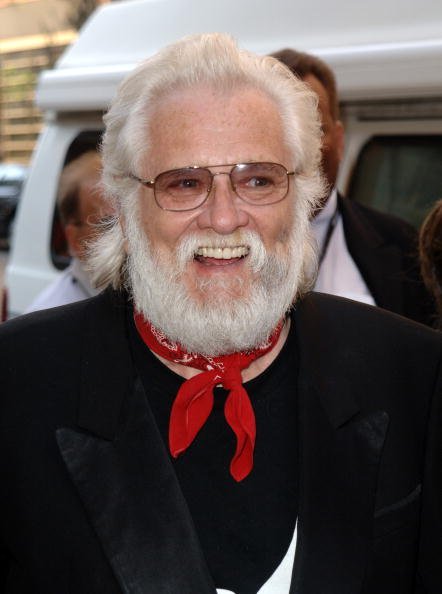
Ronnie Hawkins at the Elgin Theatre in Toronto.
George Pimentel / WireImage
Ronnie Hawkins, the southern U.S. rockabilly artist who moved to Canada and became godfather to a generation of influential rock musicians, died May 29 at the age of 87.
Story continues below advertisement
Known for his vivacious personality and enthusiastic stage presence, the singer of Ruby Baby, Mary Lou and Bo Diddley cover Who Do You Love earned several nicknames including Mr. Dynamo, Sir Ronnie, Rompin’ Ronnie and the Hawk.
Hawkins was godfather to a generation of influential artists, including musicians he enlisted for his backing band the Hawks, which would go on to play for Bob Dylan on his infamous 1966 tour when the folkster embraced the electric guitar. Five members of the Hawks, including Levon Helm and Robbie Robertson, would later form the Band.
Though Hawkins clashed with some of his former bandmates, he joined the Band onstage as part of their iconic 1976 farewell show captured in Martin Scorsese’s concert film The Last Waltz.
From 1962 to 2017, Hawkins called a 175-acre property, including the 5,600-square-foot home, on Stoney Lake north of Peterborough, Ont., home. He sold most of the property for nearly $4 million and he and his partner moved to Peterborough.
Mary Mara during the 2006 Los Angeles Film Festival at the ‘Swedish Auto’ screening at Crest Theatre in Los Angeles.
Matthew Simmons / WireImage
Mary Mara, a character actor best known for her roles on ER, Ray Donavan and Law & Order, died in an apparent drowning on June 26. She was 61.
Story continues below advertisement
Mara performed roles for TV and film, and her credits include multi-episode roles on beloved series such as Dexter, Star Trek: Enterprise and Nash Bridges. Her film credits include Mr. Saturday Night and Love Potion #9.
Mara’s last role was the 2020 film Break Even, after which she retired from acting and moved back to her hometown of Syracuse, N.Y.
Nick Nemeroff died suddenly at the age of 32.
Nick Nemeroff / Twitter
Nick Nemeroff, a Montreal-based comedian who has graced the stages of Conan and Just For Laughs, died June 27 at the age of 32.
The young performer attended Royal West Academy in Montreal West before heading to Toronto, where he graduated from Toronto Metropolitan University’s radio and television program
He performed on Conan before the age of 30 and was featured in multiple TV tapings, most recently, CTV’s Roast Battle Canada.
Story continues below advertisement
Sonny Barger, founder of the Oakland, Calif., charter of the Hells Angels motorcycle club, autographs a copy of Post magazine during an event at a Harley-Davidson motorcycle dealership Aug. 23, 2003 in Quincy, Ill.
Scott Olson / Getty Images
Ralph (Sonny) Barger, the tough-living leader of the Hells Angels Motorcycle Club, died June 29 after a brief battle with cancer. He was 83.
Barger was the founder of the first chapter of the Hells Angels in Oakland, Calif., in 1957.
He attained near-mythic status as a rugged hellion and a cool charismatic leader of men who called themselves one percenters — apart from the straight-living 99 per cent of the population. Much of that 99 per cent was genuinely fearful of the Angels with their menacing appearance, rumbling Harley Davidson motorcycles, violent no-limits lifestyle and black leather wardrobe adorned with the club’s sacred winged skull patch.
Barger himself was convicted of marijuana possession, heroin dealing, assault with a deadly weapon, kidnapping, firearms possession and conspiring to blow up the clubhouse of a rival motorcycle gang in Kentucky. But he told the Los Angeles Times the total 13 years he spent in prison was “not much, considering all the fun I’ve had.”
Story continues below advertisement
In 2000, Barger added best-selling author to his resume with the autobiography Hell’s Angel: The Life and Times of Sonny Barger and the Hells Angels Motorcycle Club. In 2010 he co-authored Let’s Ride, a best-selling guide to motorcycling ownership and safety, and he went on to write several biker-related novels.
Takahashi Kazuki speaking at a panel.
Twitter / EyePatchWolf
Takahashi Kazuki, the Japanese manga artist and creator of the internationally popular series Yu-Gi-Oh!, was found dead in the sea off the coast of Japan’s Okinawa Island on July 4. He was 60.
He began his career as an artist of the Japanese-style comics in the early 1980s.
Yu-Gi-Oh! received international acclaim when the manga’s success led to the creation of a TV anime series and a wildly popular trading card game.
Story continues below advertisement
The game was certified in 2009 by the Guinness Book of World Records as one of the best-selling trading card games of all time.
James Caan attends the Humane Society of The United States’ annual To The Rescue! Los Angeles benefit at Paramount Studios on April 22, 2017 in Hollywood, Calif.
Jason LaVeris / FilmMagic
Legendary actor James Caan, who starred in the Godfather trilogy and other renowned movies like Misery and The Gambler, died on July 6. He was 82.
Caan was a grinning, handsome performer with an athlete’s swagger and muscular build. He built a thriving Hollywood career, despite drug problems, outbursts of temper and minor brushes with the law.
Caan had been a favourite of Francis Ford Coppola since the 1960s, when Coppola cast him for the lead in Rain People. He was primed for a featured role in The Godfather as Sonny, the No. 1 enforcer and eldest son of Mafia boss Vito Corleone.
Story continues below advertisement
After Brian’s Song and The Godfather, he was one of Hollywood’s busiest actors, appearing in Hide in Plain Sight (which he also directed), Funny Lady and Neil Simon’s Chapter Two, among others. He also made a brief appearance in a flashback sequence in The Godfather, Part II.
Later in his career, he introduced himself to a new generation playing Walter, the workaholic, stone-faced father of Buddy’s Will Ferrell in Elf.
Tony Sirico, who plays the role of Paulie (Walnuts) Gualtieri in the hit HBO television series ‘The Sopranos,’ poses for photographers as he arrives at the world premiere of the sixth season in New York, Tuesday, March 7, 2006.
Stuart Ramson / The Associated Press
Tony Sirico, who played the impeccably groomed mobster Paulie Walnuts in The Sopranos and brought his tough-guy swagger to films including Goodfellas, died July 8. He was 79.
Story continues below advertisement
Sirico, born July 29, 1942, in New York City, grew up in the Flatbush and Bensonhurst neighbourhoods, where he said “every guy was trying to prove himself. You either had to have a tattoo or a bullet hole.”
Sirico also was cast outside the gangster mould, playing police officers in the films Dead Presidents and Deconstructing Harry. Among his other credits were Woody Allen films including Bullets over Broadway and Mighty Aphrodite, and appearances on TV series including Miami Vice and voice roles on Family Guy and American Dad!
Pat John, an actor on the long-running Canadian television show ‘The Beachcombers,’ died at the age of 69.
Courtesy / Jackson Davies / Facebook
Pat John, an actor on the long-running Canadian television show The Beachcombers, died July 13 at the age of 69.
John, a member of the shíshálh First Nation in Sechelt, B.C., was one of the first Indigenous actors to play a contemporary character on Canadian TV and started in his late teens.
Story continues below advertisement
He played the role of Jesse Jim, a young business partner with the show’s main character, Nick Adonidas, played by Bruno Gerussi. They were log salvagers in the series that became a national hit and gained an international audience over its 18-year run, which ended in 1990.
John’s acting career pretty much ended after the Beachcombers run, save for a reunion series in 2002.
Nolan Neal performing on ‘America’s Got Talent’ Episode 1515, entitled ‘Live Show 3.’.
Getty Images
Nolan Neal, best known for his time as a contestant on both America’s Got Talent and The Voice, died July 18 after a long battle with substance abuse. He was 41.
Neal was a contestant on season 15 of The Voice, which aired in 2016. He auditioned with a rendition of Drive by Incubus, which earned him a spot on Maroon 5 singer Adam Levine’s team. He was eventually eliminated from the competition.
Story continues below advertisement
He later auditioned for America’s Got Talent in 2020. He performed an original song at his audition, entitled Lost. Neal said it was the first song he’d written after getting sober. He was eliminated from the show in the quarterfinal round.
‘Elvis’ star Shonka Dukureh, as Big Mama Thornton.
Kane Skennar / Warner Bros. / Courtesy Everett Collection
Shonka Dukureh, best known for her performance as Big Mama Thornton in Elvis, was found dead in her Nashville apartment on July 21. She was 44.
Elvis, the biopic about Elvis Presley’s career and subsequent stardom, was Dukureh’s first major motion picture. She was also included on the movie’s soundtrack, with her blues-style vocals featured on Doja Cat’s Vegas.
FILE – Paul Sorvino attends Focus Features Hosts The After Party For ‘Mary Queen of Scots’ at Tavern On The Green on Dec. 4, 2018 in New York City.
Photo by Paul Bruinooge/Patrick McMullan via Getty Images
Paul Sorvino, an actor whose bread and butter was playing gangsters and tough-guy cops, died on July 25. He was 83.
Story continues below advertisement
Some of Sorvino’s most notable roles included Paulie Cicero in Goodfellas and a New York police sergeant on Law & Order.
He also made a name for himself playing an Italian-American communist in Warren Beatty’s Reds, Henry Kissinger in Oliver Stone’s Nixon and mob boss Eddie Valentine in The Rocketeer.
Despite his tough exterior and penchant for forceful roles, Sorvino was passionate about poetry, painting and the opera.
Sorvino was a respected tenor singer and was invited to perform for the New York Opera at Lincoln Center in 2006.
Tony Dow, actor, director and artist, poses at his home and studio in the Topanga area of Los Angeles, Thursday, Sept. 18, 2012.
Reed Saxon / The Associated Press
Tony Dow, former star of beloved family TV comedy Leave it to Beaver, died July 27 at the age of 77.
Story continues below advertisement
Dow was best known for playing older brother Wally Cleaver to Jerry Mathers’ Beaver in the iconic black-and-white television series that aired in the late 1950s and early 1960s.
He reprised the role for the 1983 TV film Still the Beaver, a 1987 episode of The Love Boat and The New Leave It to Beaver TV series from 1983 to 1989.
He also took on writing, producing and directing, helming episodes of Harry and the Hendersons, Coach, Babylon 5 and Honey I Shrunk the Kids and an episode of Star Trek: Deep Space Nine.
According to his website biography, Dow was also a talented sculptor and had his creations on exhibit in several international museums.
Actor Nichelle Nichols speaks during the Creation Entertainment’s Official Star Trek Convention at The Westin O’Hare in Rosemont, Ill., Sunday, June 8, 2014.
Barry Brecheisen / Invision / The Associated Press
Nichelle Nichols, who broke barriers for Black women in Hollywood when she played communications officer Lt. Uhura on the original Star Trek television series, died July 30 at the age of 89.
Story continues below advertisement
Her role in the 1966-69 series as Lt. Uhura earned Nichols a lifelong position of honour with the series’ fans. It also earned her accolades for breaking stereotypes that had limited Black women to acting roles as servants and included an interracial onscreen kiss with co-star William Shatner that was unheard of at the time.
Like other original cast members, Nichols also appeared in six big-screen spinoffs starting in 1979 with Star Trek: The Motion Picture and frequented Star Trek fan conventions. She also served for many years as a NASA recruiter, helping bring minorities and women into the astronaut corps.
More recently, she had a recurring role on television’s Heroes, playing the great-aunt of a young boy with mystical powers.
Actor Pat Carroll attends the Broadway opening of ‘The Little Mermaid’ at the Lunt-Fontanne Theater, Thursday, Jan. 10, 2008.
Pat Carroll, an Emmy-winning comedian whose career included portraying the villainous sea witch Ursula in The Little Mermaid, died of pneumonia July 30. She was 95.
Story continues below advertisement
Carroll’s screwball wit earned her an Emmy in 1957 for her antics on Caesar’s Hour and she was nominated again for her work on the variety show the following year.
She also made an appearance on The Mary Tyler Moore Show in 1971, and she portrayed Lily Feeney, the mother of Cindy Williams’ character, on a 1976 instalment of Laverne & Shirley.
Her TV credits also included Cinderella, Please Don’t Eat the Daisies, The Love Boat, Designing Women and ER.
Olivia Newton-John attends the 2018 G’Day USA Los Angeles Black Tie Gala at the InterContinental Los Angeles Downtown on Jan. 27, 2018.
Paul Archuleta / Getty Images
Grease actor, Grammy-winning singer and pop-culture icon Olivia Newton-John died on Aug. 8 after living with breast cancer for many years. She was 73 years old.
The singer and actor was first diagnosed with breast cancer in 1992 and underwent chemotherapy and a partial mastectomy. In 2013, cancer was found in her shoulder.
Story continues below advertisement
In September 2018, Newton-John revealed that her cancer had returned the previous year and had spread to her lower back.
One of the best-selling artists of the 1970s and 1980s, Newton-John had a string of No. 1 singles, including You’re the One That I Want, the catchy duet she sang with John Travolta in the 1978 musical sensation Grease.
Her 1981 smash hit Physical further cemented her superstardom, spending 10 weeks at the top of the Billboard Hot 100, while its risque lyrics and fitness-themed music video reinvented her image for the rest of the 1980s.
From 1973 to 1983, Newton-John had 14 top 10 singles just in the U.S. and won four Grammys. She sold more than 100 million records over the course of her career.
She was involved in numerous charitable causes, serving as goodwill ambassador for the United Nations Environment Programme and as national spokeswoman for the Children’s Health Environmental Coalition. She also founded the Olivia Newton-John Cancer and Wellness Centre in Melbourne, Australia.
Anne Heche arrives at the premiere of ‘The Tender Bar’ at the TCL Chinese Theatre, on Dec. 12, 2021, in Los Angeles.
Jordan Strauss / The Associated Press
Anne Heche, one of the hottest Hollywood actors in the late 1990s, died on Aug. 12. She was 53.
Story continues below advertisement
Heche appeared in a number of big-budget movies throughout her career, including the 1997 film Donnie Brasco, 1997’s Volcano and 1998’s Six Days, Seven Nights.
Her relationship with Ellen DeGeneres from 1997 to 2000 heightened her fame and brought immense public scrutiny.
In a memoir released the following year, Call Me Crazy, Heche talked about her lifelong struggles with mental health and a childhood of abuse.
Heche suffered a brain injury after she crashed her car into a single-storey home in L.A. on Aug. 5.
Swiss-French director Jean-Luc Godard during the award ceremony of the ‘Grand Prix Design’, in Zurich, Switzerland, Nov. 30, 2010.
Gaetan Bally / Keystone via AP
Jean-Luc Godard, the iconic “enfant terrible” of the French New Wave who revolutionized popular cinema in 1960 with his first feature Breathless, died on Sept. 13 at the age of 91.
Story continues below advertisement
Over a long career that began in the 1950s as a film critic, Godard was perhaps the most boundary-breaking director among New Wave filmmakers who rewrote the rules for camera, sound and narrative — rebelling against an earlier tradition of more formulaic storytelling.
Godard died peacefully and surrounded by loved ones at his home in the Swiss town of Rolle, on Lake Geneva, his family said in a statement. The statement gave assisted suicide, which is legal in Switzerland, as the cause of death.
Louise Fletcher, a cast member in ‘Shameless,’ poses at the premiere of the second season of the Showtime television series in Los Angeles, Jan. 5, 2012.
Chris Pizzello / The Associated Press
Louise Fletcher, a late-blooming star whose riveting performance as the cruel and calculating Nurse Ratched in One Flew Over the Cuckoo’s Nest won her an Academy Award, died on Sept. 23. She was 88.
After putting her career on hold for years to raise her children, Fletcher was in her early 40s and little known when chosen for the role opposite Jack Nicholson in the 1975 film by director Milos Forman. At the time, she didn’t know that many other prominent stars, including Anne Bancroft, Ellen Burstyn and Angela Lansbury, had turned down the role of Nurse Ratched.
Story continues below advertisement
“I was the last person cast,” she recalled in a 2004 interview. “It wasn’t until we were halfway through shooting that I realized the part had been offered to other actresses who didn’t want to appear so horrible on the screen.”
Robert Cormier is shown in Season 15 of ‘Heartland’ in this undated handout photo.
Handout via The Canadian Press
Robert Cormier, a Toronto TV and film actor who played Finn Cotter on the long-running Canadian drama series Heartland, died on Sept. 23 at the age of 33.
Cormier first appeared on Heartland in the 15th season, where he played a new love interest for the show’s main character Amy Fleming, portrayed by Amber Marshall.
Cormier was also known for his role as Kit Jennings in the third season of Netflix’s horror anthology series Slasher and as Winston in Starz’s American Gods.
Story continues below advertisement
No cause of death was given in Cormier’s obituary, but the actor’s sister Stephanie told The Hollywood Reporter that he died in a Toronto hospital after sustaining injuries from a fall.
Sacheen Littlefeather on stage at AMPAS Presents An Evening with Sacheen Littlefeather at the Academy Museum of Motion Pictures on Sept. 17, 2022 in Los Angeles.
Frazer Harrison / Getty Images
Sacheen Littlefeather, the actor and activist who declined Marlon Brando’s 1973 Academy Award for The Godfather on his behalf in an indelible protest of Hollywood’s portrayal of Native Americans, died on Oct. 2. She was 75.
Littlefeather’s appearance at the 1973 Oscars would become one of the award show’s most famous moments. Clad in buckskin dress and moccasins, Littlefeather took the stage when presenter Roger Moore read Brando’s name as the winner for best actor.
Speaking to the audience, Littlefeather cited Native American stereotypes in film and the then-ongoing weeks-long protest at Wounded Knee in South Dakota as the reason for Brando’s absence. She said Brando had written “a very long speech” but she was restricted by time to brief remarks.
Story continues below advertisement
Producer Howard Koch had allegedly warned Littlefeather, then 26, that he would have her arrested if she spoke for more than a minute.
Loretta Lynn at the American Music Honors and Awards in 2014.
Mark Zalesk / The Associated Press
Loretta Lynn, the Kentucky coal miner’s daughter whose frank songs about life and love made her a pillar of country music, died on Oct. 4 at the age of 90.
Lynn already had four children before launching her career in the early 1960s, and her songs reflected her pride in her rural Kentucky background.
As a songwriter, she crafted a persona of a defiantly tough woman, a contrast to the stereotypical image of most female country singers. The Country Music Hall of Famer wrote fearlessly about sex and love, cheating husbands, divorce and birth control and sometimes got in trouble with radio programmers for material from which even rock performers once shied away.
Story continues below advertisement
Her biggest hits came in the 1960s and ’70s, including Coal Miner’s Daughter, You Ain’t Woman Enough, The Pill, Don’t Come Home a Drinkin’ (With Lovin’ on Your Mind) and You’re Looking at Country.
Angela Lansbury poses for a portrait during press day for ‘Blithe Spirit’ in Los Angeles on Dec.16, 2014.
Casey Curry / Invision / AP
Angela Lansbury, the scene-stealing British actor who kicked up her heels in the Broadway musicals Mame and Gypsy and solved endless murders as crime novelist Jessica Fletcher in the long-running TV series Murder, She Wrote, died on Oct. 11. She was 96.
Lansbury won five Tony Awards for her Broadway performances and a lifetime achievement award. She earned Academy Award nominations as supporting actress for two of her first three films, Gaslight and The Picture of Dorian Gray, and was nominated again in 1962 for The Manchurian Candidate and her deadly portrayal of a Communist agent and the title character’s mother.
Story continues below advertisement
Lansbury’s widest fame began in 1984 when she launched Murder, She Wrote on CBS. Based loosely on Agatha Christie’s Miss Marple stories, the series centred on Jessica Fletcher, a middle-aged widow and former substitute school teacher living in the seaside village of Cabot Cove, Maine.
Director Jeff Barnaby is pictured as he promotes the film “Blood Quantum” at the Toronto International Film Festival, in Toronto, Friday, Sept. 6, 2019.
Chris Young / The Canadian Press
Mi’kmaw filmmaker Jeff Barnaby, considered a visionary of modern Indigenous cinema, died on Oct. 13 after a year-long battle with cancer. He was 46.
Raised on the Listuguj Reserve in Québec, Barnaby helmed many short films, including the Jutra Award-nominated The Colony and the Genie-nominated File Under Miscellaneous.
The writer-director who was based in Montréal gained acclaim for his 2013 debut feature Rhymes for Young Ghouls. The film criticized Canada’s residential school system in a way that hadn’t been widely done in cinema. Set in the 1970s, it also reminded audiences that the events it depicted were not ancient history.
Story continues below advertisement
Robbie Coltrane stars as Hagrid in ‘Harry Potter and the Chamber of Secrets’ in 2002.
Warner Brothers/Courtesy Everett Collection
Scottish actor Robbie Coltrane, who played the beloved half-giant Hagrid in the Harry Potter movies, died on Oct. 14 at the age of 72.
Coltrane came to fame as a hard-bitten detective in the 1990s series Cracker, for which he won best actor at the British Academy Television Awards three years running.
He played gentle half-giant Hagrid, a mentor to the boy wizard, in all eight Harry Potter films, released between 2001 and 2011.
Other roles include a Russian crime boss in the James Bond thrillers GoldenEye and The World is Not Enough.
Leslie Jordan poses for a portrait at Pan Pacific Park in the Fairfax district of Los Angeles on Thursday, April 8, 2021 to promote his new book “How Y’all Doing?: Misadventures and Mischief from a Life Well Lived.”
Damian Dovarganes / The Associated Press
Leslie Jordan, the widely-adored actor and comedian best known for his role on Will & Grace, died on Oct. 24 after a car crash in Hollywood, Calif. He was 67.
Story continues below advertisement
In 2006, Jordan, a Tennessee native, won an Emmy for his role as Beverley Leslie on Will & Grace. Jordan also appeared on several other popular TV shows, including Boston Legal, Reba, Desperate Housewives, American Horror Story and Call Me Kat.
Jordan was much beloved among LGBTQ2S+ communities. This year, he appeared as a guest star on Season 12 of RuPaul’s Drag Race.
During the COVID-19 pandemic, Jordan regularly went viral on TikTok and Instagram where he posted short, funny videos about his life and daily happenings. Many of Jordan’s videos included him asking “How ya’ll doin?” and some included stories about Hollywood or his childhood growing up with identical twin sisters and their “mama,” as he called her.
Author Julie Powell attends the premiere of “Julie & Julia” at The Ziegfeld Theatre, in New York, on July 30, 2009.
The Associated Press
Food writer Julie Powell, who became an internet darling after blogging for a year about making every recipe in Julia Child’s Mastering the Art of French Cooking, died of cardiac arrest on Oct. 26. She was 49.
Story continues below advertisement
Powell’s 2005 book Julie & Julia: 365 Days, 524 Recipes, 1 Tiny Apartment Kitchen became the hit Nora Ephron-directed film Julie & Julia, with the author portrayed in the movie by Amy Adams and Meryl Streep as Child.
Her sophomore and last effort — titled Cleaving: A Story of Marriage, Meat and Obsession — was a bit jarring in its honesty. Powell revealed she had an affair, the pain of loving two men at once, of her fondness for sadomasochism and even a bout of self-punishing sex with a stranger.
Her book tapped into the growing interest in old school butchery and her experience slicing meat actually resulted in her eating less of it. She was an advocate for humanely raised and slaughtered animals.
Jerry Lee Lewis performs during Farm Aid on Sept. 20, 2008 in Mansfield, Mass.
Lisa Poole / The Associated Press
Jerry Lee Lewis, the untamable rock ‘n’ roll pioneer whose outrageous talent, energy and ego collided on such definitive records as Great Balls of Fire and Whole Lotta Shakin’ Goin’ On, died on Oct. 28. He was 87.
Story continues below advertisement
Of all the rock rebels to emerge in the 1950s, few captured the new genre’s attraction and danger as unforgettably as the Louisiana-born piano player who called himself “The Killer.”
Tender ballads were best left to the old folks. Lewis was all about lust and gratification, with his leering tenor and demanding asides, violent tempos and brash glissandi, cocky sneer and crazy blond hair.
He won three Grammys, and recorded with some of the industry’s greatest stars. In 2006, Lewis came out with Last Man Standing, featuring Mick Jagger, Bruce Springsteen, B.B. King and George Jones. In 2010, Lewis brought in Jagger, Keith Richards, Sheryl Crow, Tim McGraw and others for the album Mean Old Man.
Lee Jihan, who was killed during a crowd surge in Seoul on Oct. 29, 2022.
935 Entertainment
Lee Jihan, a South Korean singer and actor, died on Oct. 30 at 24 years old after a crowd surge killed 150 people during Halloween festivities in Seoul, South Korea.
Story continues below advertisement
Lee rose to popularity after he appeared as a contestant on the Korean TV program Produce 101, a singing competition where hopefuls battled for one of 11 spots in a new Korean boyband. He auditioned with a cover of EXO’s Overdose.
Though Lee did not win the competition, he garnered a considerable fanbase after the show.
Lee later used his new popularity to earn an acting role in the K-Drama Today Was Another Namhyun Day.
Takeoff arrives at the ESPY Awards in Los Angeles on July 10, 2019.
Jordan Strauss / Invision / AP
Takeoff, one-third of the popular rap group Migos, was shot and killed on Nov. 1 in Houston, Texas. He was 28 years old.
The rapper, whose real name was Kirshnik Khari Ball, was the youngest member of Migos, the Grammy-nominated rap trio from suburban Atlanta that also featured his uncle Quavo and cousin Offset.
Story continues below advertisement
Migos first broke through with the massive hit Versace in 2013. They had four Top 10 hits on the Billboard Hot 100, though Takeoff was not on their multi-week No. 1 hit Bad and Boujee, featuring Lil Uzi Vert. They put out a trilogy of albums called Culture, Culture II and Culture III, with the first two hitting No. 1 on the Billboard 200 album chart.
In 2018, Takeoff released his first and only solo album, entitled The Last Rocket.
inger Aaron Carter arrives at a premiere of “Saints & Strangers” at the Saban Theater in Beverly Hills, Calif., Nov. 9, 2015.
Rich Fury / Invistion / AP
Aaron Carter, the singer-rapper who began performing as a child and had hit albums starting in his teen years, died on Nov. 5 at the age of 34.
Carter, the younger brother of Nick Carter of the Backstreet Boys, performed as an opening act for Britney Spears as well as his brother’s boy band, and appeared on the family’s reality series House of Carters that aired on E!
Story continues below advertisement
Carter’s 2000 album, Aaron’s Party (Come Get It), sold three million copies and produced hit singles including the title song and I Want Candy. His videos received regular airplay on Disney and Nickelodeon.
Carter’s fifth and final studio album, LOVE, was released in 2018.
Kevin Conroy participates during a Q&A panel at Wizard World on Aug. 24, 2019, in Chicago.
Rob Grabowski / Invision / AP
Kevin Conroy, the prolific voice actor whose gravely delivery on Batman: The Animated Series was for many Batman fans the definitive sound of the Caped Crusader, died on Nov. 10. He was 66.
Conroy was the voice of Batman on the acclaimed animated series that ran from 1992 to 1996, often acting opposite Mark Hamill’s Joker. Conroy continued on as the almost exclusive animated voice of Batman, including some 15 films, 400 episodes of television and two dozen video games, including the Batman: Arkham and Injustice franchises.
Story continues below advertisement
In the eight-decade history of Batman, no one played the Dark Knight more.
John Aniston arrives at the 42nd annual Daytime Emmy Awards at Warner Bros. Studios on Sunday, April 26, 2015, in Burbank, Calif.
Richard Shotwell / Invision / The Associated Press
John Aniston, a veteran soap opera star known for his work on Days of Our Lives and father to actress Jennifer Aniston, died on Nov. 11. He was 89.
Aniston appeared in nearly 3,000 episodes of Days of Our Lives. His career on the soap opera began in 1970 when he portrayed a character named Eric Richards. He returned to the cast in 1985 as Victor Kiriakis, a now iconic crime boss.
In 1986, he won two Soap Opera Digest Awards, for outstanding actor in a leading role and for outstanding villain in a daytime serial.
Last year, he received a Daytime Emmy Lifetime Achievement Award.
Story continues below advertisement
Jason David Frank attends the premiere of “Omniboat: A Fast Boat Fantasia” during the 2020 Sundance Film Festival on Jan. 26, 2020, in Park City, Utah.
Charles Sykes / Invision / AP
Jason David Frank, who played the Green Power Ranger Tommy Oliver on the 1990s children’s series Mighty Morphin Power Rangers, died on Nov. 19 at the age of 49.
Mighty Morphin Power Rangers, about five teenagers deputized to save Earth from the evil, debuted on Fox in 1993 and went on to become a pop-culture phenomenon. Early in the first season, Frank’s Tommy Oliver was first seen as a villain, brainwashed by the evil Rita Repulsa. But soon after, he was inducted in the group as the Green Ranger and became one of the most popular characters on the show.
Irene Cara, best known as a singer of movie themes, holds her award for the song “What a Feeling” from the movie “Flashdance.”
Getty Images
Oscar, Golden Globe and two-time Grammy winning singer-actress Irene Cara, who starred and sang the title cut from the 1980 hit movie Fame and then belted out the era-defining hit Flashdance … What a Feeling from 1983’s Flashdance, died on Nov. 25. She was 63.
Story continues below advertisement
During her career, Cara had three Top 10 hits on the Billboard Hot 100, including Breakdance, Out Here On My Own, Fame and Flashdance … What A Feeling, which spent six weeks at No. 1. She was behind some of the most joyful, high-energy pop anthems of the early ’80s.
Our Stories Part 2: The moments that stayed with us this past year
Jake Flint, an Oklahoma country singer who died on Sunday, just hours after getting married.
Jake Flint / Instagram
Oklahoma country singer Jake Flint died in his sleep only hours after getting married on Nov. 28. He was 37.
Story continues below advertisement
The up-and-coming artist was in the midst of touring Oklahoma and surrounding states when he got married to his wife, Brenda Flint.
In a since-deleted Facebook post, Brenda wrote, “We should be going through wedding photos but instead I have to pick out clothes to bury my husband in.”
“People aren’t meant to feel this much pain. My heart is gone and I just really need him to come back,” she added.
Flint’s publicist Clif Doyal said the artist was a “true ambassador of the Oklahoma and Texas Red Dirt music scene.”
Flint released his sophomore self-titled studio album in 2020.
Musician Christine McVie attends the 2019 Rock & Roll Hall of Fame induction ceremony in New York on March 29, 2019.
Evan Agostini / Invision / AP
Christine McVie, the British-born Fleetwood Mac vocalist, songwriter and keyboard player whose cool, soulful contralto helped define such classics as You Make Loving Fun, Everywhere and Don’t Stop, died on Nov. 30. She was 79.
Story continues below advertisement
McVie was a steady presence and personality in a band known for its frequent lineup changes and volatile personalities — notably fellow singer-songwriters Stevie Nicks and Lindsey Buckingham.
Fleetwood Mac started out as a London blues band in the 1960s, and evolved into one of the defining makers of 1970s California pop-rock, with the combined talents of McVie, Nicks and Buckingham anchored by the rhythm section of founder Mick Fleetwood on drums and John McVie on bass.
Singer and actor Bob McGrath attends 11th Annual Sesame Street Workshop Benefit Gala at Cipriani 42nd Street on May 29, 2013, in New York City.
Getty Images
Bob McGrath, an actor, musician and children’s author widely known for his portrayal of one of the first regular characters on the children’s show Sesame Street, died on Dec. 4. He was 90.
McGrath was a founding cast member of Sesame Street when the show premiered in 1969, playing a friendly neighbour Bob Johnson. He made his final appearance on the show in 2017, marking an almost five-decade-long figure in the Sesame Street world.
Story continues below advertisement
In B.C., McGrath was also widely known for his work with Variety – The Children’s Charity. He made his Variety Show of Hearts Telethon debut in 1973 and appeared on the show 40 times over the years.
McGrath was also a regular host of Saskatchewan’s Kinsmen TeleMiracle Fundraiser.
Kirstie Alley arrives at the Premiere Of Quiver Distribution’s “The Fanatic” at the Egyptian Theatre on August 22, 2019 in Hollywood, Calif.
Steve Granitz / WireImage
Kirstie Alley, the Emmy-winning actor best known for her breakout role in the hit sitcom Cheers, died on Dec. 5 after a battle with cancer. She was 71.
Alley replaced original cast member Shelley Long as the female lead on Cheers, where she played bar manager Rebecca Howe from 1987 to 1993. She won the Primetime Emmy Award for outstanding comedy actress in 1991 and was nominated for every other season she appeared in.
Story continues below advertisement
Alley won her second Emmy in 1994 for her lead role as the parent of an autistic teenager in the made-for-television movie David’s Mother.
She also starred in the hit film Look Who’s Talking opposite John Travolta, as well as its two sequels.
She made her film debut in 1982’s Star Trek II: The Wrath of Khan.
Stephen “tWitch” Boss appears at the FOX 2022 Upfront presentation in New York on May 16, 2022.
Dia Dipasupil / Getty Images
Stephen “tWitch” Boss, best known as the bubbly, longtime DJ on The Ellen DeGeneres Show, died on Dec. 13 at the age of 40.
TMZ, which first reported the news of Boss’ death, said the DJ died by suicide.
Boss was the DJ on The Ellen DeGeneres Show from 2014 up until the program’s final episode in 2022. He became an executive producer of Ellen in 2020.
Story continues below advertisement
Before Ellen, Boss got his start on MTV’s The Wade Robson Project and Star Search, two competitive dance productions that were popular in the 2000s.
Boss’ career launched into the stratosphere when he appeared on reality dance competition So You Think You Can Dance in 2008, where he was an easy fan-favourite. His krumping dance style won over both the audience and the judges, and he ended up taking second place.
FILE – Brazil’s Pelé wears his national team’s jersey in Rio de Janeiro, Brazil, May 25, 1962.
AP Photo, File
Pelé, the Brazilian king of soccer who won a record three World Cups and became one of the most commanding sports figures of the last century, died on Dec. 29. He was 82.
The standard-bearer of “the beautiful game” had undergone treatment for colon cancer since 2021.
Story continues below advertisement
Widely regarded as one of soccer’s greatest players, Pelé carried Brazil to soccer’s heights and became a global ambassador for his sport in a journey that began on the streets of Sao Paulo state, where he would kick a sock stuffed with newspapers or rags.
The player who would be dubbed “The King” was introduced to the world at 17 at the 1958 World Cup in Sweden, the youngest player ever at the tournament. He was carried off the field on teammates’ shoulders after scoring two goals in Brazil’s 5-2 victory over the host country in the final.
The image of Pelé in a bright, yellow Brazil jersey, with the No. 10 stamped on the back, remains alive with soccer fans everywhere. As does his trademark goal celebration — a leap with a right fist thrust high above his head.
Pelé’s life after soccer took many forms. He was a politician — Brazil’s Extraordinary Minister for Sport — a wealthy businessman, and an ambassador for UNESCO and the United Nations.
Vivienne Westwood launches “Changeons de Mode” showcases at Galeries Lafayette Haussmann on September 04, 2019 in Paris, France.
Jerome Domine/ABABACAPRESS.COM
Vivienne Westwood, the person who dressed the Sex Pistols, died on Dec. 29 at the age of 81.
Story continues below advertisement
She was synonymous with 1970s punk rock, a rebelliousness that remained the hallmark of an unapologetically political designer who became one of British fashion’s biggest names.
“The world needs people like Vivienne to make a change for the better,” her fashion house said on Twitter after her death was announced.
Climate change, pollution, and her support for WikiLeaks founder Julian Assange were all fodder for protest T-shirts or banners carried by her models on the runway.
The rebel was inducted into Britain’s establishment in 1992 by Queen Elizabeth who awarded her the Order of the British Empire medal. But, ever keen to shock, Westwood turned up at Buckingham Palace without underwear – a fact she proved to photographers by a revealing twirl of her skirt.
“The only reason I am in fashion is to destroy the word ‘conformity’,” Westwood said in her 2014 biography. “Nothing is interesting to me unless it’s got that element.”
Ian Tyson is shown during an interview with The Canadian Press in Toronto on Monday, Oct.18, 2010. Canadian folk legend Tyson, best known for the hit single “Four Strong Winds” as one half of Ian & Sylvia, has died at age 89.
THE CANADIAN PRESS/Frank Gunn
Ian Tyson, the Canadian folk legend-turned-cowboy storyteller who penned Four Strong Winds as one half of Ian & Sylvia, died on Dec. 29 at age 89.
Story continues below advertisement
The Victoria native died at his ranch near Longview, Alta., following a series of ongoing health complications, according to his manager Paul Mascioli. The singer-songwriter was a part of the influential folk movement in Toronto with his first wife, Sylvia Tyson. But he divided much of his life and career between two passions largely unrelated to his folkie past: living on his southern Alberta ranch and pursuing songs about the cowboy life.
He picked up numerous awards for his music, including an induction into the Canadian Songwriters Hall of Fame in 2019.
In 1987, he won a Juno Award for country male vocalist of the year and five years later he was inducted into the Canadian Music Hall of Fame alongside Sylvia Tyson. He won a Governor General’s Performing Arts Award in 2003, and has been named to the Order of Canada and the Canadian Country Music Hall of Fame.
Barbara Walters attends the 2015 Time 100 Gala at Frederick P. Rose Hall, Jazz at Lincoln Center on April 21, 2015 in New York City.
Taylor Hill/Getty Images
Barbara Walters, the intrepid interviewer, anchor and program host who led the way as the first woman to become a TV news superstar during a network career remarkable for its duration and variety, died on Dec. 30 at age 93.
Story continues below advertisement
“Barbara Walters passed away peacefully in her home surrounded by loved ones. She lived her life with no regrets. She was a trailblazer not only for female journalists, but for all women,” her publicist Cindi Berger said in a statement.
During nearly four decades at ABC, and before that at NBC, Walters’ exclusive interviews with rulers, royalty and entertainers brought her celebrity status that ranked with theirs, while placing her at the forefront of the trend in broadcast journalism that made stars of TV reporters and brought news programs into the race for higher ratings.
Walters made headlines in 1976 as the first female network news anchor, with an unprecedented $1 million annual salary that drew gasps. Her drive was legendary as she competed — not just with rival networks, but with colleagues at her own network — for each big “get” in a world jammed with more and more interviewers, including female journalists who followed the trail she blazed.
Late in her career, in 1997, she gave infotainment a new twist with The View, a live ABC weekday “kaffee klatsch” with an all-female panel for whom any topic was on the table and who welcomed guests ranging from world leaders to teen idols.
Walters was eventually moved off of the co-anchor slot and into special projects for ABC News. Meanwhile, she found success with her quarterly prime-time interview specials. She became a frequent contributor to ABC’s newsmagazine 20/20, joining forces with then-host Hugh Downs, and in 1984, became co-host.
Story continues below advertisement
She is survived by her only daughter, Jacqueline Danforth.
—
— With files from The Associated Press and The Canadian Press
Our Stories Part 1: ‘Freedom Convoy’ in capital makes history