
spot_img
Thursday, April 16, 2026
More
    spot_img
    Home Blog Page 25

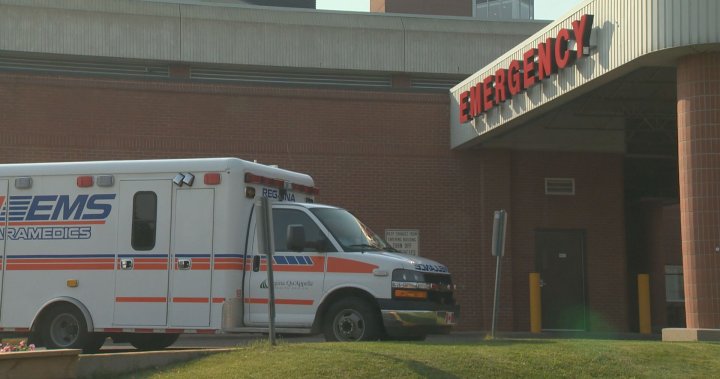
    Regina General Hospital parkade to be finished by end of 2024

    0

    The highly anticipated parkade at the Regina General Hospital is officially moving forward, with construction slated to begin this fall.

    Following years of safety concerns and complaints about lack of parking from both hospital staff and the public, the decision to go ahead with the project was made in 2022.

    The parkade will include a total of 1,005 stalls – 873 stalls in the parkade and 132 surface stalls.

    The province said the facility increases parking around the hospital by a total of 686 spots.

    “We have heard the concerns of staff and visitors to the hospital,” Health Minister Everett Hindley said in a news release. “This parkade will provide a safe, convenient option for parking for years to come. “

    Regina-based firm Link Developments Ltd. will build the parkade, having recently completed projects such as the Eastgate Centre – Medical Professional Building, the University of Saskatchewan stadium Parkade and the Avenue P Medical office building in Saskatoon.

    Story continues below advertisement

    “The Saskatchewan Health Authority (SHA) is pleased that the construction of the parkade at the RGH is moving forward,” Michelle Mula, interim vice-president, quality, safety and chief information officer of the SHA, said. “With safety at the forefront of our decision making, the parkade aims to provide additional safe and accessible parking at RGH for staff, patients and visitors.”

    Construction is set to begin this month and be finished by the end of 2024.

    &copy 2023 Global News, a division of Corus Entertainment Inc.

    Questions raised in Saskatchewan after Alberta daycare E. coli outbreak

    0

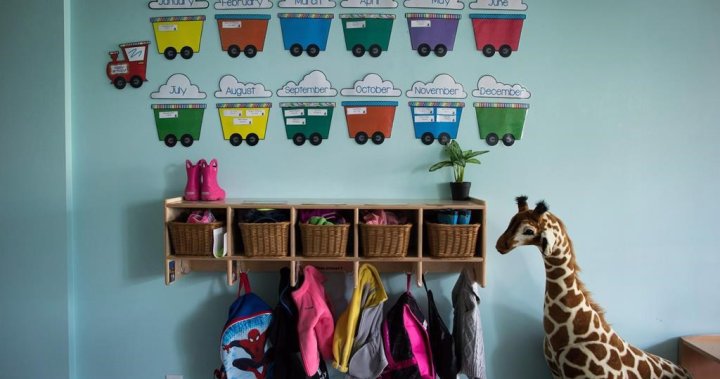
    Alberta has been facing an E. coli outbreak in daycares in and around Calgary, but there’s been no sign of the bacteria rearing its head in Saskatchewan.

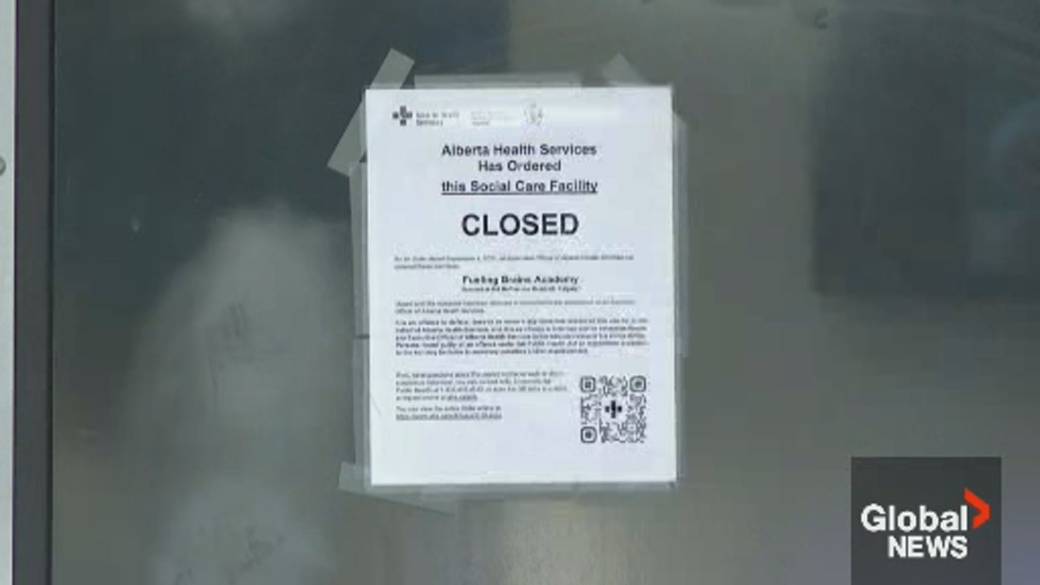
    Alberta Health Services has declared an E. coli outbreak at six Calgary daycares and five additional sites “that share a central kitchen.”


    Click to play video: 'E. coli outbreak: Calgary mother blasts ‘morally corrupt’ child-care provider'


    E. coli outbreak: Calgary mother blasts ‘morally corrupt’ child-care provider


    AHS confirmed the outbreak last week.

    Story continues below advertisement

    As of Sept. 14, AHS said that there were 329 lab-confirmed cases linked to the outbreak. Thirteen patients are currently in hospital care, all of which are children.

    Eight children have been discharged since yesterday and are now recovering at home.

    A total of 20 patients — 19 children and one adult — have now been discharged from hospital since the beginning of the outbreak.

    There are 22 secondary transmissions, all of which are linked to the outbreak through shared households.

    The public health authority said 11 total sites have had a closure order issued.

    Symptoms of an E. coli infection can include fever, abdominal pain, vomiting and watery or bloody diarrhea. Severe illness can sometimes require hospitalization.

    Story continues below advertisement

    Dean Dodge is the CEO for the YMCA in Saskatoon and said they have over 300 kids in their licensed childcare.

    “We have childcares that are 35 spaces up to 90 spaces,” Dodge said.

    He said they have breakfast, lunches and snacks throughout the day for their kids which is prepared by professional cooks.


    Click to play video: 'Parents question government’s role in childcare safety after E. coli outbreak'


    Parents question government’s role in childcare safety after E. coli outbreak


    “It’s a highly regulated industry.”

    He said the situation in Calgary was incredibly disconcerting, noting over 300 families were impacted.

    “The food that we produce stays in that centre. We don’t transport food, which there’s a risk to transporting food.”

    He said if children are sick they don’t come to childcare, and if a child gets sick at childcare parents are contacted by staff to make sure the child gets taken care of.

    Story continues below advertisement

    Dodge explained that they go through licensing and inspection each year, calling it a very extensive process.

    He said the inspection entails things like furnace and boiler inspections, fire extinguisher inspections, and kitchen and food handling inspections.

    “We work regularly with the ministry, consultants and staff every month, every week of the year on all the different pieces that we do.”

    He said inspections are usually scheduled, but noted inspectors will pop in unannounced from time to time as well.


    Click to play video: 'E. coli crisis sparks acts of kindness in Calgary daycare community'


    E. coli crisis sparks acts of kindness in Calgary daycare community


    He said meals follow the Canadian Food Guide, adding that the community has become very diverse and that there is much more variety with meals over the last five years.

    Global News reached out the Ministry of Health and received a statement.

    Story continues below advertisement

    “Licensed child care centres are inspected annually by Saskatchewan Health Authority Public Health Inspectors. General sanitation, infection control measures, and food services are assessed during inspection based on established criteria,” the statement reads.

    The ministry noted that child care facilities in Saskatoon that are affiliated with the ones that were shut down in the Calgary area were inspected within the last two weeks, but noted there were no issues detected.

    “If an issue is found during a child care centre inspection, it is indicated on the centre’s physical license available publicly within the centre.”

    — With files from Global News’ Adam Toy

    &copy 2023 Global News, a division of Corus Entertainment Inc.

    Sask. woman stranded 600 kilometres from home while being refused care in Manitoba hospital

    0

    “I’m praying I will be home by Christmas, but at the rate we are going, I’m not sure.”

    Saskatchewan woman Maureen McBratney from Denare Beach is currently 600 kilometres from home. After her kidneys began to fail in June she was rushed to Flin Flon General Hospital — a 20-minute drive from her home.

    She was then flown 600 kilometres away to Saskatoon to receive the initial emergency dialysis treatment.

    McBratney is not able to return home to become an established as a dialysis patient in Flin Flon without a Manitoba healthcard.

    “It’s not the same as being there with your support system,” McBratney said. “We can talk on the phone and we can video call but it’s not the same as having your daughter give you a hug in person or your grandson wrapping his little arms around your neck.”

    Story continues below advertisement

    McBratney’s daughter Paige Baschuk, has been helping push Saskatchewan and Manitoba to create an agreement between the provinces so those with Saskatchewan residency can access the border town’s dialysis location.

    Baschuk said the response to her letter was positive and the family spoke on the phone with the Northern Regional Health Authority shortly after in mid-August.

    “The right people responded, we felt like this was on track, we kind of let it go a little bit,” Baschuk said.

    They left feeling positive and reassured that the issue would be fixed and McBratney would soon be receiving care closer to her family.

    Two weeks later, the family received bad news on a phone call, saying McBratney would have to stay in Saskatoon.

    In the meantime, the McBratneys have been staying in a friend’s vacant home while they are away.

    “Not only is this an emotionally charged situation, but this is also financially charged for us,” McBratney noted. “It costs money to live here, in the city. We can’t stay here for free.”

    She said they also continue to pay their bills in Denare Beach.

    “We still have a hydro bill, we still have to pay taxes and everything else on our home that everybody else does. We were hoping to be home so we didn’t shut anything off.”

    Story continues below advertisement

    Baschuk said that last they heard, different levels of government will be meeting throughout the month of October to address the policies and McBratney’s situation.

    “The goals that they are working towards now is that mom can come home for a week here and a week there so that she can be home for Christmas.”

    When Global News asked Manitoba Shared Health about McBratney’s situation, they confirmed that they are working towards a solution.

    “We understand the desire for patients to access the care they need at a site that is closest to their home. Current regulations, including professional licensing restrictions for physicians and staff, govern how and when provincial health care can be delivered to patients living in another province,” read a statement from Shared Health.

    “While current regulations do not allow for Creighton residents to access ongoing dialysis care in Flin Flon, efforts are underway to explore future opportunities for collaboration with our Saskatchewan counterparts.”

    The Saskatchewan Health Authority (SHA) said they are included in the collaboration efforts as well.

    “Each province may use its discretion when accepting the ongoing care of out-of-province patients who require hemodialysis services. Saskatchewan and Manitoba have a separate agreement in place for patient access to the Flin Flon Hospital once Manitoba admits them to the program,” read a statement from SHA.

    Story continues below advertisement

    They said they are currently working with the Saskatchewan Ministry of Health, Manitoba Northern Regional Health Authority and Manitoba’s Renal Program to discuss a special arrangement for hemodialysis care.

    &copy 2023 Global News, a division of Corus Entertainment Inc.

    Regina residents upset after learning long-term care home plans to end services

    0

    Regina residents are disappointed after learning the Eden Care Communities (ECC), on behalf of the Regina Lutheran Home (RLH), has made the business decision to end its long-term care services agreement with the Saskatchewan Health Authority (SHA) effective April 11, 2024.

    In a statement from the SHA on Sept. 27, 2023, the decision was made solely by ECC prior to involving the SHA or provincial government.

    “The SHA acknowledges ECC’s decision to no longer provide LTC services and appreciates the decades of service the Regina Lutheran Home has provided to the people of Saskatchewan as a valued and respected affiliate long-term care partner in Regina,” the statement read.

    ‘”The SHA has decided not to pursue purchase of the property at this time. Given the current building is at the end of its lifespan, the SHA determined it may require further assessment and potentially significant repair work.”

    Story continues below advertisement


    Click to play video: 'Specialized long-term care facility site selected in Regina'


    Specialized long-term care facility site selected in Regina


    SHA stated they along with ECC are working together on this transition of care for residents and that plans are being developed to move all current residents to other homes as appropriate spaces become available.

    “We will work with residents and their families individually to consider their options and support appropriate placement within Regina over the next few weeks,” the statement read.

    The RLH is home to 62 residents. The family of one resident is disappointed as their loved one, who has Alzheimer’s, will have to start all over in another facility.

    “I am very dismayed to hear the Lutheran Home is to be shut down and the residents moved to who-knows-where,” stated Todd Miki, in an email statement to Global News.

    “We were told back in April or May that changes were coming to the care home, but I never for a second thought my mother would have to be relocated to another facility.”

    Story continues below advertisement

    Miki’s mother, Joanne, has been a resident at the RLH for many years where she has received care that is described as “splendid and second to none.”

    “I can say without a doubt the care my mother receives at the Lutheran Home is top-notch, and I personally will miss seeing them every weekend when I make my visits to see my mother,” the statement read.

    “I’m very upset about this upcoming change, but I can only hope and assume it’s being done for good reason.”

    A continuing care aide (CCA) at the RLH, who is also the first vice-president with CUPE that covers the former Regina Qu’Appelle Health Region, says it’s a small home-like facility that has many long-term staff employed who did not expect to hear the news.

    “Everybody is devastated about the news,” said Darlene Gilewich, who has worked at RLH for over 39 years.

    “They’re very worried about where their residents are going to be going and the care that they’re going to receive.”

    Gilewich said this move will mean a lot of layoffs and says they have approximately 100 CUPE members that will be laid off.

    “This is going to have a big effect in the city (and) in the Regina area,” said Gilewich. “I feel awful for all the residents who are going through this. All the staff do. We care for our residents. They’re like family to us. We’re their family.”

    Story continues below advertisement

    Global News reached out to ECC on behalf of RLH but did not hear a response by publication.

    &copy 2023 Global News, a division of Corus Entertainment Inc.

    Saskatchewan Ministry of health encourages those eligible to get new COVID-19 booster

    0

    Saskatchewan’s Ministry of Health is encouraging residents who are eligible to get the new COVID-19 booster to help reduce their risk.

    The government is offering the new Moderna bivalent booster, which became available Tuesday, Sept. 19, to those over the age of 70, and residents over the age of 50 in First Nations and Métis communities.

    “If you’re vaccinated, the likelihood of getting COVID is infinitely lower, and even if you do get it, it’s more likely to be a milder illness than if you were unvaccinated,” says Dr. Saqib Shahab, chief medical health officer.

    This new booster became available after more than 11 outbreaks in long-term care homes in just the month of September.

    Story continues below advertisement

    However, Shahab says they saw fewer and fewer people get the previous booster.

    “The uptake for the booster was slightly lower, especially in the younger people,” Shahab says.

    Shahab says when the new shot is available for everyone, the choice is all dependent on your situation.

    “Most of us have had a vaccine, many of us have actually had COVID over the last year or two. So really, I think it depends on your own personal assessment of your risk factors. Or do you live with someone at high risk? Or do you want to avoid getting COVID or influenza while you’re travelling? So I think it’s very much now a personal decision,” Shahab says.

    When Global News asked if boosters will become annual, like influenza shots, Shahab said it’s “hard to say.”

    “We definitely recommend the COVID vaccine along with the influenza vaccine that will be recommended every year. I think we’ll have to follow the science and the epidemiology so we’ll need to monitor COVID just like we monitor influenza and other respiratory viruses and advise accordingly,”  Shahab says.

    Neither the Saskatchewan Health Authority nor the Mental Health Ministry could confirm when the boosters will be available to the general public.

    &copy 2023 Global News, a division of Corus Entertainment Inc.

    Some parents and teachers concerned as Sask. pronouns policy set to be implemented

    0

    New education policies from the Sask. Party government are on the horizon as the province looks to start the legislature early on Tuesday to invoke the notwithstanding clause and push through their policies.

    But with these policies come fear and confusion, as Saskatchewan Teachers Federation president Samantha Becotte said many teachers and parents have shown concern about how this will impact students, particularly the most vulnerable.


    Click to play video: 'Moe defends decision to recall assembly over pronouns policy'


    Moe defends decision to recall assembly over pronouns policy


    “We want to ensure that classrooms are safe and caring learning environments where all students are welcomed and feel safe to express themselves,” Becotte said.

    Story continues below advertisement

    Former education minister Dustin Duncan announced back in August new education policies that would require parental permission if a child under the age of 16 wanted to go by a different name or pronouns.

    The policies also require parents to be informed about the sexual health education curriculum and parents will have the option to have their child opt out of those classes.

    Lastly, the policies called for school boards to stop their involvement with third-party organizations connected with sexual health education as the ministry reviewed educational resources.

    Only teachers and professionals employed by government ministries or the Saskatchewan Health Authority would be able to present sexual health material.

    Many organizations contested these policies, with a Saskatchewan judge granting an interim injunction and Premier Scott Moe vowing to use the notwithstanding clause to override that injunction and make sure the policies were put in place.

    Becotte said she doesn’t see why there’s a rush to implement these policies, adding there’s an underlying message that comes with them that teachers are also concerned about.

    “It’s this false narrative that is being spread by the government that teachers can’t be trusted, and that teachers aren’t professionals and aren’t doing what is best for kids.”


    Click to play video: 'Scott Moe vows notwithstanding clause after judge halts pronoun policy'


    Scott Moe vows notwithstanding clause after judge halts pronoun policy


    Yorkton’s school division sent out leaflets back in September debunking myths about what takes place in the classroom — one of the stranger myths being the claim that students are allowed to be “furries” in school and are able to use litter boxes instead of washrooms.

    Story continues below advertisement

    “We are hearing these misconceptions from various sources including social media platforms, community forums, and in some instances, direct communications with concerned individuals,” said Quintin Robertson, representative for Good Spirit School Division, back in September.

    Yorkton’s school division isn’t the only school dealing with these kinds of rumours, with the Saskatchewan School Boards Association saying back in September that other divisions are dealing with the same kind of misinformation.

    Becotte called those narratives conspiracies, adding that the underlying message around the pronouns policy felt similar.

    “I just see it as a tactic from this government to mislead the public about the realities of public education.”

    She speculated whether this was possibly an attempt to further privatize the education system in the province.


    Click to play video: 'Premier Moe ‘dismayed by judicial overreach’ in pronoun policy halt, vows to pass legislation'


    Premier Moe ‘dismayed by judicial overreach’ in pronoun policy halt, vows to pass legislation


    Saskatchewan’s education system allows for independent schools to receive government funding if they meet certain criteria, falling under the label of Qualified Independent Schools.

    Story continues below advertisement

    The Saskatchewan Distance Learning Centre was also created recently as the province’s newest Crown corporation, offering students a means to access school courses remotely through that corporation.

    “We have seen that trend here in Saskatchewan.”

    Becotte said the government is creating different education options and has created legislation for further options, “and then sowing those seeds of division and undermining the public’s trust in public education.”

    She said public education is the best option for this province, noting it creates future success for all kids, rather than creating a system where there are haves and have-nots.

    As a parent, Becotte said she worries about what her children’s experience will be in the public education system 10 years down the road.

    Looking forward to the implementation of the new education policies, Becotte said teachers haven’t had much direction from school divisions or the Ministry of Education, noting it has many worried.

    She said the policy to pause all third-party presentations regarding sexual health education was fairly clear, but added even that has created further questions about what qualifies for sexual health education.

    “Teachers have asked me, what is considered sexual health education? Is it Science 9, that talks about reproduction, which includes contraceptive techniques? Those science topics, are those considered sexual health? Is it the healthy relationships conversation, and consent conversations?”

    Story continues below advertisement


    Click to play video: 'Sask Party using ‘powers of government to bully vulnerable kids’, Saskatchewan NDP says'


    Sask Party using ‘powers of government to bully vulnerable kids’, Saskatchewan NDP says


    Becotte said there’s still a lot of confusion around those guidelines, which she added have not been provided to teachers by school divisions.

    She said school divisions are in a position where they have to take a close look at their policies, adding that many current policies will contradict these new upcoming ones.

    “Many school divisions across the province have policies around supporting student learning that involves including or engaging with organizations in the community. They have policies around creating safe and caring learning environments.”

    She said this leaves teachers in a difficult position of not knowing what the correct thing to do is.

    Becotte said some teachers are questioning whether they should be following the Ministry of Education and school division, or upholding child student rights.

    Story continues below advertisement

    Part of Duncan’s announcement was that parents would now be allowed to have their kid opt out of sexual health education, but Becotte said that’s always been an option.

    “It has always been in place, it’s in division policies.”

    She said it’s also regular practice for teachers to update parents on what is going on in the classroom, noting she would reach out to parents, letting them know when they’d start trigonometry and when the assessment dates were.

    “I get a newsletter from my children’s teachers on a monthly basis as well as I get updates throughout the month on what’s happening in the classroom.”

    Becotte said she hasn’t seen a single teacher in the province push parents away, noting they welcome conversations with them.

    “It’s part of our professional responsibility to communicate home with parents.”


    Click to play video: 'Q and A: Psychiatrist weights in on Saskatchewan’s new pronoun, sex ed policies'


    Q and A: Psychiatrist weights in on Saskatchewan’s new pronoun, sex ed policies


    She said there are still some major concerns regarding public education in Saskatchewan that people should be worried about, but added that these new policies aren’t aimed at solving them.

    Story continues below advertisement

    “We have a near crisis in many of our divisions due to chronic underfunding that continues to happen and we have a lack of resources and supports despite the messages that we’re hearing from some of those political leaders, whether it’s the minister of education or the premier of this province, that say students will be wrapped in supports. Those supports in many areas of this province do not exist.”

    The Sask. Party had said that with the new pronoun policy, supports would be available for kids to get them to a point where they feel comfortable coming out to their parents if they say they don’t feel comfortable getting parental permission for different names or pronouns.

    Global News reached out to the Saskatchewan School Boards Association, but it said due to the matter being in front of the court, it couldn’t comment at this time.

    Global News also reached out to the Ministry of Education for comment regarding the education policies and was directed to comments Premier Scott Moe has previously made regarding the issue.

    Moe claimed that these education policies will create clarity for parents and teachers, as well as build a more responsive education system.

    When asked why more consultation wasn’t done with experts regarding child impact or legal experts regarding the legislation, Moe said a lot of discussions happened between MLAs and parents.

    Story continues below advertisement

    He said there is an opportunity within a short period of time for the government to look at the existing supports in place for students, adding they’ve been looking at things like rapid access counselling services.

    Moe said school divisions are working on their implementation plans.

    When asked about what sort of guidelines schools have received regarding the pause on third-party organizations presenting sexual health material in classrooms, the province added a statement.

    “It was directed on Aug. 22, 2023, that boards of education must immediately pause involvement with any third-party organization connected to sexual health education as the ministry undertakes review of educational resources to ensure alignment with curriculum outcomes,” the government said. “Only teachers, not outside third parties, will be able to present sexual education materials in the classroom. This directive does not include professionals employed by government ministries or the Saskatchewan Health Authority.”

    “There were no changes made to the curriculum as a result of the new policies. Sexual assault prevention education will continue to be taught by teachers as part of the curriculum,” the statement said.

    — with files from Global News’ Brooke Kruger 

    Saskatchewan’s pronoun policy: what does it mean and how did we get here?

    0

    The government of Saskatchewan will bring forth education policies that have sparked some major debate when the legislature starts back up on Tuesday (today), but how did we get here and what does it all mean?

    Former education minister Dustin Duncan announced back in August new education policies that would require parental permission if a child under the age of 16 wanted to go by a different name or pronouns.

    Story continues below advertisement

    The policies also require parents to be informed about the sexual health education curriculum and parents will have the option to have their child opt out of those classes.

    Lastly, the policies called for school boards to stop their involvement with third-party organizations connected with sexual health education as the ministry reviewed educational resources.

    Only teachers and professionals employed by government ministries or the Saskatchewan Health Authority would be able to present sexual health material.


    Click to play video: 'Moe defends decision to recall assembly over pronouns policy'


    Moe defends decision to recall assembly over pronouns policy


    The ministry suspended Planned Parenthood from presenting in schools back in June due to a child getting a hold of a pamphlet separately from a classroom presentation that was described to have graphic sexual vocabulary.

    Story continues below advertisement

    The pamphlet hadn’t been approved by the school, and the executive director for Planned Parenthood had said it normally doesn’t carry material that teachers weren’t already familiar with, and had contacted the school as soon as it learned about the situation.

    Duncan had claimed that these policies would also create consistency across school divisions, likening the pronoun permission policy to getting parental permission to go on a school trip.

    Premier Scott Moe also claimed these policies were brought down at the request of parents in the province.


    Click to play video: 'Scott Moe vows notwithstanding clause after judge halts pronoun policy'


    Scott Moe vows notwithstanding clause after judge halts pronoun policy


    The new policies raised immediate concerns with several human rights, LGBTQ2, and sexual health organizations.

    Story continues below advertisement

    These organizations included OUTSaskatoon, the Canadian Civil Liberties Association, Egale Canada, UR Pride Centre for Sexuality and Gender Diversity, the Battlefords and Area Sexual Assault Centre, Saskatchewan Teachers Federation and the Saskatchewan Federation of Labour, to name a few.

    The Saskatchewan Advocate for Children and Youth announced that it would investigate the new policies, later coming to the conclusion that the pronouns and name policy in schools violated provincial human rights laws and the Canadian Charter of Rights and Freedoms.

    “We agree with the government’s desire to place a high importance on the involvement of parents and guardians in education. However, this objective can be achieved without imposing such strict rules around consent, which could result in a violation of a young person’s rights under provincial, constitutional, and international human rights laws,” said Advocate Lisa Broda, who conducted the review.

    The Saskatchewan Human Rights Code states that “discrimination because of gender identity or gender expression is against the law in Saskatchewan.”

    The Government of Canada website says a person’s gender identity is each person’s internal and individual experience of gender, noting for some people, their gender identity doesn’t align with their sex assigned at birth, which is often described as transgender or trans.

    It added that a person’s gender expression is how a person publicly presents their gender, which can be shown through behaviour, outward appearance, body language, voice, or the pronouns they use.

    Story continues below advertisement


    Click to play video: 'Sask Party using ‘powers of government to bully vulnerable kids’, Saskatchewan NDP says'


    Sask Party using ‘powers of government to bully vulnerable kids’, Saskatchewan NDP says


    Broda claimed that the age requirement of 16 isn’t fair to students because it does not demonstrate the individual’s capabilities.

    “Many young people under the age of 16 will have the capacity to make this type of decision. Giving them the chance to demonstrate capacity is an important step in accommodating their right to their gender identity.”

    Many advocates have pointed to statistics that trans people are far more susceptible to things like suicide, but those numbers drop when those people are able to use the pronouns and names they identify with.

    A landmark 2018 study published in the Journal of Adolescent Health found transgender youth who are able to use names and pronouns of their choosing reported a 34 per cent drop in suicidal thoughts and a 65 per cent decrease in suicide attempts.

    Story continues below advertisement

    Moe has been pushing back the entire way, insisting that these new policies, particularly the pronouns and name policy, would protect parental rights, which is not included in the Charter, but which he says are important to Saskatchewan residents nonetheless.

    “It is in the best interest of children to ensure parents are included in their children’s education, in their classrooms and in all important decisions involving their children,” Moe said.

    Restrictions around third-party organizations not being able to present sexual health education at schools shocked some, with Amber Stewart, the executive director for the Battlefords and Area Sexual Assault Centre, saying it was not only detrimental to the centre’s staffing, but also to the education and sexual health of students across the province.


    Click to play video: 'Sask. resident warns of violence in the home'


    Sask. resident warns of violence in the home


    “Our province has the highest rates of STIs, high rates of unplanned pregnancy, high rates of interpersonal violence, and taking away education is not going to stop kids from having sex,” Stewart said.

    Story continues below advertisement

    She stressed that not every parent is a safe person for these kids to be around, noting some parents are kicking their kids out of the house based on who they identify as.

    Stewart added that some teachers aren’t comfortable covering sexual health and prevention topics, which is why organizations like hers exist.

    “They aren’t comfortable necessarily delivering this information, just as I wouldn’t be comfortable walking in and teaching Grade 9 math, that’s not my thing. But I can come in and talk about consent all day long.”

    Regarding the government’s announcement that parents would be able to opt their kids out of sexual health education classes, Saskatchewan Teachers Federation president Samantha Becotte said that’s always been an option for parents and isn’t anything new.

    Court and the Notwithstanding Clause

    Lawyers for UR Pride sought an injunction against the pronoun policy at the end of September, arguing that it could cause teachers to out or misgender kids and that it violates Charter rights.

    Story continues below advertisement

    The province’s lawyers said the policy was being misinterpreted.

    Moe made it clear in the lead-up to the court’s decision that his government would use whatever tools necessary to keep the policy in place, and immediately after a Saskatchewan judge granted an interim injunction, Moe vowed to use the notwithstanding clause.

    The clause, sometimes known as “the override power,” allows governments to override some rights within the Canadian Charter of Rights and Freedoms.

    That override can’t be challenged and expires after five years, though a government can renew it. The only way to remove the clause from a policy is for the enacting government to rescind the use of the clause, or for that government to get booted out of office through an election and for the new government to rescind it.

    “If people aren’t happy with the use of the notwithstanding clause, if they aren’t happy with how the government has violated rights, they can vote them out,” explained Sarah Burningham, assistant professor at the college of law at the University of Saskatchewan.


    Click to play video: 'New Saskatchewan education minister responds to gender, sex-ed. policy backlash following cabinet shuffle'


    New Saskatchewan education minister responds to gender, sex-ed. policy backlash following cabinet shuffle


    The Saskatchewan Legislature starts back up on Tuesday after Moe announced that it would be starting early so that the notwithstanding clause could be invoked and the education policies could be implemented as quickly as possible.

    Story continues below advertisement

    This has left teachers and schools feeling unsure and confused about the next steps, with Becotte wondering why these policies were being rushed through, adding teachers haven’t received any guidelines from the Ministry of Education.

    She explained that the Ministry would direct school divisions, who would then direct teachers, but Becotte noted that things haven’t been very clear.

    “Unfortunately, it just has been so confusing for everyone in this process. Many school divisions haven’t set out clear policies and processes that would direct teachers on what they need to be doing.”

    Becotte said in terms of the third-party organization ban, that message has been quite clear, but there remain questions about what is encompassed in sexual health education and what organizations are banned.

    She said some teachers are even questioning whether they should be following the direction of school divisions and the Ministry.

    “Teachers are questioning, ‘Do I follow my school division and the Ministry, or do I uphold the child student rights?’ It’s a scary position for a lot of teachers to be in, wondering what they might get challenged on.”

    Global News reached out to the Ministry of Education and the Saskatchewan School Boards Association for comment.

    The Saskatchewan School Boards Association said the matter is still before the courts and couldn’t comment at this time.

    Story continues below advertisement

    The ministry directed Global News to comments Premier Scott Moe has previously made regarding the issue.

    Moe claimed that these education policies will create clarity for parents and teachers, as well as build a more responsive education system.

    When asked why more consultation wasn’t done with experts regarding child impact or legal experts regarding the legislation, Moe said a lot of discussions happened between MLAs and parents.

    He said there is an opportunity within a short period of time for the government to look at the existing supports in place for students, adding they’ve been looking at things like rapid access counselling services.

    Moe said school divisions are working on their implementation plans.

    When asked about what sort of guidelines schools have received regarding the pause on third-party organizations presenting sexual health material in classrooms, the province added a statement.

    “It was directed on Aug. 22, 2023, that boards of education must immediately pause involvement with any third-party organization connected to sexual health education as the ministry undertakes review of educational resources to ensure alignment with curriculum outcomes,” the government said. “Only teachers, not outside third parties, will be able to present sexual education materials in the classroom. This directive does not include professionals employed by government ministries or the Saskatchewan Health Authority.”

    Story continues below advertisement

    “There were no changes made to the curriculum as a result of the new policies. Sexual assault prevention education will continue to be taught by teachers as part of the curriculum,” the statement said.

    — with files from Brooke Kruger and The Canadian Press

    Saskatchewan sexual assault centres say they’re banned from schools, but shouldn’t be

    0

    “We have seen a massive uptake in grade 5 and 6 students watching PornHub and watching pornography.”

    That comes from the executive director of the Battlefords and Area Sexual Assault Centre, Amber Stewart, who is calling for the Saskatchewan government to allow organizations like theirs to present prevention education in classrooms again.

    As part of the government’s Parental Inclusion and Consent Policy, also known as the pronoun policy, that was announced in August, third-party organizations are no longer able to present sexual health material in schools, but Stewart says that shouldn’t include sexual assault centres.


    Click to play video: 'North Battleford, SK. teacher sheds light on school struggles with violence and mental health'


    North Battleford, SK. teacher sheds light on school struggles with violence and mental health


    “With very little clarity or direction and very vague language in this policy it has impacted organizations that do not deliver sexual health specific information but simply all organizations that provide information on anything direct or indirectly related to sex or gender,” Stewart said.

    Story continues below advertisement

    Former education minister Dustin Duncan announced back in August new education policies that would require parental permission if a child under the age of 16 wanted to go by a different name or pronouns.

    The policies also require parents to be informed about the sexual health education curriculum and parents will have the option to have their child opt out of those classes.

    Lastly, the policies called for school boards to stop their involvement with third-party organizations connected with sexual health education as the ministry reviewed educational resources.

    “Only teachers, not outside third-parties, are able to present sexual education materials in the classroom. This directive does not include professionals employed by government ministries or the Saskatchewan Health Authority,” the provincial government explained in a statement.


    Click to play video: 'Pronoun policy leads to heated debate in the Saskatchewan Legislative Building'


    Pronoun policy leads to heated debate in the Saskatchewan Legislative Building


    Stewart said the Battlefords and Area Sexual Assault Centre (BASAC) has been working in the community for over 40 years to support survivors and raise awareness to sexualized violence.

    Story continues below advertisement

    “Over the last number of years, we have maintained a strong focus on prevention education and establishing ourselves as not only experts in the community but trusted adults to the students we are seeing in the schools. This education has been created to be in line with the Saskatchewan education curriculum and is delivered in classrooms from K-9.”

    She said during the 2022-23 school year they presented sexual violence prevention education programs across 14 different schools to 3,051 students.

    “Children and youth having tools to understand sexual abuse, consent, body safety, etc. lowers the risk of those same children and youth becoming victims of abuse.”

    Stewart said she has two full-time staff who solely focus on giving presentations at schools, adding that before the education policy announcement they were fully booked until the end of December. She said their presentations fall in line with the Saskatchewan education curriculum.

    Stewart said they receive hundreds of thousands of dollars in grant funding to present this material in schools, adding it could be detrimental to their organization if they lose it.


    Click to play video: 'Protests outside Saskatchewan Legislative Building as pronoun policy set to be introduced'


    Protests outside Saskatchewan Legislative Building as pronoun policy set to be introduced


    “If we’re not allowed to do that we could be in a financial position that could greatly jeopardize our organization. If we have to start giving money back because we can’t do the job that we said we were going to do, I don’t know that we keep our doors open.”

    Story continues below advertisement

    She said they are core-funded through the provincial ministry of justice, which she said wasn’t aware of these policies coming down, but added that the ministry has been supportive of her organization and has been working to advocate for them.

    Stewart reached out to Education Minister Jeremy Cockrill, who is also her MLA, saying she has received vague answers and that these rules won’t be looked at until the legislation is passed.

    She said many organizations are being thrown into this umbrella of third-party organizations that are barred from presenting in schools, noting all sexual assault centres in the province are affected.

    The executive director for the Saskatoon Sexual Assault and Information Centre, Reagan Conway, took to Tiktok with a video explaining their issues with the new education policy, noting it was very vague, and adding that it is impacting organizations that don’t present sexual health material in classrooms.

    @ssaic1

    ♬ original sound – SSAIC

    Conway said they’ve worked with Saskatoon Public Schools and the Greater Saskatoon Catholic Schools for 17 years.

    The video talked about the different programs they present in schools and the thousands of kids they’ve presented to, adding that these presentations closely follow the health curriculum dictated by the provincial government.

    “SSAIC has always made sure our presentations are child friendly and aligned with the Saskatchewan Health Curriculum,” Conway said.

    Story continues below advertisement

    Stewart explained some of the programming they present in schools, prefacing that everything they talk about comes with information for kids to take back home to show their parents, and a letter is sent home beforehand letting parents know that these presentations will be happening.

    She said from time to time they’ve received calls from parents asking why a sexual assault centre is presenting in their kid’s school, but everyone has been okay with it after it has been explained to them.

    “For our little ones, for kindergarten to grade 1, we use a program called Protect Yourself Rules. So this program is about rules that are safe and unsafe touches; tell a grown-up; shout, run, tell; doesn’t matter who it is; stranger safety; and hitting is wrong.”


    Click to play video: 'Moe defends decision to recall assembly over pronouns policy'


    Moe defends decision to recall assembly over pronouns policy


    She said that’s a four session program that has a video and a booklet, which the kids can take home for them to show their parents and talk about it with them.

    Story continues below advertisement

    Stewart said they also work to normalize using proper terms for private parts.

    As kids get older, Stewart said they offer the Go Guys and Go Girls program, which is condensed into a seven week program where they talk about emotions and expressing them in a healthy way, good and bad emotions and how they affect you, image and self-esteem.

    “In this we do talk about gender, but we talk about it as gender stereotyping and how these beliefs can impact someone’s self-esteem. So it’s things like ‘boys should be tough and boys shouldn’t cry, and girls should be polite.’”

    She said it also delves in relationships in terms of healthy friendships and dating relationships, as well as consent.

    “Like everyday consent as well as sexual consent, because I bet if you asked education or even other adults they couldn’t give you the legality of what the consent law is in Saskatchewan.”

    She said as kids get into grade 8 and 9 they cover things like how you can’t consent when alcohol is involved, which she says is very important for both boys and girls to understand.

    Stewart said the province has asked for their school material for them to review, saying she’s concerned that the government might try to remove things from their presentations, as well as the Saskatchewan curriculum.

    Story continues below advertisement


    Click to play video: 'Scott Moe vows notwithstanding clause after judge halts pronoun policy'


    Scott Moe vows notwithstanding clause after judge halts pronoun policy


    She said they base their programming off of best practices, but are also responding to what they are hearing from kids.

    “Things have changed, but the kids are telling us what is going on.”

    Stewart said schools are calling organizations like hers to come in to address certain behaviours like sexual language, noting these kids are learning these things from sites like PornHub.

    She added that things like sexting are also on the rise.

    “We listen to the kids and we listen to the teachers as the trends change.”

    She said parents don’t always know how to have these conversations, adding that their organization is a great way to start those talks.

    Story continues below advertisement

    Stewart also gave some statistics.

    “Saskatchewan has the highest rates of interpersonal violence of all of the Canadian provinces, at twice the national average. In addition, Saskatchewan’s rate of sexual assault is one of the highest in Canada, a rate of 104 sexual assaults per 100,000 persons.”

    She said statistics show that one in three girls and one in six boys will become a victim of sexualized violence and that children ages 7-13 are the most vulnerable to child sexual abuse.

    “Educating children and youth on the topics of consent, body safety and sexual abuse enables them to have a voice and reach out to a trusted adult if they are being abused, taking away the education is taking away that voice.”

    Stewart says they are working to combat the low rates of reported sexual assault in Canada, noting out of 1,000 sexual assault roughly 33 are reported to police.

    Premier Scott Moe claimed in a previous interview that these education policies will create clarity for parents and teachers, as well as build a more responsive education system.

    He also claimed these policies were brought down at the request of parents in the province.

    When asked why more consultation wasn’t done with experts regarding child impact or legal experts regarding the legislation, Moe said a lot of discussions happened between MLAs and parents.

    Story continues below advertisement

    He said there is an opportunity within a short period of time for the government to look at the existing supports in place for students, adding they’ve been looking at things like rapid access counselling services.

    Moe said school divisions are working on their implementation plans.

    When asked about what sort of guidelines schools have received regarding the pause on third-party organizations presenting sexual health material in classrooms, the province added a statement.

    “It was directed on Aug. 22, 2023, that boards of education must immediately pause involvement with any third-party organization connected to sexual health education as the ministry undertakes review of educational resources to ensure alignment with curriculum outcomes,” the government said. “Only teachers, not outside third parties, will be able to present sexual education materials in the classroom. This directive does not include professionals employed by government ministries or the Saskatchewan Health Authority.”

    “There were no changes made to the curriculum as a result of the new policies. Sexual assault prevention education will continue to be taught by teachers as part of the curriculum,” the statement said.

    Global News reached out to the provincial government for comment and received a statement.

    When asked for a description on what all encompasses sexual education material, the government said, “The Ministry of Education has a process to review and recommend resources that support sexual health education, which is part of the health education curricula. School divisions may choose to use those or other materials, as long as they align with provincial directives, to support the needs of their students. ”

    Story continues below advertisement

    The province said third-party organizations continue to be important in schools, giving an example of sexual assault centres still providing services like counselling.

    “The Community Safety and Wellbeing Branch (CSWB) within Integrated Justice Services is working with its community partners to ensure all partners understand this and address any questions.”

    “CSWB is actively working to support the policy direction of government alongside its community partners. At no point has CSWB agreed to advocate on behalf of any agency against the new policy, nor is that the role of the branch,” the statement added.

    ‘They are muzzled’: Retired nurse horrified by Saskatoon RUH conditions

    0

    A retired Saskatoon nurse said she left the Royal University Hospital (RUH) in shock last week after witnessing the conditions inside the facility.

    “It was incredulous, what I was seeing,” said Tami Fehr. “There were stretchers in every hallway, numerous paramedics caring for their patients in the hallway, every corner I turned there were patients on stretchers in every little cubby.”

    Fehr visited RUH last week to help a family member through a medical emergency.

    She said her family member was lucky enough to be sent an available ambulance and that she has no critiques about the care her family member was given, but said the conditions inside the walls of the hospital were appalling.

    She said the hallways were packed with patients and tucked into storage rooms, on recliners and stretchers without access to call bells and oxygen hookups.

    Story continues below advertisement

    Her family member was placed on a bed in the hallway before being admitted to “a hole” of a room. While in the hallway, the patient had to undergo an ECG, which involves the exposure of the chest, a procedure that should have been performed privately.

    “When I did try to get help for my family member, there was no one at the nurses’ pod because they were busy helping other patients. Every shift they work is like this. Who could possibly recruit or keep staff in this working environment?”

    She noted that Saskatoon hospitals serve not only the city, but the northern half of the province.

    “Would Scott Moe or Andrew Will want their pants changed in the hallway? Not likely, but that is the reality now.”

    Saskatoon Fire Department inspected St. Paul’s Hospital this week after a complaint highlighted overcrowded hallways that were violating fire code requirements. No penalties or fines were issued.

    Now, the fire department is inspecting RUH after the same complaint was made against the hospital, according to assistant Chief Yvonne Raymer.

    Fehr worked 35 years an as RN in the Saskatoon region and said that during her employment, head nurses and managers weren’t afraid to speak up for their ward.

    “Now if they speak up, they are moved or given five wards to manage, or given wards to manage at different sites,” Fehr claimed. “‘Rock the boat’ and you are downgraded in your evaluation and your bonus is affected.”

    Story continues below advertisement

    She said that she learned of a policy that means nurses are not allowed to approach the media with their concerns. According to the Saskatchewan Union of Nurses, the policy is true.

    “I tried to give them an outlet, left contacts to the media, and guaranteed anonymity,” Fehr said. “The staff are afraid of reprimand and of losing their jobs.”

    The letter she left the nurses in the hospital containing media contacts had been taken down.

    “They are muzzled,” Fehr said.

    Saskatchewan Union of Nurses president Tracy Zambory said the current state of nursing is nothing short of a disaster.

    “We are hanging on by our fingernails in this province.”

    She said the province is facing its worst nursing shortage since 2008 and the hospital conditions are worse than they were during the pandemic.

    A survey conducted by the union showed that almost 90 per cent of the time, nurses feel as though it is impossible to give safe care due to the environment they are subjected to. It also showed 81 per cent of members reported times where patients were put at risk as a result of short staffing.

    “This is the truth from the front line,” Zambory said. “The healthcare system itself is in freefall and getting worse every day.”

    Story continues below advertisement

    She said that St. Paul’s hospital administration has reported being 100 to 200 per cent over capacity, 100 per cent of the time.

    Zambory said the provincial government’s plans have, so far, been an utter failure.

    “We have recruited 79 nurses from the Philippines. We are 1,000 full-time equivalents short. 79 registered nurses is not going to make one bit of difference.”

    She claimed most of the new nurses will be implemented without mentors and placed into facilities without other registered nurses.

    “We are so glad that they want to make Saskatchewan their home, but we have no measures that are going to keep them and make them feel like they are safe.”

    Fehr said she has repeatedly sent emails to the Saskatchewan Health Authority’s chief executive officer Andrew Will, Health Minister Everett Hindley and Health Critic Vicki Mowat, outlining her concerns around hospital conditions and nursing shortages.

    “The CEO of the health region should be mandated to make an appearance,” read Fehr’s letter to the province. “They need to actually see the extremely and incredible work these front-line staff are doing. Get out of your cushy office.”

    At the Legislature on Thursday, Hindley said the government is investigating the situation so patients don’t have to be treated in hallways.

    Story continues below advertisement

    “It’s not acceptable and not something that we want to have happen and it just indicates that we don’t have enough room for the patients coming in.”

    He noted that hospitals are in the midst of seasonal pressures that are driving up bed usage.

    “There has been work done previously and investments made to increase the number of complex and acute care beds in some of our hospitals in Saskatoon and Regina as well and providing additional staff. We need to continue these investments.”

    Hindley said the government is working on creating a “broader health care team” and expanding virtual and regional care centres so patients don’t congregate in big facilities. He added his team is also looking to expand the scope of care for pharmacists, paramedics and nurses so people have more options as to where they receive treatment.

    Fehr has asked the province for three fully functioning buildings within Saskatoon with full-scale emergency rooms and acute care centres in each.

    “There is a large percentage of city hospital, I know, that is appointment based. There are floors where it is not acute care. Use the space you have.”

    She said her family member has been traumatized by her experience at RUH.

    “Where is the dignity when your chest is exposed for an ECG, or your pants are changed in a hallway? I used to be proud to be a nurse and work in the health authority, but this is horrendous.”

    2 Regina women frustrated with long waiting lists for biopsies

    0

    Two women from Regina have one thing in common: Cheryl Harvey and Lindsay Rogers both say the wait-list for a biopsy in Saskatchewan is long.

    Rogers is 35 years old and has a family history of breast cancer. She is currently waiting for a biopsy. Harvey is a 59-year-old breast cancer survivor who has been recently diagnosed with breast cancer again.

    These two women have been closer as they’ve joined together to voice the same concern: that Saskatchewan’s wait-list for biopsies is astounding.

    “We’re going through the same thing. And we were brought together by a mutual friend after she was telling me a story about her friend and what her friend was going through,” Rogers said. “I told her, ‘Hey, that sounds like my story.’”

    In April, Rogers found a lump on her left breast. Her doctor examined her in June and found a lump in her right breast as well. She was sent for an ultrasound and received her results in August. Due to her results, Rogers’ new family doctor sent a referral for her to receive a biopsy and to this day, she is still waiting for an appointment for a biopsy.

    Story continues below advertisement

    “I was first told one to two weeks, then three to four, then five to six and two months, two and a half months. Now we’re at three-plus (months) for the third or fourth week in November,” Rogers said. “Based on past experiences, every time I get close to a date, it gets extended. So, we’ll see if that’s actually a reality.”

    Harvey was first diagnosed with breast cancer in 2010. She started treatments at a cancer clinic and was even invited to join clinical trials, which she accepted. One of the policies for that particular clinical trial is that they follow you for 15 years after. So, every year since, Harvey has met with the team every October and she would receive a mammogram every August.

    “Since then, I’ve been clear. Except for this year, any regular mammogram came up, and the very next day the cancer clinic contacted me and said, ‘We’re going to send in a requisition for a biopsy,’” Harvey said.

    Harvey has waited for five and a half weeks to get her biopsy done and now, she has her surgery slated for Nov. 15.

    “The cancer clinic had contacted me and said, ‘Did you go for your biopsy yet?’ No, (I told them). So, they looked into it for me, and I was starting to get really frustrated.”

    Harvey said the oncologist spoke with one of the radiologists that does the biopsies, and suggested she get an MRI. After receiving the MRI, results indicated that Harvey needs a biopsy.

    Story continues below advertisement

    “I was told that they would get a hold of me whenever,” she said. “I was sharing with (a) mutual friend how frustrated I was waiting this long. I already know that there’s something there. And it’s enough that the cancer clinic and the radiologists are worried about that.

    “When I heard Lindsay’s story about how long she’s waited, I became even more frustrated.”

    The two women met with Saskatchewan Health Minister Everett Hindley on Monday. They were informed that Hindley had met with the Saskatchewan Health Authority (SHA), the CEO of the Saskatchewan Cancer Agency and others to try to find resolutions.

    Choking back tears, Rogers told Hindley how this has been impacting her and her family.

    “I never want to hear my mother tell me ever again that she prayed to Jesus to take her, not me,” she said. “I can wait. I can stay strong. But my mom is probably suffering more than I have right now. That’s not OK.”
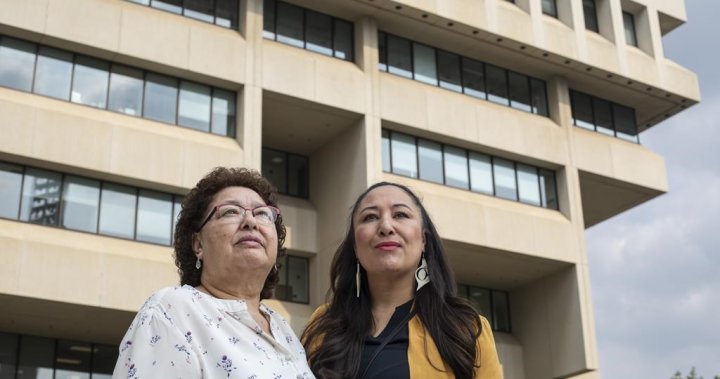
    The women said Hindley assured them that he was going to reach out with the number of biopsies performed every week, the number on the waiting list and the progress that has been made.

    “I really, really hope that Health Minister Hindley keeps his word and keeps us informed of the progress that’s going on,” Harvey said. “He doesn’t have to contact me, but he needs to contact somebody and let them know what’s going on so that we can make sure that our government is held accountable…. Now’s the time to act. Now’s the time to do something.”

    Story continues below advertisement

    After last week’s question period, Global News sat down with Hindley to ask about the biopsies wait-list in Saskatchewan and the steps that are being taken to shorten it.

    “To those women and any other woman in Saskatchewan right now that may be waiting for a mammogram or waiting for a biopsy or the results of that biopsy and the potentially the surgery, we want to ensure that those wait times are as short as possible. That’s the ultimate priority for us,” Hindley said. “The SHA is implemented, and they’re using a couple of locums right now to try and manage that list of patients.”

    The ministry did not give a timeline of when the wait-list for biopsies will start to shorten.


    Story continues below advertisement


    &copy 2023 Global News, a division of Corus Entertainment Inc.