As rural Saskatchewan battles a depleted health-care system, the province has announced 15 new internationally trained doctors are practicing in communities around the province.
The government said the latest recruits under the Saskatchewan International Physician Practice Assessment (SIPPA) program are working in Biggar, Canora, Esterhazy, Fort Qu’Appelle, Humboldt, Kamsack, Kindersley, Lanigan, Melville, North Battleford, Outlook, Preeceville, Shellbrook, Turtleford and Weyburn.
“Started in 2011, SIPPA is a made-in-Saskatchewan program that opens doors for family doctors trained in countries around the world,” the government said in a press release. “The program assesses internationally educated physicians on their medical education and clinical ability as part of the licensure process to practice medicine in Saskatchewan.
According to the government, 278 internationally trained family physicians are working in the province thanks to the SIPPA program. Of those, 77 per cent are working in rural communities.
Story continues below advertisement
Through a return-of-service contract, doctors agree to work in the province for a minimum of three years upon completion of the SIPPA assessment.
The program assesses physicians three times a year, with an annual capacity of approximately 45 physicians.
“Providing seamless care as close to home as possible is a key priority for the Saskatchewan Health Authority, and the SIPPA program helps us accomplish that,” said SHA Chief Medical Officer Dr. Susan Shaw.
“These new SIPPA graduates, along with the retention of locally trained doctors and those already practicing in the province, will strengthen our existing physician workforce.”
Word of new doctors comes after a big announcement from the government Wednesday.
As of April 1, payments under the Rural Physician Incentive Program will increase to $200,000 over five years from their current level of $47,000 over four years.
As well, incentives will now be offered to doctors who are practicing through the SIPPA program.
Sask. physician incentive more than quadrupling for rural and remote communities
The 2023-24 budget dropped in the Saskatchewan legislature on Wednesday with record investment in Saskatchewan health care to support recruitment initiatives, infrastructure renovations, and rural health care.
The government announced an additional $431 million to the Ministry of Health’s budget in comparison to last year, totaling a 6.7 per cent increase.
The total health care funds for the province now stand at $6.9 billion for the year. $4.4 billion of which is targeted funding for the Saskatchewan Health Authority, a 4.5 per cent increase over the last year.
“Our government recognizes the importance of maintaining a modern health care system that not only attracts and retains health care workers, but provides world-class care for patients, residents and communities,” Merriman said. “This year’s budget will also build a stronger, more responsive health system by investing in critical and acute care initiatives and anticipating future growth needs.”
Story continues below advertisement
Saskatchewan’s medical recruitment plan, the Health Human Resources Action Plan will receive a $98.8 million government-wide investment. The money will be distributed through the Ministry of Health, advanced education, and immigration and career training.
$11.9 million will support costs associated with the recruitment of 850 internationally educated health care workers over two years including 600 from the Philippines and surrounding areas, 200 from Saskatchewan, and 50 from Ukraine.
Training seat funding is planned to be expanded as well by $28 million to support the continued implementation of more than 550 education seats that were announced at the end of January. $10 million will fund the second year of the 150-seat nursing expansion supported by the University of Saskatchewan, University of Regina, and Saskatchewan Polytechnic.
This expansion is supposed to kick in for Fall 2023, and includes positions of medical lab assistant, continuing care assistant, primary care paramedic, licensed practical nurse, pharmacy technician, clinical psychologist, physical therapist and mental health and addictions counsellor.
The province also noted that seats for specialized programs not available in Saskatchewan will also be purchased, including respiratory therapy, magnetic resonance imaging technology, diagnostic medical sonography, occupational therapy, electro-neurophysiology and cardiovascular perfusion.
Story continues below advertisement
A new government initiative will try to bring more physician assistants to the province in 2023 to battle staffing shortages although very few details of action were included in the budget.
In September 2022, the government announced the implementation of 250 new full-time positions, and the enhancement of part-time positions. As of February 24, 2023, less than 100 of the positions have been filled.
Saskatchewan health critic says investments for health care in 2023’s tabled budget ‘incredibly disappointing’
“We need the staffing to happen,” said health critic Vicki Mowat. “In terms of the plan, it’s a lot of training seats for post-secondary which are absolutely welcomed but we are talking about things that are years down the road and very short on details. We don’t even know what the break downs of the seats looks like.”
To incentivize the province’s recruitment programs, the Saskatchewan government said it will be offering rural and remote incentives, student loan forgiveness, and placement bursaries totaling nearly $2.86 million.
Story continues below advertisement
The new budget claims to offer $200, 000 to recent Canadian and international medical graduates who establish a practice in rural Saskatchewan in exchange for five years of service.
Infrastructure investments were outlined in the budget to address surgical wait times as the province set a goal to perform a record $103, 000 surgeries this year, exceeding pre-pandemic levels. Infrastructure highlights include:
$98.6M investment for the Victoria Hospital redevelopment project in Prince Albert.
$65.7M for maintenance and equipment, which is a 15 per cent increase.
$38M investment for the Weyburn General Hospital redevelopment project.
$20M investment for the La Ronge Long Term Care project.
$10M investment for the Grenfell Long Term Care replacement project.
$10M investment for Regina Long Term Care specialized beds.
$5.2M in funding for the St Paul’s Hospital Front Entrance Redevelopment in Saskatoon.
$2.6 million in new funding to initiate work on other key infrastructure priorities, including developing plans for the Rosthern Hospital, Battlefords District Care Centre, and St. Anthony’s Hospital in Esterhazy.
$1M for the Estevan Long-Term Care redevelopment project.
$1M for the Watson Quill Plains Lodge redevelopment project.
$500,000 for the Yorkton Regional Health Centre replacement project.
$500,000 to continue planning and developing the Regina parkade.
64 permanent acute and complex care beds are to be split between Saskatoon’s Royal University Hospital and Regina’s Pasqua Hospital, using $20 million of the budget.
Story continues below advertisement
Additionally, $39 million will provide long term care homes and senior living support with additional beds and assistants. There were no details on how the long-term care assistants would be acquired.
“If you are a health care worker, working short, burnt out, and hoping that the government will finally listen to medical doctors over their own spin doctors and make bold investments to stabilize our health care system, this budget, it doesn’t help you,” said opposition leader Carla Beck.
“We don’t see anything that is meaningfully going to change the state of our health care system.”
A Saskatoon family physician who was looking forward to some primary care reform after Saskatchewan’s budget announcement at the legislature on Wednesday was instead left disappointed.
“I just didn’t really see that,” said Dr. Adam Ogieglo from Lakeside Medical Clinic. “More or less, it comes down to we need more family doctors.”
Wednesday, the Saskatchewan government announced an additional $431 million to the Ministry of Health’s budget in comparison to last year, totaling a 6.7 per cent increase.
Total health-care funding for the province now stands at $6.9 billion for the year, $4.4 billion of which is targeted for the Saskatchewan Health Authority, a 4.5 per cent increase over the last year.
Story continues below advertisement
Saskatchewan’s medical recruitment plan, the Health Human Resources Action Plan, will receive a $98.8 million government-wide investment. The money will be distributed through the Ministry of Health, advanced education, and immigration and career training.
The plan is aimed at bringing more physicians and practitioners to the province and offering additional training seats to education programs.
Sask. healthcare system ‘dissolving’
“We’ll have to kind of see how things sort of flesh out in terms of some of the fine details but I didn’t see anything specifically geared towards family medicine, apart from seats, which was nice to see some additional training spots for family doctors in the province,” Ogieglo said.
Ogieglo explained that Saskatchewan’s current system for paying medical professionals isn’t all that enticing.
Story continues below advertisement
“We pay per patient encounter. Whether it’s a 15-minute encounter or a one-hour encounter, the amount the one gets paid is the same. Complex care of an aging population with more complex medical needs is not being adequately addressed in our current system. It is going to require an investment change.”
He noted that other provinces are making system changes toward funding of family health teams.
“If we don’t do it, we’re going to fall behind and doctors are going to leave, (even) new graduates,” said Ogieglo. “We can train as many family medicine residents as we want to, but if the grass is greener on the other side of the fence, you know, they’re mobile.”
Saskatchewan health minister responds to retention rates among doctors, nurses serving rural communities
Documents obtained by the Canadian Union of Public Employees (CUPE) show that the Saskatchewan government is paying at least $730,000, and potentially more, for private staffing solutions in the health-care sector.
This is costing the government a lot of money and is negatively affecting morale in the public sector, the union says.
The numbers were disclosed to CUPE as part of its collective agreement and bargaining negotiations. Saskatchewan Health Authority (SHA) documents showed the start and end date of each contract, the contracting agency, the name of the contractor and the total cost of each contract.
The released documents covered only a part of the province, however. CUPE could confirm that in the North Battleford and Meadow Lake area alone, $732,000 was spent on licensed practical nurses in private contracting.
Story continues below advertisement
“There is no transparency, but if these are the numbers already revealed, God knows how much the government is spending in total,” Bashir Jalloh, president of CUPE, said.
According to Jalloh, the larger issue is that private contracts are undermining the public sector.
Saskatchewan’s health minister defends province’s private, public health-care policies
“There are two big issues here. First, the government is spending way more money on these contracts. A continuing-care assistant gets paid around a third more if they work for a private company. That leads to the second issue: the current public staff losing morale or leaving and switching to private contracts themselves.”
Jalloh said this is causing a lot of health-care workers to leave the province.
“The Saskatchewan government is very focused on recruitment. They are recruiting a lot of people, but we notice that many of those people are not staying in the province. We are asking the government to also start paying attention to the retention of our members.”
Paying higher wages and offering additional benefits, such as covering travel, accommodations and meal allowances, could help, said Jalloh.
“If the government can afford to pay private contractors, they can afford to invest in Saskatchewan workers. We need long-term solutions, not costly temporary band-aids.”
The Saskatchewan government said in a statement to Global News:
“The Saskatchewan Health Authority (SHA) primarily utilizes contract staffing to help minimize service disruptions while recruitment is underway, and this includes a number of hard-to recruit positions in rural and remote locations. As vacancies (in the public sector, red.) are filled across the province, the SHA will phase out our reliance on contract staff.”
Saskatchewan government emails warned of health-care collapse ahead of COVID patient transfer
A report created by the Saskatchewan Human Rights Commission was brought forward on Thursday and delved into concerns of racism and discrimination at the College of Medicine after outcry back in 2020.
A group of physicians came forward highlighting concerns about racism and inequity in the medical profession, as well as the Saskatchewan medical education system.
Specific recommendations were made through a document created by the physicians called “9 Calls to Action” to address structural racism and create a more equitable learning environment.
A letter was then published on Aug. 5, 2020 by Dr. Adebola Obayan called “My Experience with Racial Discrimination in Residency,” in which he talked about incidents of discrimination and mistreatment he experienced during his time in medical residency in Saskatchewan.
Story continues below advertisement
A group of 19 physicians affiliated with USask then came forward on Sept. 1, 2020, with a letter demanding changes at the College of Medicine, as well as an investigation into allegations of past discrimination and mistreatment.
An investigation from the Saskatchewan Human Right Commission then began with an invitation from the College of Medicine and the University of Saskatchewan.
The report that was brought forward on Thursday recognized that understanding the intrinsic equality and value of human beings was fundamental, noting it could ultimately affect the lives of physicians and patients alike, giving several examples:
On May 21, 2020, Samwel Uko, a 20-year-old Black Canadian, sought emergency care for a mental health issue at the Regina General Hospital. He was removed from the hospital, without being triaged or receiving care, and was later found dead in Wascana Lake.
On Sept. 28, 2020, Joyce Echaquan, a 37-year-old Atikamekw woman, died in the Centre hospitalier de Lanaudière in Saint-Charles-Borromée, Quebec, having been subjected to verbal abuse. Racism and prejudice were contributing factors in her death.
In July 2017, the Saskatchewan Health Authority offered an apology after an independent report described the experiences of Indigenous women who were coerced into tubal ligation procedures within the Saskatoon Health Region.
On Sept. 20, 2008, Brian Sinclair, a 45-year-old Indigenous man from the Fort Alexander First Nation, died at the Health Sciences Centre Emergency Department in Winnipeg, Manitoba, having waited for 34-hours without assessment or treatment.
Inquests were launched into the deaths of Mr. Uko, Ms. Echaquan, and Brian Sinclair, and each of the subsequent official reports found racism to be a factor in their deaths.
The 2015 report of the Truth and Reconciliation Commission of Canada and the 2019 report of the National Inquiry into Missing and Murdered Indigenous Women and Girls have further documented anti-Indigenous discrimination within Canada’s healthcare systems.
The Truth and Reconciliation Calls to Action specifically ask medical and nursing schools to provide training in intercultural competency, confliction resolution, human rights, and anti-racism.
Story continues below advertisement
The commission gathered information regarding discrimination in the health sector that started in November 2021 with conversations with stakeholders.
It noted the initiative didn’t have the aim of conducting formal investigations into allegations, but said in several cases there was specific enough allegations that formal human rights complaints could have been made.
The commission said people who reported experiencing discrimination often described several incidents.
“For me, as a student, I’ve had multiple encounters. Whether it’s someone making a joke about a person of colour, or someone saying things to me directly about my skin colour or my ethnicity, I often times feel silenced. Honestly, like it was a pretty small incident, but it had been repeating over and over … making weird comments about my skin tone,” read one comment.
Some of the respondents described instances of faculty using outdated and derogatory terms like “Orientals”, or slurs like the “n” word.
A few students felt like they dealt with excessive criticism because of their race, and others wanted staff and faculty to have a better understanding of race issues to avoid making inappropriate comments.
Racist attitudes and behaviours towards patients were also reported.
Cases of sexism were also reported by students, with some saying they’d overhear sexist jokes or comments from faculty, or deal with additional hurdles in certain specializations.
“Male surgeons telling female students interested in surgery, ‘Don’t expect your male colleagues to pick up your slack when you have kids and go down to part time.’ Being told surgery ‘isn’t good for women.’”
Some students also noted being disappointed in the amount of LGBTQ2 content in the curriculum.
“I am frustrated that our queer education takes the shape of two lectures in the first year, and then just a couple of things that pop up along the way. Like this case in our OSCE: ‘Wow, it turns out this student is gay. Wow, they must have a mood disorder’ – that sort of thing,” another comment said.
The report lists several other issues, some regarding a lack of data collection, concerns whether complaints resulted in any action, and a fear of possible repercussions.
It did list nine issues to be addressed by the College of Medicine:
Implement a College-level EDI action plan linked to Research and Evaluation
Ensure education equity by supporting student diversity
Review and update curriculum and assessment mechanisms to eliminate discriminatory elements
Improve the student complaint process
Address uneven diversity in faculty and leadership positions
Pursue constructive relationships with Black, Indigenous, and other physicians
Strengthen work culture, building trust and pursuing employee satisfaction
Implement demographic data collection and data stewardship
Communicate the College’s Policy and Practice on Racism and other forms of discrimination
Global News asked Preston Smith, dean of the college, about whether there were immediate reactions to any of these issues.
Story continues below advertisement
“If you look at all of those nine initiatives you can actually track activities that are going on currently in all of them,” Smith said.
He stressed that this doesn’t take away from the fact that more needs to be done, but he gave examples of a revamped admissions program to bring a wider equity lens forward, and a joint initiative among medical schools called “Anti-racist Transformation in Medical Education”.
International Day for the Elimination of Racial Discrimination
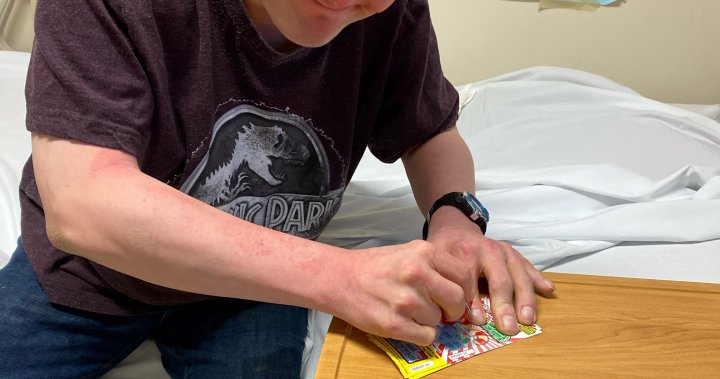
After 10 months in a Saskatoon hospital, Cory Kadlec’s has officially been discharged.
Kadlec has been in the hospital since June 11, 2022, after he had a seizure, according to his sister Tara Jo Kadlec.
She told Global News that Cory has down syndrome, diabetes, celiac disease, stage 2 dementia, a thyroid issue and he also suffered a stroke in 2020.
Cory had originally been staying in a care home, but after his seizure, the home said they could not take him back from the hospital as they didn’t have the proper medial treatments.
According to his family, the only option the Saskatchewan Health Authority (SHA) and Ministry of Social Services (MSS) offered was a long-term care dementia ward.
Story continues below advertisement
Tara Jo said Cory does need access to round-the-clock care, not for his dementia, but, for his diabetes.
She said Cory’s mental health was deteriorating during his time in the hospital, and with the only option being a dementia ward, they decided to take matters into their own hands.
“We were tired of fighting something that was never going to go our way and it won’t go anybody’s way until there’s a system change,” Tara Jo said.
The decision was made to rent a three-bedroom home in Saskatoon, where Tara Jo, her sister and Cory could all live.
Tara Jo said the family will begin privately hiring people to help take care of Cory.
“We want him to relearn what it means to feel safe, to be able to trust, to feel joy, to relearn the things he always used to love and know that it’s not going to be taken away from him,” Tara Jo said when discussing Cory.
Tara Jo and her sister will help take care of Cory when service isn’t available.
In terms of funding, Tara Jo said SHA direct client will help with payments, along with Community Living Service Delivery (CLSD), and the Saskatchewan Assured Income for Disability program (SAID). Whatever cost is left over, will be paid by Cory’s family.
Story continues below advertisement
“For us to create a family-managed home, there is a lot of policies and procedures based on government and social services rules,” she explained. “We have to hire the staff, we have to create the day programming and our family doesn’t get paid for any of that.”
Now that he is out of the hospital, Tara Jo said both Cory and the family will have to take things one day at a time, as there has been a lot of grief and struggles over the last year, and this will be another big change.
“He can feel safe being who he is and how he’s feeling and not be scared or fearful or worried anymore,” she said.
Green Shirt Day designer talks about her own organ transplant journey
Mask restrictions are lifted at Saskatchewan Health Authority facilities across Saskatchewan today (Tuesday).
Rural and Remote Health Minister Everett Hindley spoke about the issue at the Saskatchewan Legislature on Monday, saying requirements for masking will remain only where they existed pre-pandemic, such as operating rooms.
He added this decision came down following consultations with Dr. Saqib Shahab.
“I was hearing about it from families, but also from health-care workers, as a matter of fact — a number of health-care workers from across this province who felt that it was time to revert back to the previous policy,” Hindley said.
He said masks will still be available at the facilities for those who want them.
Story continues below advertisement
The province noted that privately run physician clinics get to set their own policies, and may still require masks.
It added that the SK Vax Wallet app will also be decommissioned by the end of April due to the decreased need for proof of vaccination, and vaccine records can still be found on your MySaskHealthRecord account.
Saskatchewan’s Health Critic Vicki Mowat said she would like to see the recommendations from the province’s chief medical health officer directly.
“It would be good to hear the recommendations from Dr. Shahab and to know what direction ministry is receiving,” Mowat said.
The latest respiratory illness report from the province that was published on March 25 showed the COVID-19 viral load in wastewater remains moderate to high in several parts of the province.
Dr. Adam Ogieglo, a family physician in Saskatoon, gave his two cents about the mask requirements being lifted, saying he disagreed with it a little.
“I think masking in a health facility is sort of almost an expectation now so that vulnerable people can access care without fear of becoming infected with COVID-19 or other respiratory infections,” Ogieglo said.
He said he would like to see those requirements in place longer.
“Those decisions are obviously above my pay grade.”
Ogieglo said he hopes people recognize that vulnerable people can be at these health facilities with no other choice.
“Those vulnerable people can certainly wear masks and try their best to protect themselves, the problems comes when those vulnerable people need to remove those masks to receive their care.”
He said we should be trying to protect vulnerable people and allow them to access health care safely, adding he expects to work out the rest of his career with COVID-19 around.
Ogieglo said we need to learn to live with COVID-19, but that doesn’t mean ignoring it and trying to go back to where we were in 2019.
Peterborough Public Health moves community risk index up to moderate
A routine trip to get some bloodwork done has turned into a long wait for Calgarians.
Michelle Archer needs monthly tests done to monitor her autoimmune diseases and usually faces a 10- to 30-minute wait for a walk-in visit at the Ranchlands clinic now operated by Dynalife.
“This time when I got there, the parking lot was full and there were people standing outside the door and I was shocked to see many people there,” Archer said. “It was so crowded. It took me forever to get to the desk.”
After finally checking in with the front desk, Archer waited an hour to be called in from the waiting area and another hour to get her tests done.
Story continues below advertisement
“So I asked at the desk, ‘What’s happening here this morning?’ She said, ‘Welcome to private health care.’
“And she said that to every patient that came up.”
Edmonton doctors prepare to help Stollery during surge
On Dec. 5, 2022, the province announced community lab services in large urban centres would transition to Dynalife from Alberta Precision Laboratories (APL). Dynalife also received the contract to do some testing from hospitals provincewide, but APL’s in-hospital labs would continue to do tests.
“Dynalife has a proven history of providing innovative lab services and Albertans can be assured they are getting the best care possible,” Health Minister Jason Copping said at the time of the announcement.
At the same time, a new appointment booking system was rolled out. AHS says wrinkles in the new system are still being worked out.
Story continues below advertisement
“The new system experienced some network disruptions over the first few days, causing longer than average wait times at some community collection locations,” AHS said in a statement. “As Calgary staff and system users continue to adapt to the new appointment system, wait times continue to improve towards pretransition levels.”
The provincial health authority said the holiday season also saw longer wait times at some locations.
“There were no negative impacts for routine processing or resulting for community blood work,” AHS noted.
“We apologize to those having to experience longer wait times at community labs and are working with Dynalife to do what we can to improve this.”
Alberta expands contract with private lab services company DynaLIFE
Lorian Hardcastle, an assistant professor in health law at the University of Calgary, said Dynalife’s for-profit model is reason to question whether the company is curtailing staffing or hours.
Dynalife did not respond to Global News’ request for comment.
“Ideally we wouldn’t have felt the change at all. Ideally, the government would have worked with Dynalife to ensure that the transition was smooth and was unfelt by the public,” Hardcastle said. “But unfortunately that doesn’t seem to be the case.”
She said since taxpayer dollars are involved in the Dynalife contract, the government should “hold their feet to the fire.”
“If the public is sitting in wait rooms and not able to make appointments and is having trouble accessing services, the government needs to be accountable for that and needs to be transparent about what’s causing that problem and how they’re working with Dynalife to fix that problem,” Hardcastle said.
With the essential and potentially life-saving service labs and testing can provide in the community and for primary care physicians, Hardcastle said efficient lab services can help keep people out of already-stressed hospitals.
“The last thing that we need is for people to show up in hospital because their conditions weren’t being adequately managed in the community,” the U of C professor said.
Premier Smith dismisses AHS board, hires official administrator
Story continues below advertisement
Archer said she’s known the staff at her local community lab for years. But the most recent visit was different.
“Staff was obviously overwhelmed. They were agitated, not angry, but overwhelmed, flustered, running around. There was a ton of staff, but it was chaos.”
AHS said community lab services have been transitioned to Dynalife in Okotoks, Strathmore, Red Deer, Leduc, Edmonton, Grande Prairie and Fort MacMurray, with additional ones coming to Lethbridge and Calgary.
High-profile lawyer Mary Ellen Turpel-Lafond and B.C.’s former representative for children and youth is no longer employed by the University of British Columbia.
The university won’t say why it cut ties with the former judge, only that as of Dec. 16 she is no longer a professor at the Allard School of Law.
Turpel-Lafond served as director of the UBC Indian Residential School History and Dialogue Centre until June.
Her history came under the microscope last fall after a series of reports by the CBC raised questions about both her claims of Indigenous ancestry and her claims of academic accomplishments.
Global News has requested comment from Turpel-Lafond.
Story continues below advertisement
In a statement posted to her Twitter account in October, she maintained she was “of Cree, Scottish & English heritage & hold the name aki-kwe & am an active member of the Muskeg Lake Cree Nation. My credentials have been vetted at the highest levels of our country.”
I am of Cree, Scottish & English heritage & hold the name aki-kwe & am an active member of the Muskeg Lake Cree Nation. My credentials have been vetted at the highest levels of our country. Read my statement here #bcpoli#skpoli#cdnpolipic.twitter.com/nj15RryLTy
At the time, UBC issued a statement to the Globe and Mail supporting Turpel-Lafond, and stating that “Indigenous identity was not a criterion” for the position she held at the university.
Story continues below advertisement
The Union of B.C. Indian Chiefs also issued a statement of support at the time and calling her “a fierce, ethical, and groundbreaking advocate for Indigenous peoples for decades.”
“She has demonstrated time and again her commitment to human rights, justice, and reconciliation, including in her role as the Representative for Children and Youth and her investigation into systemic racism in the health care system,” it added.
Turpel-Lafond has been a high-profile public figure in B.C. and across Canada for decades in areas of Indigenous human rights and constitutional law.
In 2020, she authored the report In Plain Sight: Addressing Indigenous-specific Racism and Discrimination in B.C. Health Care.
The Saskatchewan Liquor and Gaming Authority (SLGA) will be auctioning off its liquor licenses in February as the stores close, giving businesses the opportunity to secure the right to sell alcohol in their establishments.
“The licences are in high demand because people see opportunity,” said Shawn Moen, CEO of 9 Mile Brewery in Saskatoon.
The Saskatchewan government announced in 2022 that it would be closing all SLGA stores in the province, with plans to put the money elsewhere.
“Should we be investing in coolers of alcohol, or should we be investing in a highway?” said SLGA Minister Lori Carr.
Online auctions for the SLGA permits will be held from Feb. 6 to Feb. 15. Regina, Saskatoon and Prince Albert currently have more than one SLGA location in the city, meaning more than one permit will be available in the area. Thirty-five permits will be auctioned off.
Story continues below advertisement
Saskatchewan Liquor and Gaming Authority exits retail
“The whole point of this is that the retail stores that the government owns at this point in time, when you put them all together, eventually you are going to be losing money,” said Carr.
“We would have to put a lot of money into refurbishing these stores to bring them up to date. That money can be better spent on health-care services, social services highways, name your need in the province.”
Online bidders are required to provide a $5,000 deposit to participate in the auction and must meet all qualifications for holding a retail store permit.
After making the winning bid, the winner must pay a bidder’s premium fee of up to $750 and a $525 permit application fee. The remaining annual fees will vary depending on the location of the business and surrounding competition.
“I think a lot of people are asking themselves, ‘Is this what I voted for?,’” said NDP SLGA critic Nathaniel Teed. “Nobody asked for the Sask. Party to sell off profitable liquor stores that pay for our hospitals and schools or to lay off 400 workers in the middle of an affordability crisis. With this important stream of revenue lost, I fear the Sask. Party government will continue to increase taxes and hike power and energy bills again just to pay for their bad financial decisions.”
The sale will include the liquor permit only and not provide the winner with the previous building used by the SLGA.
If the bidder does not place the highest bid, they will receive their deposit back if they show “good character,” which the SLGA described as being able to provide a clean criminal record check.
“The licensing approach with SLGA has evolved considerably over the years,” said Moen. “We started in 2015 and at that time a number of the processes needed to be feathered out. It has become much more robust in terms of product safety, in terms of monitoring good business practices and really emphasizing a high commitment to quality.”
Carr said the province has been making less money each year from SLGA stores, and predicted that by next year, the province would officially be losing money.
Story continues below advertisement
The first SLGA store to close is scheduled for late January.