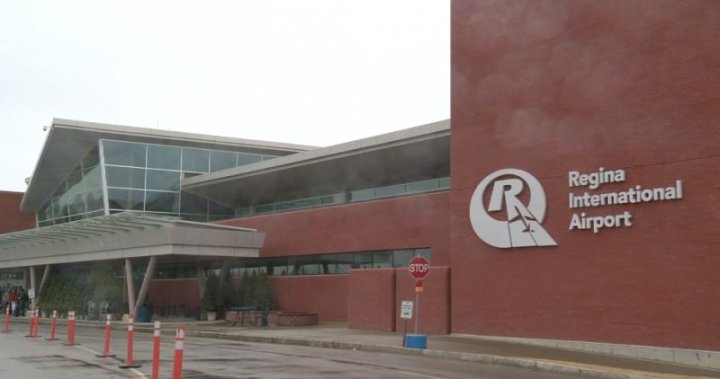
A construction worker on the Regina International Airport property has died after an incident that occurred Friday night.
Officials said a “serious accident” happened at around 11:30 p.m. on May 26, related to the 13-31 runway overlay project.
“Emergency responders attended the scene immediately, but unfortunately the injuries the individual suffered were fatal,” The Regina International Airport said in a release.
They said Regina Police and the Saskatchewan Coroners Service worked into the early morning hours on the airfield, and federal occupational health and safety workers would be conducting an investigation.
Next of kin have been notified.
No gender or age was released to the public as of Saturday afternoon.
“This is such as sad, tragic situation, and we will be respecting those involved and their families,” James Bogusz, the President and CEO of the Regina Airport Authority said.
Story continues below advertisement
In a statement from PCL Construction Management, who is overseeing the runway project, they said they will also be undertaking its own investigation.
“We are deeply saddened by the unfortunate incident that occurred Friday evening at our airport site,” the statement read. “We are currently involved in gathering further information, so at this time we are unable to provide any details or answer any questions. We are also respecting the privacy of the individual and trade contractor involved and are not providing personal information.”
According to the release, PCL is in contact with Saskatchewan Occupational Health and Safety, regularly coordinating with the agency as it relates to the ongoing investigation.
Normal runway operations and flights are continuing as scheduled.
Runway construction, however, is being halted over the weekend so everyone can regroup, but is expected to resume Monday.
“It is with great sadness that we share this devastating news and we pray for the individual’s family, friends, co-workers and community,” the airport said.
The minister responsible for Mental Health and Addictions said the province is making significant investments into the area of mental health and addictions by making sure that they are providing support for people that works for them.
“We know that when it comes to mental health and addictions, that it’s not really a one-size-fits-all approach. People have different needs when it comes to supports and services that they require for mental health and addictions,” said Minister Everett Hindley.
“I think this is a perfect example of that, how we’re able to (use) the online virtual therapy component, how it provides yet another tool for people to be able to access, in this case, the mental health support they need, regardless of where they might live in Saskatchewan.”
Story continues below advertisement
The Online Therapy Unit provides effective online treatment to those in the province who are experiencing depression, anxiety, substance misuse or difficulties coping with chronic health conditions.
Heather Hadjistavropoulos is a professor of psychology at the University of Regina and is also the executive director of the Online Therapy Unit. She said this funding will help overcome barriers to care and gives clients another option.
“Specifically, barriers like being living in a rural and remote area, having limited time because of maybe personal circumstances, having concerns about privacy, or just this desire to learn about mental health in a different type of way,” she said.
“So, we’re thrilled to have this extra $400,000 to help us expand our reach with online therapy. And that actually opens up 500 extra spots for online therapy in Saskatchewan,”
According to a release, the Online Therapy Unit was established through partnership with the Saskatchewan Health Authority and has grown over the past few years.
Since 2015, the province has invested approximately $9 million for ICBT.
Addressing a potential mental health crisis in Saskatchewan
“Police believe fentanyl is involved in the deaths,” said a release. “Police are concerned about the possibility of a tainted or compromised drug.”
MJPS reminds the public that anyone can be at risk of an overdose. They encourage anyone planning to use drugs to not do so alone.
“If you are a drug user, or you know a drug user, get help,” stated police. “Don’t let the addiction make the decisions and plans that can lead to a near-fatal or fatal overdose. Connect with health resources.”
Police also encourage the public to know the signs of an opioid overdose, which can include:
difficulty walking, talking or staying awake
blue lips or nails, pinpoint pupils, cold and clammy skin
dizziness or confusion; extreme drowsiness
choking, gurgling or snoring sounds
slow or weak breathing
inability to wake up even when shaken or shouted at.
“Know that the Good Samaritan Overdose Act will protect anyone experiencing a drug overdose from charges of possession of a controlled substance,” police stated. “That’s also true for anyone present while someone else is experiencing an overdose. Don’t hesitate to call 9-1-1 in an overdose situation.”
Story continues below advertisement
As the MJPS continue to investigate the three fatal overdoses, they say anyone can access take-home naloxone kits if they are concerned about experiencing a drug overdose or witnessing one.
Anyone with any information about people trafficking drugs in Moose Jaw should call authorities. People wishing to remain anonymous can call Crime Stoppers at 1-800-222-TIPS (8477).
Saskatchewan police issue warning after recent fatal overdoses
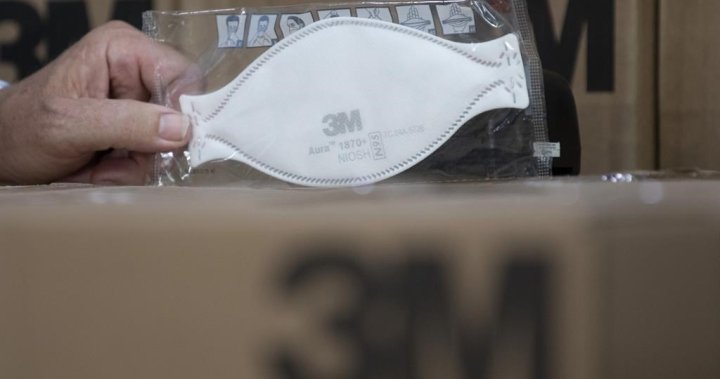
A Calgary-based doctor is planning to go to court to prevent Alberta Health Services from dropping its continuous masking policy.
On Thursday, the provincial health authority said continuing masking at AHS facilities, continuing care facilities and contracted sites will not be required after Monday. That includes Alberta Precision Laboratories, Covenant Health, CapitalCare and Carewest sites.
Dr. David Keegan set up a crowdfunding campaign to raise $20,000 to file a court injunction against AHS lifting its facility mask mandate on June 19. That gofundme hit its goal in less than 24 hours.
On Thursday afternoon, Keegan said he’s retained senior legal counsel and the court case will “move ahead” in a tweet at 4:01 p.m.
Keegan said he’s trying to look out for patients, staff and members of the public.
Story continues below advertisement
“Anybody who’s on AHS premises, we need to be able to rely upon the air, to have reasonable things in place to keep it safe,” he told Global News.
“We know that COVID is airborne. It spreads just like cigarette smoke, and if people are not masking anymore, then that’s going to infect or contaminate the air.”
Alberta pediatric doctors plead for proactive approach to reduce viral transmission
The concern is especially high for people who are immune-compromised, like infants or cancer patients, for whom a COVID infection puts them at a much higher likelihood of severe outcomes.
AHS said “patients are encouraged to have conversations with their care providers regarding masking, hand hygiene, or other factors that patients feel are important to their care.”
But Keegan said it’s unrealistic to ask someone sick on a stretcher to ask their nurse or doctor to mask up.
Story continues below advertisement
“I don’t know if people really understand the power differential that’s there between health care providers who are well and patients who are sick,” Keegan said. “And I’ve lived that and walked that path.
“You can’t be putting the responsibility for basic measures to protect people with disabilities and chronic disease… on them when a very minor, reasonable, easy-to-do accommodation can be just kept in place.”
Masks could still benefit patients in Manitoba hospitals, microbiologist says
According to the latest AHS infection prevention and control annual report, patients hospitalized with COVID-19 primarily were infected in the community. But at the start of 2022, “there was a sharp rise in the rate of hospital-acquired cases from 2.12 to 14.54 per 10,000 patient-days when compared with Q3: October-December 2021.”
“Despite a reduction in severe outcomes in waves five and six, the burden of COVID-19 on Canadian hospitals was substantial,” the report reads.
That was the same time the highly transmissible Omicron subvariant became dominant in the province and country.
The president of the United Nurses of Alberta expressed concerns about how the AHS policy changes could affect nurses’ health and wellbeing from both COVID-19 and the public.
Heather Smith said the change in policy “does not in any way remove obligations for workers to be safe, to ensure their patients, residents, clients are to be safe and that they must wear appropriate PPE to match the situation.”
Decision Alberta: Health care a key issue in provincial election
Smith pointed to the latest data release on the pandemic in Alberta that showed 352 people were in hospitals with COVID, across all AHS zones.
Story continues below advertisement
The UNA president was also concerned about the message the mask use policy sends, the “perception that everything’s okay, health care workers don’t need to (wear masks).
“And I also am concerned about backlash that ‘Why are you wearing them? You shouldn’t be wearing them since the mask mandate is gone.’”
UNA has a PPE agreement with AHS, put in place at first in 2020 and amended in 2021. Smith said it was also reaffirmed this week by AHS, who she characterized as being very good at procuring and maintaining adequate PPE supply.
She said Albertans should not hesitate seeking health care as a result of the change in mask policy.
“We have an obligation not just to keep ourselves safe, but to keep members of the public safe,” Smith said. “And I would suggest that that includes masking.”
The health-care provider said it consulted with stakeholders such as patients, families, advisory councils, clinicians and frontline managers in arriving at its decision.
AHS said people are welcome to wear masks if they choose, but will not be required to do so.
Story continues below advertisement
AHS added it will closely monitor COVID-19 data to see if there is any need for changes to the new policy.
COVID no longer considered a global health emergency
Keegan announced on Twitter Friday he has retained legal counsel and the court case will be moving ahead.
“I beg you to keep the mask mandate in place until a full disability-impact review can be done and accommodations implemented,” he wrote directly to AHS in the tweet.
He’s also skeptical of any assurances of all AHS HVAC systems being able to provide enough fresh air.
“The trick is we don’t know that until you test things in real circumstances,” the family doctor said.
Keegan said he measured the CO2 levels – a proxy for how fresh the air in a room is – during a 10-minute patient visit. In that time, the levels doubled from 600 to 1,200 parts per million, he said, apparently showing a lack of fresh air exchange.
Story continues below advertisement
“Until we know that every place is safe and has great air quality… then we can’t just assume they are,” he said.
“Our duty is to provide a safe space for patients to seek care and to provide a safe space for our staff, physicians, contractors, learners, anybody else who might be in those places.”
Provinces like B.C., Saskatchewan and Manitoba have dropped their mandatory masking in health-care settings.
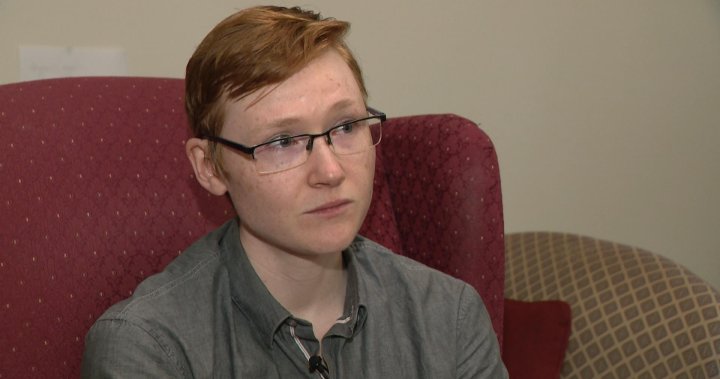
Two Saskatchewan transgender persons have reached settlements with the Saskatchewan Ministry of Health over access to gender affirmation surgery in the province and won financial compensation for expenses they were forced to pay. One person declined to be interviewed by Global News, but Gillian Walker is sharing their story.
Walker, a transgender, non-binary person, said they had to pay out of pocket to have a gender-affirming diagnosis and surgery.
“I would not be sitting in front of you had I not had the surgery,” Walker said in an interview with Global News. “It is that painful for someone who is transgender.”
Walker said it was their wish to have a mastectomy with chest reconstruction in 2015, a procedure only offered if an individual is diagnosed with gender dysphoria.
Story continues below advertisement
“You can think of gender dysphoria as an insane dissonance between who you are in inside and the way that your body is represented to the world,” Walker explained.
At the time, gender dysphoria could only be diagnosed by two clinics in Canada, neither of which were in Saskatchewan.
Walker was placed on a two-year waiting list just for the diagnosis.
“I had a meltdown,” they said. “It drastically reduced my mental health.”
In 2016, Walker filed a complaint with the Saskatchewan Human Rights Commission over the inaccessibility of gender-affirmation surgeries for Saskatchewan residents.
“During that time, I actually went on anti-depressants because living in my body was unbearable,” Walker said.
A year later, Walker learned that the procedure was not offered in Saskatchewan and was impossible to get close to home.
“I’m working through this process and I’m trying to be as patient as possible and when we get to this conversation and mediation that says ‘hey, the needs of you as a transgender person are not covered by our healthcare’, there is my second meltdown,” Walker said.
They said that one of the main barriers that they faced, was trying to make the ministry understand the difference between cosmetic surgery and something that is medically necessary.
Story continues below advertisement
“The process has been exceptionally frustrating because every step that I have taken, I have been placed in the position of being an educator as well as an advocate.”
Because Walker’s surgery was not considered a necessary medical procedure by the ministry, it was not covered financially.
In 2017, Walker took matters into their own hands and spent over $10,000 travelling to Ontario to have the surgery at a clinic known for offering services to transgender people.
When Global News asked the Saskatchewan Ministry of Health why gender affirmation surgery isn’t accessible to everyone is Saskatchewan, it responded with a written statement saying residents need to discuss their options with their physician or primary-care provider.
“The Ministry of Health will be working to establish an internal advisory table/committee to provide guidance on transgender health issues going forward and work to improve communications. Individuals associated with the transgender community will be asked to be a part of this work,” the statement continued.
In response to details about Walker’s specific case, the ministry said it was unable to comment due to confidentiality laws.
In a media statement, Barry Wilcox, chief commissioner of the Saskatchewan Human Rights Commission, said increasing access to gender affirmation surgeries is a step towards equality.
“The Saskatchewan Human Rights Commission and The Saskatchewan Human Rights Code, 2018, support the rights of transgender people,” Wilcox said. “We know that transgender individuals face numerous obstacles when transitioning, including social stigma and institutional barriers. The cost associated with the surgical procedures, as well as restrictive health policies, can result in substantial barriers to obtaining necessary medical treatment.”
Story continues below advertisement
During the five years between Walker filing their complaint and an eventual settlement, Walker claimed the Human Rights Commission had trouble contacting the ministry regarding questions about the case investigation.
“It is my opinion that the ministry was not ready to answer some of those questions and that they did not want to be caught out in a position,” Walker said. “One of the driving factors that kept me going with this complaint after I had received treatment is that I don’t want anyone to ever be in the same position that I was.”
Walker said that during the five-year investigation, the ministry did make some small changes in the right direction.
The ministry has since brought forward an authority on gender dysphoria and placed them in the province to give diagnoses.
“I was exceptionally privileged where I could spend money to access these life-saving services but as far as the access and clarity of information being provided by the Ministry of Health, we are still not there yet,” Walker said. “Here I am six, seven years after my initial complaint and it feels like the process is still the same for transgender patients.”
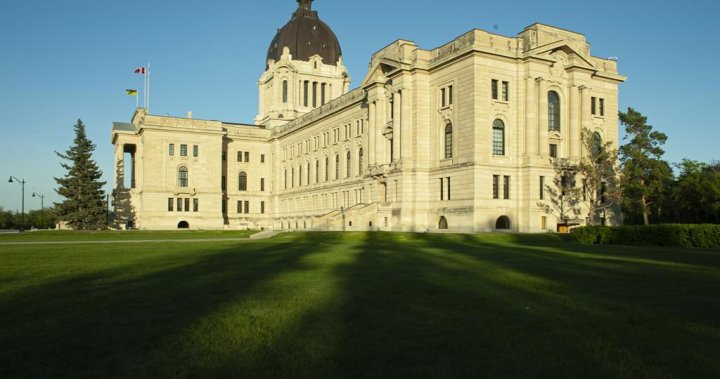
The Saskatchewan government and the Saskatchewan Health Authority (SHA) have outlined their budget for 2023-24 and it includes nearly $5 billion in funding.
On Thursday, the SHA board of directors approved a $4.82-billion operating budget for the 2023-24 fiscal year, as well as a capital expenditure plan of more than $314.7 million.
“Our Board recognizes the critical role our services play in supporting a high quality of life for all Saskatchewan residents,” Arlene Wiks, the SHA board chair, said. “The budget approved today strengthens those services by prioritizing investments that will enhance care for the patients and residents we serve across the province.”
A few key areas outlined in the budget include:
$42.5 million will be dedicated to the surgical program, providing an additional 6,000 procedures, for a total of 103,000 surgeries this fiscal year.
$39 million to support seniors’ care and facilitate seniors living in their own homes and the community.
$19.8-million increase to support 64 permanent acute and complex care beds located at Royal University Hospital in Saskatoon (36 beds) and Pasqua Hospital in Regina.
Mental health
Moving forward, the SHA also outlined an emphasis on mental health and addictions resources.
Story continues below advertisement
The budget includes $12.4 million to address new and ongoing mental health and addictions initiatives. There will also be an additional 150 addiction treatment spaces introduced in the province.
At the St. John’s Hospital in Estevan, 26 post-treatment beds have also been expanded. Rapid access to counselling services is also being expanded from 23 to 31 communities.
Overdose Outreach Teams in Regina and Saskatoon will connect people who have recently experienced an overdose with programs and services.
As part of looking forward, the SHA is also looking back at the success of the new tactics put in place for recruiting health-care workers to the province.
“Since last September, we have begun to stabilize services by filling more than 120 new and enhanced permanent full-time positions at sites across rural and remote areas,” Andrew Will, the CEO of the SHA, said in the report.
Philippines and grad student additions
One of the province’s recruitment tactics has been getting doctors to come to Saskatchewan from the Philippines, something the SHA says is gaining momentum.
“Conditional job offers have been made to nearly 400 Registered Nurses, 31 Continuing Care Aides and two Medical Lab Assistants,” the SHA said. “Seven Continuing Care Aides arrived from the Philippines the week of April 24, 2023 and will be working in Swift Current, Strasbourg, Yorkton, Kindersley, Regina, St. Brieux and La Loche.”
Another large recruitment pool used is graduating nursing students.
SHA said since December 2022, it has hired or made conditional offers to 315 nurses.
“In addition, a high-profile advertising/marketing and outreach campaign for the new 550 post-secondary health care training seats is now underway,” the report said.
Recruitment
Recruitment has largely been focused on rural Saskatchewan, where shortages are impacting communities across the province.
Recently, the minister of health approved changes to the Rural Physician Incentive Program that would expand eligibility beyond new graduates to all new-to-rural practice physicians, including internationally trained physicians who have completed the Saskatchewan International Physician Practice Assessment.
The incentive has also been increased to an incentive grant of $200,000 over five years.
Surgical wait times
The province’s surgical wait times have also been outlined by the SHA.
“In 2022-23, clinical teams hit a record high of completing 90,040 surgeries and the highest number of joint replacements in Saskatchewan’s history,” the SHA public agenda read.
The 2023-24 provincial budget provides an additional investment of $42.5 million to the surgical program, which includes $38.5 million for additional surgeries and $4 million to support the expansion of the surgical information system.
Story continues below advertisement
“This investment will reduce the wait times for surgical patients and reduce the number of surgical patients waiting throughout the province by investing in our surgical teams, operating rooms, equipment and patient care.”
For more information on the SHA budget and plans for 2023-24, visit the SHA website.
The future home of a specialized long-term care facility has been selected in Regina.
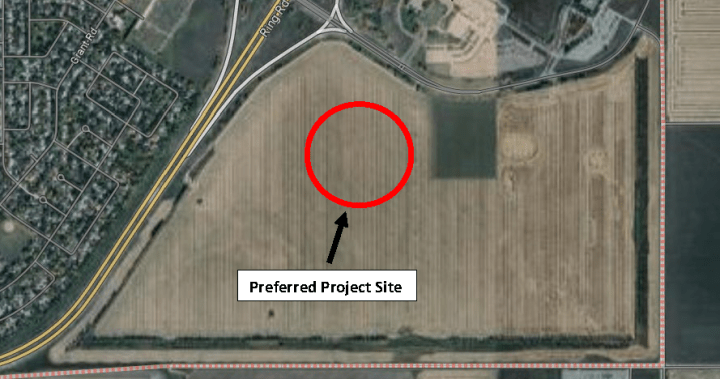
The land, 390 acres located south of the Saskatchewan Polytechnic Regina Campus, was selected as the preferred site, according to a news release from the province.
The new facility will be owned and operated by the Saskatchewan Health Authority (SHA).
“This is the building for the future,” Minister of Health Paul Merriman said. “It’s the largest long term care facility in the province.”
The project layout has yet to be finalized, but it is anticipated that it will be designed as a multi-storey building with a focus on creating a home-like environment. It is expected to incorporate resident care features such as individual rooms with en suite bathrooms, and indoor and outdoor multi-purpose spaces. Additional features will be shared once the design of the facility is finalized.
Story continues below advertisement
“Moving the project forward with a preferred site is welcome news for the SHA as well as for residents and families requiring specialized programs and services in Regina and area,” Saskatchewan Health Authority executive director of continuing care Debbie Sinnett said. “We know that the need for specialized long-term care beds is increasing and this project will go a long way in meeting the needs of those residents.”
The land was already owned by the government of Saskatchewan and is managed by the Ministry of SaskBuilds and Procurement. It is currently undeveloped and has been used for agricultural purposes for the past several years.
“We’ve got some work to do with as far as permitting with the city,” Merriman said. “We own the land out there. So that was very easy procurement for us and reduce the costs of the overall long term care project.”
Merriman said the decision to locate just south of Sask. Polytechnic will hopefully allow collaboration with the school.
“There’s opportunities for training within this facility,” he said. “We can make sure that the people coming out of Sask. Poly are trained up and actually have some real experience right across the street.”
The project is in the pre-procurement planning phase and is a partnership between the SHA, the SBP and the Ministry of Health.
The project is expected to begin procurement this year and will work with the City of Regina on land use and approvals while working to finalize a design.
“Our health care system is going in the wrong direction.”
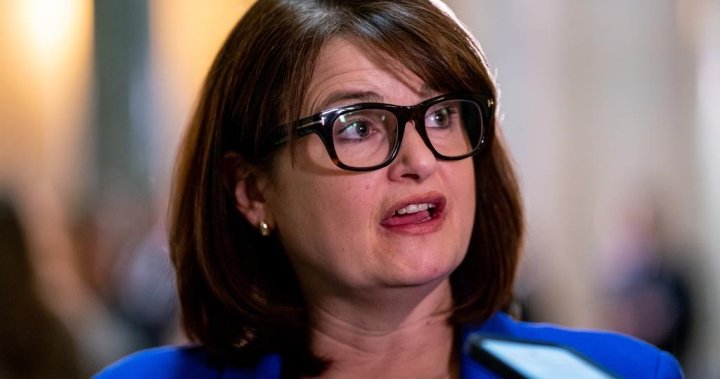
That was the sentiment from Sask. NDP leader Carla Beck Thursday morning, as she voiced her concerns with the provincial government to address and the growing surgical wait times in the province.
According to new Saskatchewan Health Authority (SHA) and Canadian Institute for Health Information (CIHI) data, Saskatchewan has the worst surgical wait times in Canada.
According to the CIHI report, the median wait time for knee replacements in 2022 was 466 days. The national average was 190 days, and the second longest province was Manitoba at 336 days.
The data also shows the median wait time for hip replacements was 309 days.
The numbers put Saskatchewan at the bottom of the list when compared to other provinces.
Story continues below advertisement
“We all know someone who’s been waiting in pain for too long,” Beck said. “We need to be expanding our capacity in terms of operating rooms, capacity in terms of health care, staff capacity.”
Rural and Remote Health Critic Matt Love said he would also like to see the province more aggressively pursue retaining health-care workers.
And while SHA has posted jobs online, Love argues because they are only part-time positions, they are turning people away.
“Health-care workers want to work jobs where they can afford to live in our province and posting casual and part time positions … No wonder those are hard to fill,” he said.
The government has said it’s looking to lower wait times by completing additional surgeries this year, including some in private clinics.
The government has also put an emphasis on offering out of province surgery opportunities.
A statement from the Ministry of Health said the province is looking to complete 103,000 surgeries in 2023-24.
“Surgical wait lists have begun to come down since the peak in November 2021, with an almost 10 per cent reduction since pandemic highs,” the statement read.
“From April 1, 2022 to March 31, 2023 over 90,000 surgical procedures were performed, the highest ever recorded in Saskatchewan for a one-year period.”
Story continues below advertisement
The Ministry of Health said the waitlist target for 2023-34 is to reach pre-COVID-19 numbers of patients, with fewer than 25,000 on the waitlist by March 31, 2024.
Saskatchewan Health Authority outlines $4.8B budget, plans for future of health care
A comment made by the federal justice minister that resulted in an outcry from the Prairie premiers is generating comments from other politicians and stakeholders.
Federal Minister David Lametti was at the Assembly of First Nations’ Special Chiefs Assembly in Ottawa on April 5 and was asked to rescind the 1930s Natural Resources Transfer Agreement.
“I can’t pronounce right now, but I do commit to looking at that,” was the response given by Lametti, which caused Saskatchewan Premier Scott Moe to take to Twitter, calling the comment “dangerous and divisive,” and saying the federal government has an agenda to strip provinces of their jurisdiction and autonomy.
Prime Minister Justin Trudeau was in Winnipeg on Wednesday and addressed the outcry, saying the Prairie premiers are not taking their responsibilities towards the United Nations Declaration on the Rights of Indigenous Peoples (UNDRIP) seriously.
Story continues below advertisement
“Let me be very clear, the minister of Justice said no such thing. If you actually look at his remarks it is very clear that we are talking about the importance of the federal government living up to our responsibilities under UNDRIP, something that unfortunately the Prairie premiers have not taken seriously, and they are instead trying to elevate fears that have absolutely no grounding in truth,” Trudeau said.
“We know we need to move forward in true reconciliation and partnership with Indigenous peoples, and that’s something we certainly hope we’re going to be able to work on with the premiers and with Indigenous peoples to be able to grow the economy and create those great jobs, including in natural resources that are going to be there for decades to come as we move towards a net zero world.”
Pierre Poilievre took to Twitter as well to give his two cents by quote-tweeting Alberta Premier Danielle Smith’s and Premier Scott Moe’s tweet, calling Lametti’s comment at the AFN assembly an “attack.”
“Trudeau’s Justice Minister David Lametti threatened to overturn the constitution & take federal control over provincial resources. I’ll never allow this attack by the costly coalition on our prairie resource workers. I’ll put westerners in control of their resources & lives,” read Poilievre’s tweet.
Story continues below advertisement
Global News reached out to Federation of Sovereign Indigenous Nations Chief Bobby Cameron for his take on the Twitter beef.
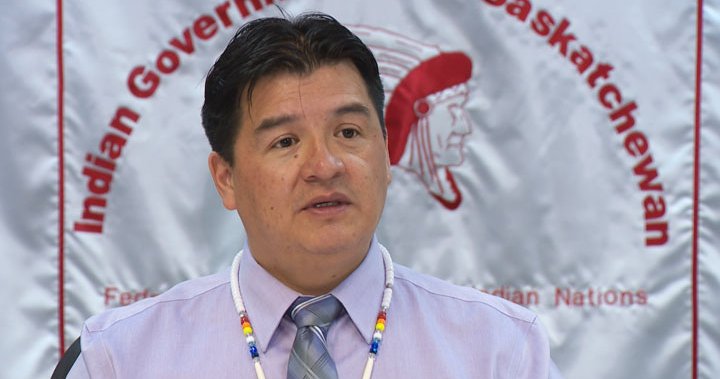
“They can play politics all they want. Our position is treaty,” Cameron said.
He said the FSIN fully intends to pursue its comments about rescinding the Natural Resource Transfer Agreement.
Cameron said he wasn’t sure if Lametti was just trying to appease the crowd or not, but he did have some things to say about him.
“I’ll tell you this about David Lametti: he’s accessible, he listens, and he is trying to do what is right.”
Saskatchewan premier, minister’s claims of consultation ‘disingenuous’: Metis Nation Sask. vice president
He called the 1930 Natural Resources Transfer Agreement an illegal document, noting it was never approved by First Nations and not supported by treaty rights holders.
Story continues below advertisement
“We’re from the perspective that our inherent treaty rights were here long before any provincial government was formed, long before this country of Canada was ever formed. And this is what people need to understand.”
“The premiers of Canada don’t realize that our treaties were signed with the British crown, international law, not provincial law, not federal law. And under treaty, clearly there was no discussion, no agreement about natural resources. It was only to share the depth of a plow, to share the land topsoil, six inches of topsoil,” Cameron said.
He added it impacts hunting and trapping, and also damages the environment.
“You’re not going to come into the backyards of our First Nations communities, not anymore. We’ll either see you in court, or we’ll see you on the land. Simple as that.”
Frank Tough is a professor of native studies, director of the Metis Archival Project and a historical geographer at the University of Alberta. He said the Natural Resources Transfer Agreement is particularly important for the Prairie province governments, and up until this week, not many people knew about the agreement.
“This is a very important issue, control over lands and resources. Whether you’re going the development path of Ralph Klein — he couldn’t have done that if the province didn’t have control over the oil sands — or Allan Blakeney, the former premier of Saskatchewan. His whole crown corporations generating economic activity for the provinces as crown corporations, would have been impossible without the Natural Resources Transfer Agreement,” Tough said.
Story continues below advertisement
He said the agreement transfers the federal crown interest in lands and resources to the provinces. But he said the second clause protects the existing interest in lands and resources.
“If you’re a homestead guy, you have your homestead and you’ve completed your duties, you want your title. Well, just because the authorities change from the federal government to the provincial government, a provincial government can’t come along and appropriate your land.”
Tough said there is some explicit protection for Indigenous interests in the agreement.
“That would be references to Treaty Indians, so not all Indigenous people.”
He also noted a clause touching on non-crown interest in land, which he said would pertain to homesteaders at the time.
“I think it could be argued, and this is where I break from conventional wisdom, it could be argued that the treaty is a non-crown interest in the land. If so, then the treaty, or some parts of the treaties are protected by the Natural Resources Transfer Agreement. That’s a very different interpretation.”
He said if this argument was won in court it would strengthen the duty to consult, and would be a good basis to argue comprehensively for royalty payments.
Story continues below advertisement
“I would say probably not all impact benefit agreements are equal, but I think this would be a good platform, and it would also be good to consider whether it’s something that might be dealt with at a provincial level, instead of a band by band level.”
Tough said there are some views about getting rid of the Natural Resources Transfer Agreement as a whole, but that could result in some uncertain consequences.
“The other approach, it might be a pragmatic approach, which would be, if everyone is in the spirit of reconciliation, to look at these Natural Resource Transfer Agreement amendments to our constitution, and see how they can be used to implement a better distribution of wealth.”
He added that the agreement could be amended as well if the provinces and federal government came to a mutual agreement, noting updates have been made on things like water in the past.
FSIN says critical minerals protected by treaty law in spite of government’s pledge to mine
Since mid-March, several brands of frozen organic strawberries have been recalled across the U.S. over concerns of hepatitis A infections.
The strawberries in question were imported by a common supplier from certain farms located in Baja California, a Mexican state, the U.S. Food and Drug Administration (FDA) said in an update on April 11.
The affected products were pulled nationwide from big retail chains such as Costco and Trader Joe’s.
CFIA, which is responsible for food safety investigations and recalls in Canada, said they are not currently aware of any Canadian distribution of the strawberries that may pose an infection risk, but they are looking into the matter.
Story continues below advertisement
“The CFIA is aware of the outbreak in the United States and is working with U.S. authorities to confirm if any affected products are sold in Canada,” an agency spokesperson told Global News Friday.
“If an affected product is identified, the agency will work with industry to recall the product as soon as possible.”
Health Canada told Global News there are currently no active recalls of strawberries in Canada.
In that outbreak, four people required hospitalization but there were no deaths.
The FDA, which continues its investigation, says the current strain of hepatitis A virus causing illnesses is “genetically identical” to the strain that caused the outbreak last year.
Story continues below advertisement
Hepatitis A is a contagious liver disease that is preventable through vaccination.
If you think that you have been exposed to the hepatitis A virus, see your doctor immediately. Vaccination can prevent the onset of symptoms if given within two weeks of exposure.
If you have been diagnosed with hepatitis A, or any other gastrointestinal illness, do not prepare food or pour water for other people.