Out of the family violence incidents that were reported to police in 2022, Saskatchewan had 730 incidents per 100,000 people. The next highest was Manitoba with 585 incidents, with other provinces sitting in the 200-400 range.
Out of the intimate partner violence incidents that were reported to police in 2022, Saskatchewan had 732 incidents per 100,000 people. Manitoba scored second place with 633 incidents, and the other provinces again sat in the 200-400 range.
November is Family Violence Prevention Month
Statistics Canada said overall rates of family violence were over two times higher among women and girls and more than three times higher when it came to intimate partner violence.
Story continues below advertisement
While the overall number of police-reported incidents remained unchanged between 2022 and 2021, it was noted in the report that both forms of violence have increased by 19 per cent since 2014.
The report also noted that family violence against children and youth across Canada increased by 38 per cent between 2014 and 2022, but saw a slight decrease between 2022 and the year prior.
“Younger victims are unique in that they may be unaware that they are being victimized, may not know how to seek help, may be unable to report their victimization and may be dependent on the perpetrator. Research has indicated that, while a similar proportion of girls and boys experience childhood victimization, a smaller proportion of boys report their experiences to authorities,” the report said.
It also pointed out a large increase in intimate partner violence incidents between 2014 and 2022 for people between the ages of 25 to 64 (up 32 per cent) and people over the age of 65 (up 42 per cent).
Ex-partner of Saskatchewan mass murderer shares story of abuse, survival, and hope
That being said, eight out of 10 victims who reported intimate partner violence in 2022 were women and girls.
Story continues below advertisement
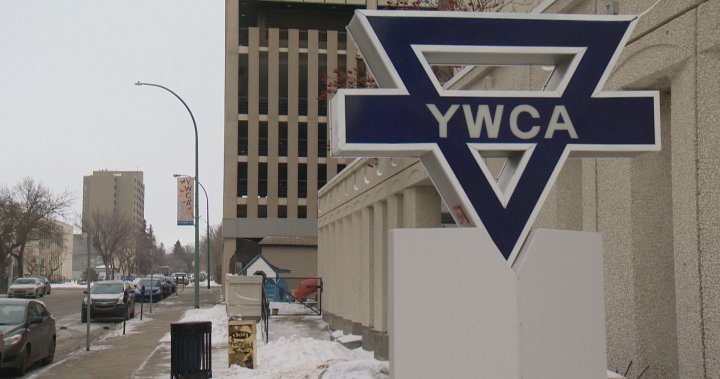
Cara Bahr, CEO of YWCA Saskatoon, said in September that they had to turn away 4,253 women, children and youth in 2022 due to the shelter being at full capacity.
The YWCAs in Saskatoon and Regina have been working to expand their facilities to work with more women and families facing abuse.
Bahr said it takes an average of seven to eight times for a woman to leave her abuser.
More to come.
If you or someone you know is experiencing abuse or is involved in an abusive situation, please visit the Canadian Resource Centre for Victims of Crime for help. They are also reachable toll-free at 1-877-232-2610.
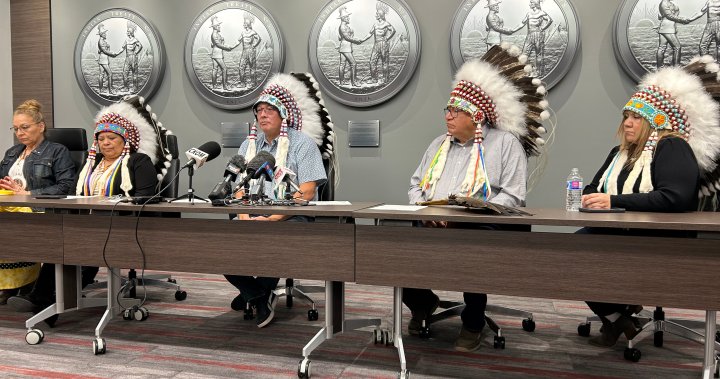
The Federation of Sovereign Indigenous Nations (FSIN) said they are disgusted with the Saskatchewan and federal governments as they are withholding income assistance from First Nations citizens.
“The federal government says they are merely following the province by withholding income assistance from First Nations who receive more than $15,000 for per capita distributions from their Nations,” Vice-Chief Edward Dutch Lerat said.
The group said assistance is being withheld from First Nations citizens who receive per capita distributions from specific claims of more than $15,000.
The provincial government confirmed the $15,000 cap in an email statement.
“The ministry currently exempts Per Capita Distribution payments for First Nations members receiving SIS and SAID benefits, up to $15,000 per member, per settlement,” read the statement.
The FSIN said that the provincial policy affects off-reserve band members while federal policy restricts those living on reserve.
Story continues below advertisement
In a media release, the FSIN said distribution payments are “the recognition of and compensation for the harm done, historical grievances, pain, and suffering caused by breaches of the promises made under Treaty.”
It said that the payments are an avenue to honour treaties with the Crown, fulfill the spirit and intent of treaties, and advance reconciliation.
“We don’t know if any consultation was carried out on this issue, which is incredibly troublesome when the purpose of specific claims is to address historic breaches of our Treaties intended to right past wrongs and renew relationships,” Lerat said.
Chief Calvin Sanderson said the province isn’t providing First Nations people with enough money as it is, saying assistance isn’t keeping up with inflation.
He also noted the housing crisis happening on First Nations’ land.
“If we had the capacity to build our own houses in our communities, we would bring our people back home to live there,” Sanderson said. “The province and the government have to stop dictating us. We are here for our membership.”
FSIN Chief Bobby Cameron said the benefit of redress is reduced in favour of Canada and the province.
“It is shameful and unconscionable that those disproportionately benefitted from Treaty are attempting to claw back this court-ordered redress intended to right past wrongs.”
Story continues below advertisement
He called on both governments to sit down with the FSIN and First Nations leadership moving forward.
The province told Global News it has been in communication with the FSIN and that the Ministry of Social Services will be reviewing the policy.
“The Government of Saskatchewan recently sent a letter to the Federation of Sovereign Indigenous Nations indicating the Ministry of Social Services is reviewing its policy on Per Capita Distribution payments for First Nations members receiving SIS and SAID benefits and welcomes conversation and feedback with First Nations leadership.”
Global News has reached out to the federal government for comment.
After a perilous journey from northern Gaza to Egypt, which included a five-kilometre walk on foot with his hands up as missiles exploded around him, Akram Al-Sabbagh was welcomed by his relieved family at Toronto Pearson International Airport Tuesday morning.
Tears flowed from Al-Sabbagh’s son, Mohammed, his daughter, Samah, and her four children as they rushed to embrace the weary 73-year-old after he arrived from Cairo.
“I’m so happy to see my … [family]. I’m back to my country and back again for good,” Akram told reporters.
‘Huge, huge relief’
Samah said they had been waiting so long for this day.
“It’s a huge, huge relief,” she said.
Akram, a London, Ont., resident and Canadian citizen for over 30 years, was visiting family in Gaza when Hamas militants stormed into Israel on Oct. 7, killing an estimated 1,200 people and taking roughly 240 others back into Gaza as hostages.
The massacre prompted Israel to declare war on Hamas, and it has responded with repeated air and land strikes on Gaza. Gaza’s Hamas-run government said at least 13,300 Palestinians have been killed, including at least 5,600 children and 3,550 women.
WATCH | Man reunites with his family at Toronto’s Pearson Airport:
73-year-old who walked north to south in Gaza returns to Canada
Featured VideoA 73-year-old man who was first trapped in Gaza and then forced to walk from northern to southern Gaza to avoid Israeli airstrikes has reunited with his family at Toronto’s Pearson International Airport.
No Canadians were added Tuesday to a list of foreign nationals approved to cross into Egypt from the territory, where Foreign Affairs Minister Mélanie Joly says about 200 people with ties to Canada are still waiting for a chance to get out, The Canadian Press reported.
Ottawa says more than 450 Canadians, permanent residents and their relatives have made the trip out of the Palestinian territory since the conflict began.
“No area [is] safe over there, anywhere in Gaza,” Akram said.
He expressed some surprise that he was experiencing a reunion with his family, as he was unsure about whether he was going to make it out of the region.
Al-Sabbagh says no area is safe in Gaza. (Mark Gollom/CBC)
“I don’t believe that I’m alive right now,” he said.
“I told my wife on the phone, ‘OK, I want to tell you what to do after I’ve died.’ I didn’t believe I’d come back.”
Akram reached the Rafah border crossing with Egypt on Friday night after a harrowing trip out of northern Gaza and south to the border.
Akram said he was rejected five times at the border, until he was finally allowed through on Sunday after waiting two nights for the border to reopen to Canadians who had been approved to enter Egypt.
He said part of his journey to the border included a five-kilometre trek by foot while carrying his luggage and passport, which he held over his head as he walked.
He said that two missiles exploded just behind him, but that he had to keep walking, not stop, even if he dropped something.
“Can’t turn right, I can’t turn left. If you do, [they] shoot you right away,” he said.
“It’s too hard to find food, too hard to find water, too hard to find bread, too hard to find anything to eat. Nothing,” he said.
He said the border area itself was not safe, bombed twice while he was there.
Samah said while she’s relieved that her father is back, it’s a bittersweet moment.
“It’s happiness, but filled with sorrow, because as we speak, there are still so many people getting killed,” she said.
“We still have family there. We don’t even know anything about them. We haven’t been able to contact them at all.”
After a perilous journey from northern Gaza to Egypt, which included a five-kilometre walk on foot with his hands up as missiles exploded around him, Akram Al-Sabbagh was welcomed by his relieved family at Toronto Pearson International Airport Tuesday morning.
Tears flowed from Al-Sabbagh’s son, Mohammed, his daughter, Samah, and her four children as they rushed to embrace the weary 73-year-old after he arrived from Cairo.
“I’m so happy to see my … [family]. I’m back to my country and back again for good,” Akram told reporters.
‘Huge, huge relief’
Samah said they had been waiting so long for this day.
“It’s a huge, huge relief,” she said.
Akram, a London, Ont., resident and Canadian citizen for over 30 years, was visiting family in Gaza when Hamas militants stormed into Israel on Oct. 7, killing an estimated 1,200 people and taking roughly 240 others back into Gaza as hostages.
The massacre prompted Israel to declare war on Hamas, and it has responded with repeated air and land strikes on Gaza. Gaza’s Hamas-run government said at least 13,300 Palestinians have been killed, including at least 5,600 children and 3,550 women.
WATCH | Man reunites with his family at Toronto’s Pearson Airport:
Man reunited with family after ‘nightmare journey’ out of Gaza
Featured VideoAkram Al-Sabbagh was visiting family in Gaza when the Israel-Hamas war broke out on Oct. 7. After a perilous journey from northern Gaza to Egypt and then Toronto, the 73-year-old from London, Ont., said he ‘didn’t believe’ he would come back.
No Canadians were added Tuesday to a list of foreign nationals approved to cross into Egypt from the territory, where Foreign Affairs Minister Mélanie Joly says about 200 people with ties to Canada are still waiting for a chance to get out, The Canadian Press reported.
Ottawa says more than 450 Canadians, permanent residents and their relatives have made the trip out of the Palestinian territory since the conflict began.
“No area [is] safe over there, anywhere in Gaza,” Akram said.
He expressed some surprise that he was experiencing a reunion with his family, as he was unsure about whether he was going to make it out of the region.
Al-Sabbagh says no area is safe in Gaza. (Mark Gollom/CBC)
“I don’t believe that I’m alive right now,” he said.
“I told my wife on the phone, ‘OK, I want to tell you what to do after I’ve died.’ I didn’t believe I’d come back.”
Akram reached the Rafah border crossing with Egypt on Friday night after a harrowing trip out of northern Gaza and south to the border.
Akram said he was rejected five times at the border, until he was finally allowed through on Sunday after waiting two nights for the border to reopen to Canadians who had been approved to enter Egypt.
He said part of his journey to the border included a five-kilometre trek by foot while carrying his luggage and passport, which he held over his head as he walked.
He said that two missiles exploded just behind him, but that he had to keep walking, not stop, even if he dropped something.
“Can’t turn right, I can’t turn left. If you do, [they] shoot you right away,” he said.
“It’s too hard to find food, too hard to find water, too hard to find bread, too hard to find anything to eat. Nothing,” he said.
He said the border area itself was not safe, bombed twice while he was there.
Samah said while she’s relieved that her father is back, it’s a bittersweet moment.
“It’s happiness, but filled with sorrow, because as we speak, there are still so many people getting killed,” she said.
“We still have family there. We don’t even know anything about them. We haven’t been able to contact them at all.”
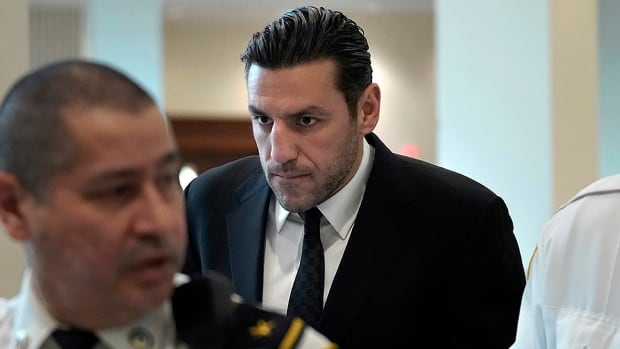
Boston Bruins forward Milan Lucic was released on personal recognizance bail Tuesday after pleading not guilty to assaulting his wife.
According to a Boston Police Department report, Lucic appeared intoxicated when officers arrived at his North End apartment early Saturday after his wife reported that he tried to choke her. Brittany Lucic told the responding officers her husband had pulled her hair but said he did not try to strangle her. She declined an offer of medical treatment.
Milan Lucic, a member of the Bruins 2011 Stanley Cup championship team, was arrested on suspicion of assault and battery on a family member, which carries a maximum penalty of 2 1/2 years in prison.
The Vancouver native did not speak at his arraignment Tuesday morning. A plea of not guilty was entered on his behalf, and a pre-trial hearing was set for Jan. 19. As condition of his bail, Lucic was prohibited from abusing the alleged victim and from consuming alcohol.
After being arraigned on a domestic violence charge, @NHLBruins winger Milan Lucic leaves out a back door of the courthouse and refuses comment to @7Newspic.twitter.com/Z89WNsTiEa
The judge granted a motion from Lucic’s attorney that he be allowed to attend the next hearing by video call.
Lucic’s agent did not reply to an email seeking comment over the weekend, and did not respond to a text message seeking comment Monday.
The six-foot-three, 236-pound Vancouver native has not played since Oct. 21 because of injury. He has two assists in four games this season.
The Bruins said Saturday that Lucic was taking an indefinite leave of absence from the team. Head coach Jim Montgomery and captain Brad Marchand said they would provide Lucic’s family any support necessary but declined to otherwise comment on the arrest.
With rising food and housing costs dominating the political agenda, Deputy Prime Minister and Finance Minister Chrystia Freeland is expected to deliver a fall economic statement Tuesday that will spur housing construction and help Canadians facing affordability challenges. Here’s how to watch and listen to CBC’s budget coverage:
Special begins at 4 p.m. ET on CBC News Network, CBC Explore, CBC.ca and CBC Radio
CBC News ·
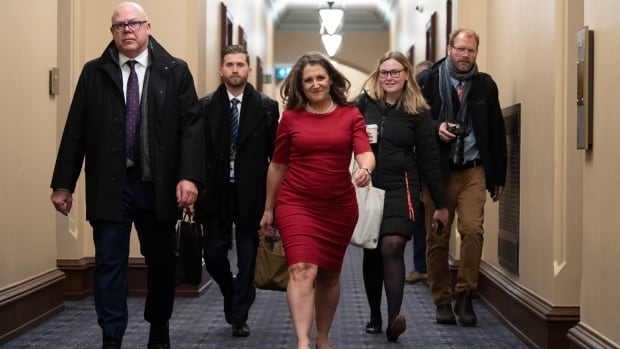
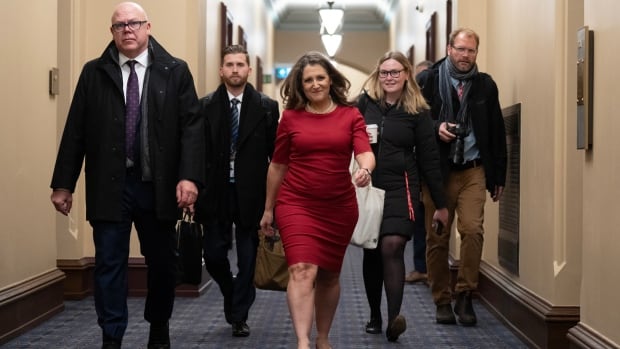
Deputy Prime Minister and Minister of Finance Chrystia Freeland makes her way to a cabinet meeting on Parliament Hill, Tuesday, November 21, 2023 in Ottawa. (Adrian Wyld/The Canadian Press)
With rising food and housing costs dominating the political agenda, Deputy Prime Minister and Finance Minister Chrystia Freeland is expected to deliver a fall economic statement Tuesday that will spur housing construction and help Canadians facing affordability challenges.
Here’s how to watch and listen to CBC’s budget coverage:
Starting at 4 p.m. ET, the special will be hosted by CBC Chief Political Correspondent Rosemary Barton and Power & Politics host David Cochrane on CBC News Network, CBC News Explore and on CBC.ca.
Also starting at 4 p.m., CBC.ca will be livestreaming Freeland’s speech to the House of Commons along with opposition leaders’ responses.
Listeners can tune in to CBC Radio’s special beginning at 4 p.m., which will be hosted by World at Six host Susan Bonner and host of CBC Radio’s The House, Catherine Cullen.
With rising food and housing costs dominating the political agenda, Deputy Prime Minister and Finance Minister Chrystia Freeland is expected to deliver a fall economic statement Tuesday that will spur housing construction and help Canadians facing affordability challenges. Here’s how to watch and listen to CBC’s budget coverage:
Special begins at 4 p.m. ET on CBC News Network, CBC Explore, CBC.ca and CBC Radio
CBC News ·
Deputy Prime Minister and Minister of Finance Chrystia Freeland makes her way to a cabinet meeting on Parliament Hill, Tuesday, November 21, 2023 in Ottawa. (Adrian Wyld/The Canadian Press)
With rising food and housing costs dominating the political agenda, Deputy Prime Minister and Finance Minister Chrystia Freeland is expected to deliver a fall economic statement Tuesday that will spur housing construction and help Canadians facing affordability challenges.
Here’s how to watch and listen to CBC’s budget coverage:
Starting at 4 p.m. ET, the special will be hosted by CBC Chief Political Correspondent Rosemary Barton and Power & Politics host David Cochrane on CBC News Network, CBC News Explore and on CBC.ca.
Also starting at 4 p.m., CBC.ca will be livestreaming Freeland’s speech to the House of Commons along with opposition leaders’ responses.
Listeners can tune in to CBC Radio’s special beginning at 4 p.m., which will be hosted by World at Six host Susan Bonner and host of CBC Radio’s The House, Catherine Cullen.
Canada’s consumer price index rose by 3.1 per cent in the year up to October, down from 3.8 per cent the previous month but in line with what economists were expecting.
Statistics Canada reported Tuesday that the biggest reason for the deceleration in the cost of living was a drop in the cost of gasoline, which declined by 6.4 per cent during the month of October alone, and is down by 7.8 per cent compared to where prices were a year ago.
If gasoline is stripped out of the numbers, the inflation rate would have been 3.6 per cent in October. That’s slightly lower than the 3.7 per cent non-gasoline inflation rate clocked the month before.
Food prices increased at a 5.4 per cent pace over the past year. While that’s still higher than the overall inflation rate, it’s down from the 5.8 per cent annual pace seen in September.
Grocery prices have now decelerated for four months in a row, but as TD Bank economist Leslie Preston noted, consumers can be forgiven for not really feeling any tangible relief at the checkout line.
“Slower growth in prices may be imperceptible to consumers who are still paying more than 20 per cent more for a basket of groceries relative to three years ago — the biggest such increase in 40 years,” she said.
While the pain at the cash register for staples like food and gasoline is getting comparatively better, plenty of other aspects that contribute to the cost of living continue to increase at an eye-watering level.
WATCH | How inflation has this woman working 3 jobs just to keep up:
She’s juggling 3 jobs and grad school — and struggling to get out of bed
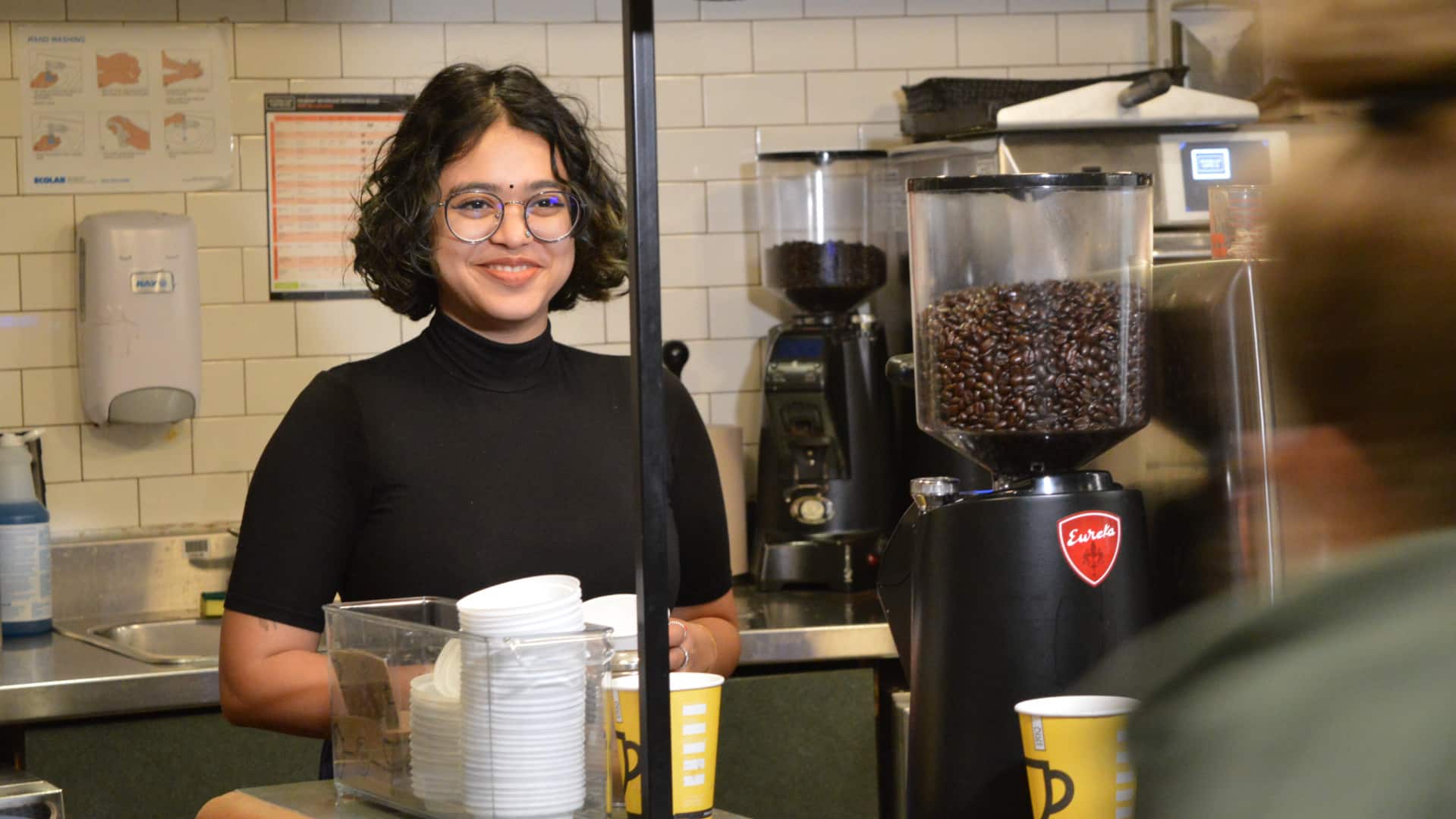
Featured VideoTwo coffee shop jobs, a third job on the side, and a master’s degree to study for. Shramana Sarkar’s daily life is so overwhelming that she struggles to get out of bed some days. But every day, she finds a way. See Sarkar’s story in Part 3 of our series The Grind, profiling people juggling multiple jobs.
Overall, shelter costs are up by more than six per cent in the past year. That’s about twice the overall inflation rate.
A big reason for that is rent which keeps going up at its fastest pace in years. The data agency says the typical cost of rent went up by 8.2 per cent in the past year. That’s up from 7.3 per cent in September.
The costs associated with owning are no better, however, with mortgage interest costs up by more than 30 per cent in the past year. And property taxes increased by 4.9 per cent in the past year. That’s up from 3.6 per cent this time last year, and it’s also the biggest one-year increase in property taxes on records dating back to 1992.
If one were to strip mortgage costs out of the numbers, the inflation rate would be 2.2 per cent and if one were to strip out shelter entirely, it would be 1.9 per cent.
Economist Tu Nguyen with consultancy RSM Canada Inc. says the shelter costs are eating a larger and larger chunk of household budgets, leaving less money for everything else and bringing down inflation in the process.
“On a per capita basis, consumer spending has actually dropped,” she said. “Households who get hit with higher mortgage payments find themselves cutting back on discretionary spending.”
She says the data give the Bank of Canada more than enough of an excuse to stop any further rate hikes.
“The CPI report is the latest sign of a cooling economy that should make the Bank of Canada feel comfortable keeping the policy rate unchanged at the December announcement. At this point, the Bank can sit back and let the forces of monetary policy work its way through the economy.”
Are you a permanent resident living in Canada but have lost hope in building a life here? Are you planning on leaving the country? We want to know why. Tell us your story by emailing ask@cbc.ca.
The plot of land is near-empty, but standing on the November-frosted dirt and looking over it, Elaine Arlene Pelletier calls it home. And that’s what her community plans to build, board by board.
Pelletier is an elder from Lucky Man Cree Nation, a Saskatchewan nation that has formally held the land, located about 100 kilometres northwest of Saskatoon, for about 34 years.
There are few indications on the 3,100 hectares of land that it might be home to anyone: an aged community hall, a nearby trailer and a yellow “NO HUNTING NO TRESPASSING” sign.
Now they’ve been joined by what will soon be the community’s first house, its skeleton grafted from the bones of a recently dismantled grain elevator.
“To see these buildings here it’s emotional, because we’ve never had a home — a reserve — before,” Pelletier said. “Now this is our home.”
Pelletier has been living for about 42 years in a small town about an hour’s drive away, but said she would move in an instant if there was somewhere to stay on reserve.
That’s the goal Lucky Man has for Pelletier and the other members. Leadership estimates there are about 120, but expects that number to grow.
See footage of the new house in progress:
Sask. First Nation community comes from the bones of a grain elevator
Featured VideoChief Crystal Okemow of Lucky Man Cree Nation gets her first look at a net-zero constructed home on their land made from recycled wood from a grain elevator.
The house is being built with wood carefully collected during the dismantling of two Saskatchewan grain elevators. Its an environmentally friendly alternative to cutting down more trees that reduces the carbon footprint in comparison to typical construction, though the calculations to determine if the build is fully net-zero construction haven’t been completed.
The plan is for the house to have net-zero energy and emissions thanks to well-insulated walls, a heat pump and solar panels.
Lucky Man Cree Nation Chief Crystal Okemow said they chose a net-zero build with climate change in mind. They want to set the stage for the rest of the community, also planned to be net-zero.
“You always think about the generations behind you, coming.”
Once a grain elevator, now a house
ABMT Wood Solutions, one of the companies the First Nation has been working with, dismantles aging, unused grain elevators. Instead of being trucking to garbage dumps, or burned, the valuable century-old wood has become the walls and flooring of Lucky Man’s first house.
“The idea was to reuse this mass timber, which is really strong and it’s in really good shape,” said Ian Loughran, owner of Vereco Smart Green Homes, which oversaw the net-zero design of the building.
Loughran referenced the importance of net-zero emission homes, given the federal goal to lower emissions by 2030 and achieve net-zero by 2050.
WATCH | Company tears down Sask. grain elevators to reuse valuable wood:
Sask. company finds new uses for province’s old grain elevators
Featured VideoA Saskatchewan company is on a mission to deconstruct grain elevators and repurpose their wood into construction materials and affordable housing.
The plan is for the 1,450-square-foot home to be finished in March with electric heat and functioning sewer services. Water will have to be trucked in at first.
Lucky Man hasn’t chosen one person or family to occupy the home. Until it is a part of a neighbourhood, it will become a temporary residence for elders, families and guests celebrating at the community hall.
The Lucky Man Cree Nation community hall, with no kitchen or water supply, is one of two buildings on the reserve before construction began on the new home. (Dayne Patterson/CBC)
Chief Okemow said the next goal is about a dozen houses in the next five years, all net zero.
After that, about 40 homes over the next 20 years, along with businesses, roads and permanent water infrastructure.
Okemow said she asked members of the community — some across Saskatchewan, some as far as Canada’s east coast — if they would return home if there was a community to stay in. She said most of them are like Pelletier: build it and they will come.
From the dirt, up
Lucky Man’s biggest hurdles are money and policy, according to Okemow.
The community struggled to secure a reserve until its land entitlement was finalized in Treaty 6 territory in 1989.
Okemow said the membership started pushing leadership to finally build a physical community around the time of the pandemic.
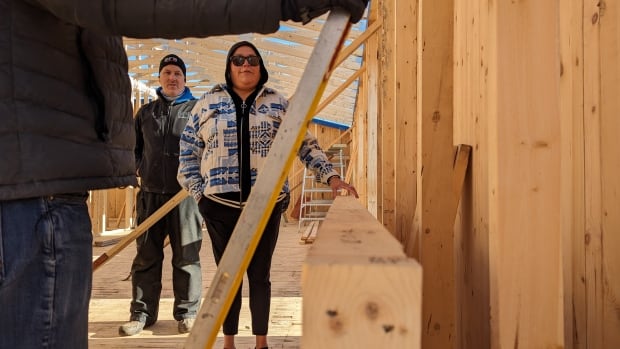
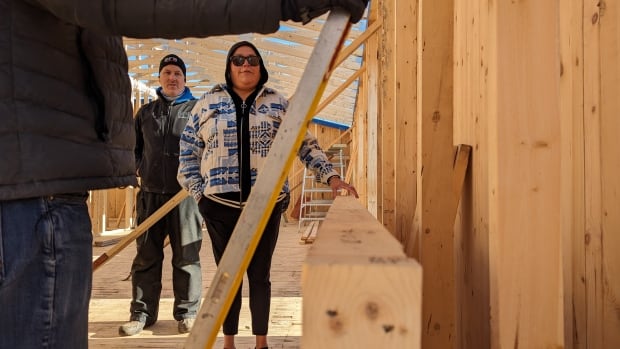
Chief Crystal Okemow, right, stands inside the new home being built on Lucky Man Cree Nation, holding a heavy wooden door intended for a security room inside. Gerard Burke, left, CEO of CFN Construction in charge of building the home, was among those talking with her about how the house will look when it’s completed in the spring. (Dayne Patterson/CBC)
With membership numbers so much lower than many other communities, and no one living on the reserve, council has to really battle for money from Indigenous Services Canada, Okemow said.
“Because we’re a small nation, Lucky Man sees a lot of discriminatory policies,” Okemow said.
She said the band’s relationship with Indigenous Services Canada has improved. Yet the dream for a complete community, drawn out in a master plan that Okemow was hesitant to share, is still distant.
This first home was built using money from a recent housing needs assessment, Okemow said. Without much more funding, the plan for the lake- and forest-dotted landscape will remain only a well-documented vision. Okemow is adamant that doesn’t happen. She plans to push for the government to follow its treaty obligations to aid First Nations.
“I’m a little hard-headed, but I like to use that to the advantage of the nation,” she said.
CBC has contacted Indigenous Services Canada for comment, but did not receive a response before publication time.
Okemow is optimistic that Lucky Man Cree Nation will find a way to build its community.
She said it’s important that children grow up in their home First Nation, rather than off-reserve like she did.
“I’ve never lived on Lucky Man,” she said. “It’s much more impactful when you’re living in your own tribe with your family, your relatives. It’s hard to put into words. It’s such a huge impact in your life.”
The plot of land is near-empty, but standing on the November-frosted dirt and looking over it, Elaine Arlene Pelletier calls it home. And that’s what her community plans to build, board by board.
Pelletier is an elder from Lucky Man Cree Nation, a Saskatchewan nation that has formally held the land, located about 100 kilometres northwest of Saskatoon, for about 34 years.
There are few indications on the 3,100 hectares of land that it might be home to anyone: an aged community hall, a nearby trailer and a yellow “NO HUNTING NO TRESPASSING” sign.
Now they’ve been joined by what will soon be the community’s first house, its skeleton grafted from the bones of a recently dismantled grain elevator.
“To see these buildings here it’s emotional, because we’ve never had a home — a reserve — before,” Pelletier said. “Now this is our home.”
Pelletier has been living for about 42 years in a small town about an hour’s drive away, but said she would move in an instant if there was somewhere to stay on reserve.
That’s the goal Lucky Man has for Pelletier and the other members. Leadership estimates there are about 120, but expects that number to grow.
See footage of the new house in progress:
Sask. First Nation community comes from the bones of a grain elevator
Featured VideoChief Crystal Okemow of Lucky Man Cree Nation gets her first look at a net-zero constructed home on their land made from recycled wood from a grain elevator.
The house is being built with wood carefully collected during the dismantling of two Saskatchewan grain elevators. Its an environmentally friendly alternative to cutting down more trees that reduces the carbon footprint in comparison to typical construction, though the calculations to determine if the build is fully net-zero construction haven’t been completed.
The plan is for the house to have net-zero energy and emissions thanks to well-insulated walls, a heat pump and solar panels.
Lucky Man Cree Nation Chief Crystal Okemow said they chose a net-zero build with climate change in mind. They want to set the stage for the rest of the community, also planned to be net-zero.
“You always think about the generations behind you, coming.”
Once a grain elevator, now a house
ABMT Wood Solutions, one of the companies the First Nation has been working with, dismantles aging, unused grain elevators. Instead of being trucking to garbage dumps, or burned, the valuable century-old wood has become the walls and flooring of Lucky Man’s first house.
“The idea was to reuse this mass timber, which is really strong and it’s in really good shape,” said Ian Loughran, owner of Vereco Smart Green Homes, which oversaw the net-zero design of the building.
Loughran referenced the importance of net-zero emission homes, given the federal goal to lower emissions by 2030 and achieve net-zero by 2050.
WATCH | Company tears down Sask. grain elevators to reuse valuable wood:
Sask. company finds new uses for province’s old grain elevators
Featured VideoA Saskatchewan company is on a mission to deconstruct grain elevators and repurpose their wood into construction materials and affordable housing.
The plan is for the 1,450-square-foot home to be finished in March with electric heat and functioning sewer services. Water will have to be trucked in at first.
Lucky Man hasn’t chosen one person or family to occupy the home. Until it is a part of a neighbourhood, it will become a temporary residence for elders, families and guests celebrating at the community hall.
The Lucky Man Cree Nation community hall, with no kitchen or water supply, is one of two buildings on the reserve before construction began on the new home. (Dayne Patterson/CBC)
Chief Okemow said the next goal is about a dozen houses in the next five years, all net zero.
After that, about 40 homes over the next 20 years, along with businesses, roads and permanent water infrastructure.
Okemow said she asked members of the community — some across Saskatchewan, some as far as Canada’s east coast — if they would return home if there was a community to stay in. She said most of them are like Pelletier: build it and they will come.
From the dirt, up
Lucky Man’s biggest hurdles are money and policy, according to Okemow.
The community struggled to secure a reserve until its land entitlement was finalized in Treaty 6 territory in 1989.
Okemow said the membership started pushing leadership to finally build a physical community around the time of the pandemic.
Chief Crystal Okemow, right, stands inside the new home being built on Lucky Man Cree Nation, holding a heavy wooden door intended for a security room inside. Gerard Burke, left, CEO of CFN Construction in charge of building the home, was among those talking with her about how the house will look when it’s completed in the spring. (Dayne Patterson/CBC)
With membership numbers so much lower than many other communities, and no one living on the reserve, council has to really battle for money from Indigenous Services Canada, Okemow said.
“Because we’re a small nation, Lucky Man sees a lot of discriminatory policies,” Okemow said.
She said the band’s relationship with Indigenous Services Canada has improved. Yet the dream for a complete community, drawn out in a master plan that Okemow was hesitant to share, is still distant.
This first home was built using money from a recent housing needs assessment, Okemow said. Without much more funding, the plan for the lake- and forest-dotted landscape will remain only a well-documented vision. Okemow is adamant that doesn’t happen. She plans to push for the government to follow its treaty obligations to aid First Nations.
“I’m a little hard-headed, but I like to use that to the advantage of the nation,” she said.
CBC has contacted Indigenous Services Canada for comment, but did not receive a response before publication time.
Okemow is optimistic that Lucky Man Cree Nation will find a way to build its community.
She said it’s important that children grow up in their home First Nation, rather than off-reserve like she did.
“I’ve never lived on Lucky Man,” she said. “It’s much more impactful when you’re living in your own tribe with your family, your relatives. It’s hard to put into words. It’s such a huge impact in your life.”