
spot_img
Saturday, February 28, 2026
More
    spot_img
    Home Blog Page 9

    Sask. First Nations call on province, feds to rescind policy that withholds income assistance for recipients

    0

    The Federation of Sovereign Indigenous Nations says it is frustrated with the federal and provincial government’s financial policy that withholds income assistance from First Nation citizens who receive per capita distributions from settlements of more than $15,000.

    “When our chiefs signed the treaty in the 1800s, one of them was exemption from taxation. Those treaties are sacred covenants… Those papers are of international law,” FSIN Chief Bobby Cameron said Tuesday. 

    “What they’ve done is this unilateral decision. No communication, unbeknownst to any chief, unbeknownst to the FSIN. How they’re taxing the poorest of the poor.”

    The settlements, known as “specific claims,” are designed to correct historic injustices. The federal government works with the communities under the Specific Claims Policy to resolve outstanding specific claims through negotiated settlements. 

    “They don’t give a damn about First Nation people because if they did, they wouldn’t hurt the poorest of the poor — our people who are going to receive those per capita distributions for the many, many decades of injustices,” he said.

    A man with a headdress.
    FSIN Chief Bobby Cameron is calling on provincial and federal governments to sit down with them to move forward. (Chanss Lagaden/CBC)

    Cameron said he asks Premier Scott Moe the reasons for his government to allow “such a harmful act” that will claw back any income assistance from First Nation citizens receiving above $15,000 in specific claims.

    “We are taking legal action on this infringement on our treaty rights… it’s a terrible move. It’s a human rights case in the making, this $15,000 limit threshold,” he said.

    “This is a battle brewing. It’s coming and it’s here to stay until we see it rule in our favour.”

    FSIN represents 74 First Nations in Saskatchewan and many chiefs shared their frustrations with the cap on Tuesday in a news conference in Saskatoon. The unanimous consensus was an urge to the federal and provincial governments to honour the spirit and intent of the treaties and implement the treaty promises made more than a century ago.

    FSIN said the provincial policy will also affect off-reserve First Nations members while the federal policy can restrict those living on reserve.

    “It is shameful and unconscionable that those disproportionately benefited from treaty are attempting to claw back this court-ordered redress intended to right past wrongs,” Cameron said.

    Chiefs spoke about how the exemption will help many single mothers and people in need in their communities and how Saskatchewan and Nova Scotia are the only provinces to impose the caps on $15,000.

    In an email statement, the Ministry of Social Services said the government recently sent a letter to FSIN indicating the ministry is reviewing its policy on Per Capita Distribution payments for First Nations members receiving income assistance benefits and welcomes conversation and feedback with First Nations leadership.

    “The ministry currently exempts Per Capita Distribution payments for First Nations members receiving SIS and SAID benefits, up to $15,000 per member, per settlement,” the statement said.

    CBC News has reached out to the federal government for comment.

    A woman speaks into microphones.
    Shelley Bear, the Chief of Ochapowace First Nation, says their nation is in a state of emergency due to the suicides among their youth and young mothers and they will be greatly impacted by this policy. (Chanss Lagaden/CBC)

    Shelley Bear, the Chief of Ochapowace First Nation, said the nation presently has six claims on the table with the government.

    “When we move to that place of reconciliation, all of a sudden they fail us once again by imposing policies that are going to hurt our people. Imposing policies on claims that were breached based on lack of consultation, based on their own policies and based on no understanding of our people,” Bear said.

    She said the nation is in a state of emergency due to the suicides among their youth and young mothers.

    “Those are the ones that are going to continue to suffer. Our most vulnerable people are the ones that are gonna be hurting once again,” she said. 

    Calvin Sanderson, chief of the Chakastaypasin band, said it took them some 35 years to negotiate their land claims but are still waiting for an offer.

    A man in a headress.
    Chief Calvin Sanderson says Saskatchewan isn’t providing First Nations people with enough money as it is, saying assistance isn’t keeping up with inflation. He says while Canada makes announcements on hosuing affordability, the housing crisis in First Nations is sidelined. (Chanss Lagaden/CBC)

    He said the province and the federal government are putting limits to their membership at no fault of their own.

    “The province only gives our membership a little bit out there to live with on their social assistance and they’re having a hard time today,” he said.

    “They don’t even have enough to pay for rent. They have to make a choice whether to pay rent or pay for food, or put the milk and diapers on the table… if you’re going to give them $15,000, that’s not going to go very far nowadays.”

    He said they have been dictated for over 135 years and clawing income assistance from their membership who receive per capita distributions from claims is just another example. He said there are still “a lot of treaty issues outstanding”.

    “Canada now has to step up to the plate. I’m grateful that we’re done our land claims and we’re going to move our own path forward but the province and the federal government got to stop dictating to us.”

    Regina police welcome province’s promised new shelter spaces for people with complex needs

    0

    The Regina Police Service’s (RPS’s) interim police chief says the force is prepared to take full advantage of 15 new shelter spaces promised by the province.

    Interim chief Dean Rae said RPS continues to deal with many people who have complex needs, such as mental health and substance abuse issues.

    From 2018 to July 2023, RPS made nearly 7,800 arrests for public intoxication, according to data presented to the Regina Board of Police commissioners on Tuesday. Rae said his officers are sometimes forced to hold these people in RPS cells because there is simply nowhere else to take them.

    “There isn’t a service or organization out there right now that would take individuals who are intoxicated if they’re combative or have other challenges within themselves. So oftentimes we end up having to bring them into our detention centre,” Rae said.

    This situation is not ideal and presents a risk to the force as an organization, he said, adding that even though there are paramedics that monitor people in RPS cells, they are not a substitute for a hospital or nursing station.

    Rae said RPS does not want to criminalize anyone who has a substance use disorder.

    “We want to take them to a place that can get them the proper supports, and in our detention we don’t have the proper supports available for them,” he said. 

    That’s why Rae is welcoming the announcement by the province.

    “We will utilize 15 beds with individuals for sure within the city of Regina, and we’ll continue to have discussions with the province on that support piece, because ultimately the support is what’s necessary for these individuals,” Rae said. 

    Saskatoon reports similar problems

    Saskatoon police have experienced similar challenges. 

    A report presented to Saskatoon’s board of police commissioners last week found that officers are left to manage dozens of people with mental health and addictions issues when there are no longer beds available at local detox or wellness centres in the city. 

    From Jan. 1, 2022 to Aug. 31, 2023, about 17,800 arrestees were brought into Saskatoon Police detention.

    Approximately 15 people per day — or 31 per cent — were detained only because they were intoxicated in public, despite not having committed a criminal offence.

    According to the report, approximately half of those people are homeless. 

    The province has announced it also plans to introduce 15 new shelter spaces for people with complex needs in Saskatoon.

    Loneliness is as bad for you as smoking, research shows. But the stigma stops people getting help

    0

    The Current20:35Loneliness as bad for you as smoking, says WHO

    Top health officials say loneliness is as bad for your health as smoking, but one doctor warns that the stigma around feeling lonely still stops people from reaching out for support. 

    “Just like thirst is a signal you need hydration, loneliness is a signal you need … human connection,” said Dr. Jeremy Nobel, a lecturer at Harvard Medical School and author of Project Unlonely: Healing our Crisis of Disconnection.

    “Why is it we’re guilty and ashamed about being lonely, where we don’t feel that way about being thirsty?” he asked The Current’s Matt Galloway. 

    Last week the World Health Organization designated loneliness as a “global public health concern,” appointing U.S. surgeon general Dr. Vivek Murthy to lead an international commission to tackle the problem. Research has shown that loneliness is as bad for people’s health as smoking 15 cigarettes a day.

    In a talk he gave at Yale last year, Murthy said he wants to raise the alarm about the shame people associate with loneliness.

    “To say you’re lonely almost feels like saying you’re not likeable. Or even worse, that you’re not lovable. And I know this because that’s how I felt as a child when I struggled with loneliness over the years,” he said during the talk on Sept. 8, 2022.

    WATCH | Loneliness: Society’s silent epidemic:

    Loneliness: Society’s silent epidemic | In-Depth

    Featured VideoOne in five Canadians identify themselves as lonely, something that is more than just a feeling we sometimes have in our lowest moments. It’s been described as an epidemic, and some say it is killing us. Feelings of loneliness have been linked to a higher risk for depression, anxiety, dementia, heart disease and diabetes. Ioanna Roumeliotis gives us an in-depth look into this world, and the people who are fighting to escape it.

    Nobel said that the condition is “probably the biggest preventable risk factor” for mental health concerns including depression, addiction and suicidality. 

    But he pointed to research in older adults that shows high, chronic levels of loneliness also exacerbate multiple physical ailments. 

    “[It] increases risk of heart attack or stroke or death from either by 30 per cent; risk of dementia by 40 per cent; type 2 diabetes 50 per cent,” he said.

    “So bottom line, we need to take it very seriously as a medical issue.”

    Pandemic created ‘window of opportunity’

    Nobel said there’s three main kinds of loneliness, all of which people can experience to varying degrees.

    “First, there’s psychological loneliness. Is there someone I can confide in and tell my troubles to? Does someone have my back?” he said.

    There is also societal loneliness, he added, where a person can feel systematically excluded due to factors like their race, gender or disability status. 

    “And then there’s a kind of existential or spiritual kind of loneliness where you wonder if your life has meaning,” he said.

    Understanding the root causes of a person’s loneliness is important, he said, so that interventions can be tailored to address it. 

    Pandemic lockdowns became a cause of loneliness for many people, but Nobel thinks that period of isolation has offered “a little window of opportunity” to overcome the stigma.

    “We were isolating in response to a common threat, not because we were flawed or unattractive or excluded,” he said.

    “And so, yes we were lonely, but we didn’t feel embarrassed, ashamed or guilty about that loneliness. So we were able to talk about it.”

    WATCH | The challenge of solo living during the pandemic:

    Tighter COVID-19 restrictions a struggle for those living alone

    Featured VideoAs public health officials urge residents to limit in-person social interaction to their own households, adherence is especially daunting for people who live alone.

    He thinks that helps to highlight why the stigma around loneliness is a social and cultural narrative — one that can be changed.

    Making loneliness ‘a new vital sign’

    Dr. Jacques Lee studies loneliness, and has seen first hand that people are reluctant to talk about it.

    “Studies of loneliness often have difficulty finding people because, you know, nobody defines himself as being lonely,” said Lee, the inaugural SREMI research chair in geriatric emergency medicine at the Schwartz/Reisman Emergency Medicine Institute at Mount Sinai Hospital in Toronto. 

    Lee said that many doctors will empathize with a patient experiencing loneliness, but often won’t consider it relevant to the diagnostic process. 

    He thinks loneliness needs to become “a new vital sign,” checked as routinely as blood pressure.

    “I think we’re beginning to understand that it should be a priority. It must be a priority,” he said. 

    Nobel said that doctors can connect patients “to community-based opportunities in faith-based groups, libraries, schools where they can have the authentic interaction with other people.”

    “If you feel you’re lonely, the most important thing to know is you’re not alone in that. Also, that it’s not your fault,” he said.

    Sobeys owner expands annual grocery price freeze between now and January

    0

    Grocery chain Sobeys is rolling out its annual price freeze on thousands of food items over the holiday season, and expanding it more than usual in the face of heightened consumer concern about inflation.

    It’s customary for grocery chains to hold prices steady as much as possible during the busy holiday season, but Nova Scotia-based Empire Company — which owns Sobeys, FreshCo, Foodland, Farm Boy, Longo’s and Safeway — says it is taking that policy one step further this year to include more items.

    “Typically, we would hold prices on approximately 90 per cent of packaged products during this time,” spokesperson Andrew Walker told CBC News in a statement. 

    This year, the chain says the “totality” of its packaged goods offerings will see prices held at their November 2023 price until at least January. That’s about 20,000 products, all told, and it includes the cancellation of planned price increases on about 1,700 items.

    “This action will remain in place regardless of any internal or external conditions that might cause those prices to go up,” Walker said. 

    Efforts to stabilize prices

    Walker confirmed the news, which was first reported by the Toronto Star.

    He added that the chain has “significant and meaningful plans in development to continue to help stabilize food prices past February,” but declined to offer specifics.

    More than a month ago, Canada’s Industry Minister François-Philippe Champagne teased at a press conference that the major grocery chains were about to announce plans to “stablize” food prices “within days,” but none of the chains have announced anything concrete in the five weeks since that pronouncement.

    WATCH | Government says grocery price stabilization is coming soon: 

    Grocery price freezes and discounts coming soon, government says

    Featured VideoThe federal government says Canada’s five major grocery chains have delivered plans to stabilize food prices, promising more discounts, price freezes and price-matching campaigns.

    “Empire has taken Minister Champagne’s and Canadian’s concerns seriously and we have done everything possible as requested by the Minister in the mid-September meeting with grocers,” Empire said in its statement.

    Limited price freezes are a fairly common occurrence in the industry over the holiday season. Last year, No Frills made headlines by freezing prices on its No Name products in a move that experts told CBC News at the time was more of a public relations strategy than a real policy shift.

    Tyler McCann, managing director of the Canadian Agri-Food Policy Institute, says the moves by retailers have more to do with global inflationary forces easing than any pressure from government.

    “This has a lot more to do with the supply chain working itself out than anything the Government of Canada has done recently,” he told CBC News in an interview.

    While he gives Empire credit for genuinely expanding its typical price freeze beyond what they would normally have done by including products outside of the in-house brand names it controls, he cautions that some sort of price freeze this time of year is industry standard, whether the companies used to announce it or not.

    “This time of year, historically, we normally see retailers freeze prices on some products. They would have just done that as part of their operations, a business decision,” he said. “But given the sensitivity around pricing and increases, we’ve seen more companies being more public with practices they’ve already been doing.”

    The move by Empire comes on the same day that Statistics Canada released its latest consumer price index.

    The data shows the inflation rate on food decelerated to an annual pace of 5.4 per cent. That’s down from 5.5 per cent the month before, but still well ahead of the 3.1 per cent overall inflation rate.

    “Food is still getting more expensive but the pressure on the gas pedal is coming off,” McCann said.  “The numbers going in the right direction.”

    Saskatchewan non-profit seeks funding to fight substance abuse, HIV spread

    0

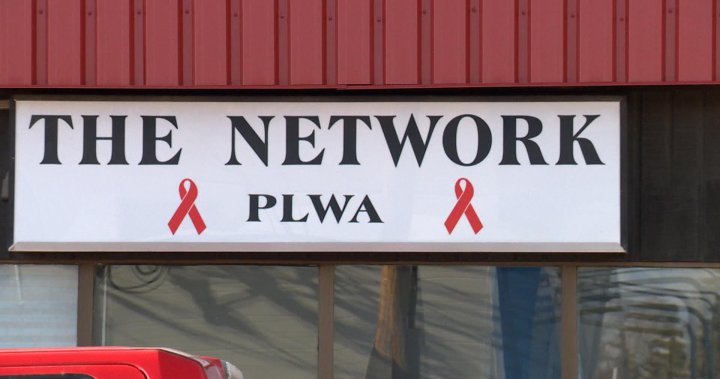
    The Persons Living with AIDS Network (PLWA) of Saskatchewan is seeking permanent funding from the federal and provincial governments to battle substance use in the community.

    Cheryl Barton with the network said it was given over $6,000 of funding to extend its pilot program by one month.

    The $125,000 two-year program was supposed to wrap up in February 2024 but has been extended to March.

    Individuals received case management from support workers, participated in road to recovery groups and clean equipment supply to prevent the spread of HIV through needles.

    “These are Indigenous people we are talking about,” Barton said. “They are the responsibility of the federal and provincial government when they are off reserve and they are not receiving the help that they need.”

    She said the network has reached out to the Ministry of Health to add additional funding to their yearly service agreement.

    Story continues below advertisement

    The PLWA is looking for funding that includes HIV prevention, linkage to care and moving people to undetectable status. According to Barton, that includes access to clean addictions and drug supplies.

    She said they are waiting on a response.

    “The work that we are doing is across systems of care. It’s not just about HIV, it is about trauma-informed care.”

    Starla Pelletier is an Okemaw and Minowin worker at the Niiyanaan Pimatishihk Wellness Centre in Saskatoon working in patient recovery and peer navigation.

    “I am like a human diary,” Pelletier said. “They come and unload and go from there. I learn about them and where they are coming from.”

    She noted she is recovering from addiction herself.

    “After getting clean and trying to find myself, this place fell in my lap basically. I like to say the angels did it.”

    Pelletier said she wishes Saskatoon had more treatment and detox centres.

    “We need so much more help than what we are getting. Quadruple it.”

    She added that a majority of the members at the Niiyanaan Pimatishihk Wellness Centre are of Indigenous background.

    Story continues below advertisement

    “It complicates things because we get treated differently,” Pelletier said. “I feel like we are looked down upon and frowned upon not only because we are Indigenous but also because we are HIV-positive. We are also drug addicts but that comes from generational hurts and traumas.

    “I would love to say we are getting there just by little steps, but it’s just the constant battle dealing with homelessness, addictions and HIV so they have a lot on their shoulders.”

    Pelletier said that longer-term programming is needed.

    “There’s only so much we can do with the time we are given.”

    The government of Canada announced $21 million in October for 52 community-led projects across the country.

    Saskatchewan will receive $964,435 in total, including $6,631 for the Niiyanaan Pimatishihk Miyooayaan Pilot Project.

    “We are tired,” Barton said. “We are not discouraged, although we do see some daily discouragement when we see things that are tough to see, but we do know that with long-term programming, we could turn this around.”

    She said the Niiyanaan Pimatishihk Wellness Centre will never close its doors.

    “No file is ever closed. People can come back whenever they need to for support.”

    Story continues below advertisement

    Global News has reached out to the Ministry of Health for comment.

    &copy 2023 Global News, a division of Corus Entertainment Inc.

    Moe says school boards will be responsible for discipline if teachers don’t follow pronoun law

    0

    Dozens of Saskatchewan teachers have signed a petition against the province’s law which requires parental consent when a student wishes to go by a different name or pronoun in school.

    But despite the pushback, Premier Scott Moe has no intention of rescinding the law.

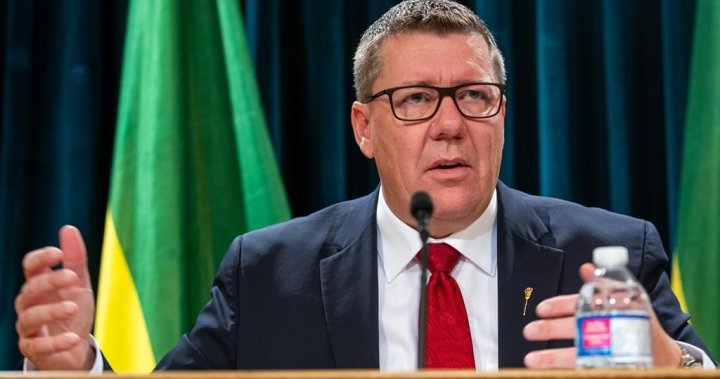
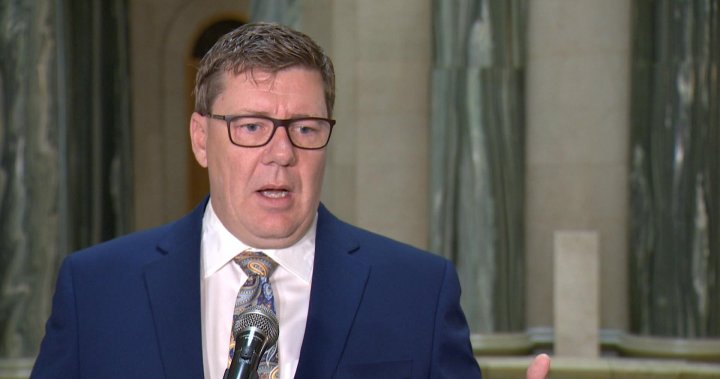
    “This is a policy about when a school will recognize a change in name or pronoun or even gender,” Moe said. “Those are decisions that the parent should be part of before a school ultimately is going to recognize any of those changes.”

    Moe, however, is not sure what consequences could look like for teachers who choose to ignore the legislation.

    Moe said now that the policy is law, it is up to the school divisions to make sure their employees are following it just as any other employer would be expected to enforce rules in their company.

    Story continues below advertisement

    “I don’t know what those protocols are, and if they differ between school divisions, but that is an inquiry that we may make at some point, but I haven’t made it yet,” Moe said.

    For opposition NDP leader Carla Beck, she believes the policy should be scrapped all together.

    Beck questions why the province needed to hold an emergency legislature session and use the notwithstanding clause to introduce the law, when the government doesn’t have a clear answer on how it will be enforced and followed.

    “This was an ill-thought-out bill that was done without consultation,” Beck said Tuesday. “Had they consulted, they would have understood that these issues and I don’t think we’ve seen all of them would come to light.”

    &copy 2023 Global News, a division of Corus Entertainment Inc.

    ‘No good way to enforce a bad law’: Retired teacher weighs in on Sask. pronoun policy

    0

    “We’ve been called pedos and groomers over and over and over again, which is ridiculous,” said Margi Corbett.

    Corbett is a retired teacher who’s been working in the field for 30 years and is hoping for teachers to stop being targeted online as Saskatchewan’s pronoun policy gets implemented.


    Click to play video: 'Saskatchewan lays out ‘work ahead’ in throne speech concerning parental rights issues'


    Saskatchewan lays out ‘work ahead’ in throne speech concerning parental rights issues


    Dozens of Saskatchewan teachers have signed a petition against the province’s law, which requires parental consent when a student wishes to go by a different name or pronouns in school.

    Story continues below advertisement

    But despite the pushback, Premier Scott Moe has no intention of rescinding the law.

    “There’s no good way to enforce a bad law,” Corbett said.

    Moe said on Tuesday that it will be up to school divisions to make sure their employees are following the law, just as any other employer would be expected to enforce rules in their company.

    Moe, however, is not sure what consequences could look like for teachers who choose to ignore the legislation.

    “I don’t know what those protocols are, and if they differ between school divisions, but that is an inquiry that we may make at some point, but I haven’t made it yet,” Moe said.

    “This is a policy about when a school will recognize a change in name or pronoun or even gender,” Moe said.

    “Those are decisions that the parent should be part of before a school ultimately is going to recognize any of those changes.”

    Corbett said it was interesting that Moe wanted school divisions to take charge of enforcing the policy even though nobody working in the education sector was consulted on it in the first place.

    Moe has mentioned in the past that the people who have been consulted regarding the pronoun policy were parents and MLA’s.

    Story continues below advertisement

    “It’s already damaging. It’s hurting our most vulnerable kids,” Corbett said.


    Click to play video: 'Protestors rally around province against pronoun policy'


    Protestors rally around province against pronoun policy


    She said this is creating some cognitive dissonance for teachers and that this policy goes against a teacher’s code of ethics.

    Corbett said teachers have been thrown into this politicized situation with many not wanting to speak on the matter.

    “And I don’t blame them.”

    When asked how she sees this policy being enforced, she wondered if it even could.

    “Realistically I don’t think it can be enforced. I don’t know how else to answer that question, I guess maybe a slap on the wrist?”

    Global News tried to answer that same question by reaching out to several school boards across the province as well as the Saskatchewan School Boards Association (SSBA).

    Story continues below advertisement

    Many didn’t respond, others refused to comment, and the SSBA noted that the matter was still technically before the courts.

    Corbett said that this situation was both damaging to kids and teachers.

    She said teachers and parents have been working together for the best possible outcome for the kids, and she wanted parents to at least try and regain respect for teachers.

    “I really hope that there are parents out there who realize that teachers are not evil. Teachers are trying to do their best for students who need support.”

    — with files from Andrew Benson

    &copy 2023 Global News, a division of Corus Entertainment Inc.

    Sask. NDP accuses MLA for raising Regina motel rates on social assistance client

    0

    The Saskatchewan NDP is accusing a provincial MLA that he owns the Sunrise Motel in Regina and had increased rates for a social assistance client.

    Regina resident Evelyn Harper was staying at the motel, which the Sask. NDP claims is owned by MLA Greg Grewal, after she was evicted from her government housing unit earlier this year.

    The Saskatchewan NDP obtained receipts from the Ministry of Social Services that raises questions about mismanagement of public funds, the transparency of the Sask. Party government and possibly even the ethics of its individual employees.

    During a press conference on Nov. 15, 2023, the Opposition social services critic said the public deserves answers.

    “They demonstrate that the Sunrise Motel … significantly inflated their rates when the Ministry of Social Services began footing the bill,” said Meara Conway.

    Story continues below advertisement

    “The price increased dramatically from Oct. 29th to Nov. 1st … the facts show that the only difference is that the Ministry of Social Services got involved and offered to foot the bill with taxpayer dollars.”

    Harper was evicted from government housing on Oct. 27, 2023. With nowhere to go, she found a room at the Sunrise Motel where she paid $132 a night, plus a $200 damage deposit when she first checked in. Two days later, the rate increased to $168 a night and on Nov. 1 to 3, the rate increased again to $200 a night.

    Conway said Harper’s situation was brought of the attention of the Minister of Social Services, Gene Makowsky.

    In a statement, the province responded that the Sask. NDP are making serious and unfounded allegations based on the fact they don’t understand that Social Services doesn’t typically pay damage deposits.

    “There is no standard rate for motel rooms. The price fluctuates based a number of factors including the type of room requested, demand and availability,” the statement read.

    “Specific to this situation, all regular guests must provide a $200 damage deposit. However, Social Services does not typically pay damage deposits, which amounts in room charges being restated, appearing higher than when Social Services does not pay the cost.”

    The province denies the Sask. NDP’s claims that MLA Grewal manages the Sunrise Motel and stated that Harper has been placed into stable housing and no longer requires accommodations at Sunrise Motel.

    Story continues below advertisement

    Grewal was not available for a comment.

    — with files from The Canadian Press 

    &copy 2023 Global News, a division of Corus Entertainment Inc.

    Saskatchewan launches new program to expand Child Support Service

    0

    Parents going through a separation and a divorce will no longer have to go to family court to calculate child support.

    The government of Saskatchewan is launching a new program to expand the Child Support Service aimed to help families by reducing children’s exposure to conflict.

    According to justice minister and attorney-general Bronwyn Eyre, family court process can be expensive, time-consuming and complex, which could also cause additional stress to parents as well as children.

    “This service aims to take away some of that financial burden and stress, allowing parents to focus on what really matters — their children,” Eyre said.

    Legal director of Saskatchewan Legal Aid’s Regina city office, Tyne Hagey, has been in family law for the past eight years. She says parents disagree on the amount of child support and sometimes they need professional help with the calculation process.

    Story continues below advertisement

    “Sometimes when parents disagree about child support its only about a few hundred dollars. This is because sometimes they have their own idea about how much the other parent is earning, and how that income should be valued, or sometimes they are just misinformed about the child support process and about how it’s calculated and works,” Hagey said.

    “People often turn to professional help for calculating child support. So, services like the child support calculation service are going to help parents, you know, take their incomes, compare it and save that time and get it done right away when contested in court.”

    This child support service expands on the recalculation service launched in 2018 to offer a faster way to update child support amounts for existing child support orders.

    “Well, as I said, it’s been in place since 2018. Part of the legislation that was passed in 2018 was about bringing in that recalculation system. And there were a number of aspects in that legislation that touched on support and the workings of the support system,” Eyre said.

    “And really from 2018 to now, a sense that we could expand this then to the calculation service right off the top. And I think there’s pretty broad consensus about the need to help people, from an access to justice perspective, get around some of that that conflict which we see in family law cases.”

    Story continues below advertisement

    The recalculation portion of the service is funded by the Government of Saskatchewan to the tune of $348,000 per year. Now the program will also provide calculation services to establish child support amounts at the beginning of a separation.

    The federal Department of Justice is providing financial support through the Canadian Family Justice Fund with the objective of improving access to the family justice system.

    The government set up this pilot project to build financial stability for children. Parents applying for the child support decision comes at no cost. It can be done without paying legal fees, or filling out complex court forms.


    Click to play video: 'Saskatchewan childcare providers react to $10-a-day child care program'


    Saskatchewan childcare providers react to $10-a-day child care program


    Saskatchewan says Ottawa’s net-zero plan would cost province $40B, job losses

    0

    The Saskatchewan government says Ottawa’s target to have net-zero emissions by 2035 would cost the province billions of dollars.

    Dustin Duncan, the minister responsible for Saskatchewan’s electricity provider, says the province would have to spend $40 billion from now until 2035 to meet the standards.

    Duncan also says electricity rates would more than double and hundreds of SaskPower employees could be without work.

    Ottawa’s clean electricity standards would require all electricity to be from renewable sources, like wind or hydro, or be equipped with carbon capture technology.

    Federal Environment Minister Steven Guilbeault has said he wants to work with the provinces and has disputed claims that the regulations would impose unfair costs or cause reliability problems.

    Saskatchewan has instead proposed it meet net-zero targets by 2050.

    &copy 2023 The Canadian Press