

spot_img
Friday, April 17, 2026
More
    spot_img
    Home Blog Page 7

    SHA returning AIMS employee scheduling to previous systems

    0


    In response to the challenges with the employee scheduling component of the Administrative Information Management System (AIMS) that have been raised by health-system employees, the Government of Saskatchewan has directed the Saskatchewan Health Authority (SHA), in partnership with 3sHealth and the Ministry of Health, to return to the previous scheduling systems.

    We want to sincerely thank health-system employees for their continued perseverance and dedication in adapting to the new system. We also acknowledge and apologize for the frustrations many have experienced with the scheduling component of AIMS.

    This change affects approximately 7,000 employees who have been using the scheduling component in the former Kelsey Trail and Cypress health regions, as well as out-of-scope employees. The supply chain, finance, payroll, and human resources components of AIMS, which are in use by about 50,000 employees, remain stable and are not impacted by this decision.

    The SHA and 3sHealth are targeting November 30 for the return to the previous scheduling systems. Employees and managers will receive direct communication and support throughout this transition to ensure they have the information they need and that service to patients and residents continues without interruption.


    Source link

    Online lab booking expanding to Moosomin, Indian Head, and Fort Qu’Appelle

    0


    News Release

    Local

    Southeast

    Fort Qu’Appelle

    Indian Head

    Moosomin

    The Saskatchewan Health Authority (SHA) is expanding its online Patient Booking System to include lab appointments in Moosomin, Indian Head, and Fort Qu’Appelle. This tool enables patients to book appointments for blood and urine collection, electrocardiograms (ECGs) and glucose intolerance testing online.

    Booking opens in Moosomin on October 28, in Indian Head on October 29, and in Fort Qu’Appelle on October 30, with appointments available in each community starting one week after booking opens.

    The SHA Patient Booking System is the fastest way to book a lab appointment and is available 24 hours a day, seven days a week. To book your appointment using the online system, you need:

    If you do not see your desired appointment type or location, or if you require further assistance, call the Patient Booking System Call Centre Monday through Friday from 8:45 a.m. to 4:45 p.m. (closed statutory holidays) at 1-833-727-5829. Walk-in appointments will continue to be available on a first-come, first-served basis at all testing locations.


    Source link

    Giving thanks for Nutrition and Food Services

    0


    On Thanksgiving weekend, 900 patients in Saskatoon hospitals celebrated the holiday with a Thanksgiving dinner. Those enjoying the full meal received the classic dinner of turkey, mashed potatoes and gravy, stuffing, cranberry sauce and a pumpkin tart. It’s one of the (tasty) ways Nutrition and Food Services show our values in action.

    “Compassion is the very first of our CARES values,” said Joy Ang, Manager of Food Production Saskatoon for Nutrition and Food Services, “and one of the ways we can show patients compassion at a time when they really need it is to feed them that special meal they might be missing out on at home.”

    This year, the meal came with a special ingredient: sage grown in an aeroponic garden on the roof of Royal University Hospital, used in the stuffing. The garden, now in its second year, expanded in 2025, producing over 750 pounds of locally harvested produce like lettuce, spinach, tomatoes, cilantro, mint and sage for hospital meals.

    “The rooftop produce is a great, sustainable, addition to our pantry,” said Ang. “In fact, we harvested enough sage that we will use it in the stuffing for the Christmas dinners as well.”

    No matter the occasion, the Nutrition and Food Services team is living the CARES values, filling hearts and bellies at the same time.

    Sage and other herbs growing on the RUH rooftop garden and the Thanksgiving meal prepared for patients in Saskatoon hospitals


    Source link

    Staff letter demands changes at Royal University Hospital

    0


    “The Saskatchewan Health Authority is moving forward with a major expansion at Saskatoon City Hospital, adding 109 new acute care beds. Once complete, this project will increase Saskatoon’s acute care capacity by 14 per cent and improve patient flow across the city,” Cockrill said.

    The government is also investing in an expansion of the RUH Intensive Care Unit, with $3 million being allotted to it this year.

    A new Emergency Communication Nurse system in Regina and Saskatoon has also been implemented to reduce emergency room pressures, Cockrill noted.

    He said the program ensures non-emergency 911 calls are assessed and directed to the most appropriate care, allowing EMS to focus on urgent cases.

    “Over time, the system will help ease pressure on emergency departments, improve response times and better align patients with the care they need.”

    Jorgenson said he’s still worried that employees will be leaving RUH soon. He added that Cockrill’s recent statement addresses things that the government has been planning and promising for awhile.

    “My guess is that at least half of the people that signed this letter are actively thinking about or have already started looking for a new job,” Jorgenson said.

    “One of the main issues is that there are people who are in acute care beds who do not actually require care … ideally when somebody comes in from the emergency room and they are required to stay for more than a few hours, they should be getting a bed.”


    Source link
    thestarphoenix.com

    Pasqua Hospital Team Performs Western Canada’s first TORe procedure

    0


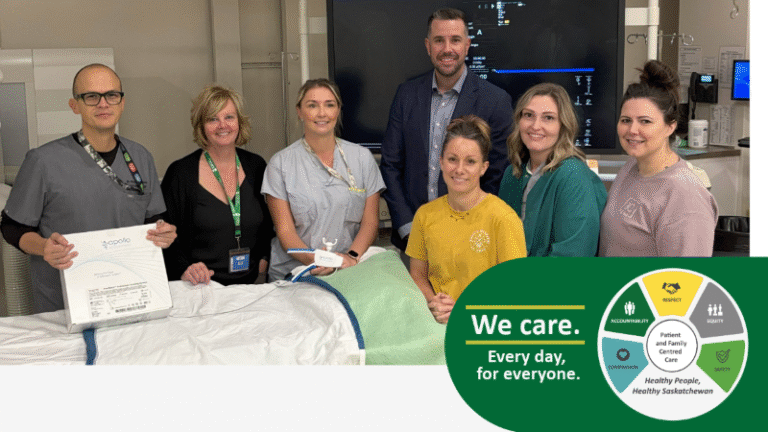
    On July 25, 2025, gastroenterologist Dr. Chris Rueda-Clausen and the team at the Pasqua Hospital gastrointestinal unit in Regina became the first in Western Canada to successfully perform the Transoral Outlet Reduction (TORe) procedure. 

    The Transoral Outlet Reduction procedure is a minimally invasive endoscopic procedure designed to help patients who experience complications after bariatric surgery, particularly weight regain or severe rapid gastric emptying (dumping syndrome). Until now, patients often required surgical revision or had to travel out of province for advanced endoscopic care.

    Performed through the mouth with an endoscope, no external incisions are required. The procedure reduces patient risk with a lower complication rate, faster recovery, improved outcomes of weight loss maintenance, and reduced symptoms of dumping syndrome.

    “With the Transoral Outlet Reduction procedure, we can offer our patients a safer and more cost-effective option right here in Regina,” said Dr. Rueda-Clausen. 

    The Pasqua Gastrointestinal Unit continues to lead in adopting advanced therapeutic endoscopy. By offering Transoral Outlet Reduction procedure and other innovative procedures, the team is expanding local access to treatments that once required major surgery, delivering safer care and better outcomes for Saskatchewan patients, a true representation of the SHA’s CARES values (compassion, accountability, respect, equity, and safety). 

    The team at the Pasqua Hospital gastrointestinal unit in Regina became the first in Western Canada to successfully perform the Transoral Outlet Reduction (TORe) procedure. From left: Dr. Chris Rueda-Clausen, Jennifer Taylor, Nicole McKinnnon, Nichole Leier, Ryan Del Bigiuo, Stacy Hubic, Ceigee Schrader


    Source link

    Saskatchewan Health Authority strengthens partnership with Surgical Centres Inc. to reduce wait times and expand access to care

    0


    The Saskatchewan Health Authority is renewing and expanding its partnership with Surgical Centres Inc. to enhance access to timely care for patients across the province. 

    Saskatchewan’s surgical teams have achieved record breaking volumes in the past two years: performing over 95,700 surgeries in 2023-24 and surpassing this total in 2024-25, with over 100,400 surgeries. Of these, community partners like Surgical Centres Inc. completed over 16,700 publicly funded surgeries — accounting for approximately 18 per cent of all core procedures in 2024-25 — helping ensure patients receive the surgical care they needed, sooner.

    “Continuing the successful partnership we’ve established with Surgical Centres Inc. is a win for Saskatchewan patients,” Health Minister Jeremy Cockrill said.  “The publicly-funded, private surgical facilities operated by Surgical Centres Inc. perform thousands of routine day surgeries each year, freeing up high-demand hospital OR spaces for more complex procedures. We appreciate the staff, surgeons, anesthetists, nursing and support staff for their dedication and ability to work with our health system to improve quality of life for patients.”

    Building on the last two years of success, the Saskatchewan Health Authority is now targeting 450,000 surgeries by the end of 2028. 

    “Each surgery represents a life-changing – and at times, life-saving – moment in someone’s life,” said Andrew Will, CEO of the Saskatchewan Health Authority. “That’s why Saskatchewan Health Authority is committed to advancing surgical services for the people of Saskatchewan by delivering timely, patient-centred care. By working together with partners like Surgical Centres Inc., we’re ensuring that more patients can access the procedures they need, when they need them, as close to home as possible.”

    Through this renewed agreement, Surgical Centres Inc. will continue providing a wide range of day surgical procedures — including general surgery, orthopedics, ophthalmology, plastics and reconstructive surgery, ENT, pediatric dental/oral maxillofacial, urology, and vascular surgery. The expanded scope now includes gynecology, further broadening access to important surgical services for Saskatchewan patients.

    Surgical Centres Inc. currently operates two centres – Prairieview Surgical Centre in Saskatoon and Regina Surgical Centre – and since 2012, has performed more than 181,000 procedures in partnership with the SHA.

    “Since 2012, Surgical Centres Inc. has been providing publicly-funded surgical access and delivering high-quality, patient-centred care and as our partnership with the Saskatchewan Health Authority has grown, Surgical Centres Inc. has added capacity and is helping respond to provincial waitlists,” said Fatima Fazal, Regional Director of Operations and Innovation, Surgical Centres Inc.  “Our clinical teams remain focused on delivering safe, consistent, and compassionate care, ensuring patients receive the surgical care they need. Together, we remain committed to ensuring Saskatchewan residents receive the publicly funded surgical care they need, when they need it.”

    This partnership, renewed through a transparent, competitive process, plays a vital role in increasing access to care, reducing waitlists, optimizing surgical capacity, and freeing up hospital operating rooms for more complex procedures for the benefit of Saskatchewan patients and families.  


    Source link

    Sask. hospital staff call out overcrowding, unsafe conditions in the emergency department

    0

    Nursing staff at St. Paul’s Hospital in Saskatoon are calling on Saskatchewan Health Authority (SHA) to act on unsafe conditions in the emergency department.

    CTV News obtained a letter to SHA leaders signed by 118 emergency department staff at St. Paul’s addresses overcrowding, unsafe ratios of nurses to patients and the indignity experienced by patients treated in hallways because of the lack of space.

    Overcrowding leads to poorer patient outcomes, longer hospital stays and higher mortality rates, the letter says, and physicians have nowhere to properly assess people.

    “We have great concerns that someday soon something bad will happen in our waiting room despite our best efforts to work in this broken system.”

    With nowhere to treat new patients coming in, staff had to place people in hallway beds, “which are literally just stretchers in front of nursing desks and lined down hallways, with no safety equipment for the patients, call bells or oxygen.”

    On Wednesday, the Saskatoon Fire Department said hallway beds were obstructing exit doors in the hospital, in violation of national fire code requirements.

    “These deplorable conditions are leading to breaches in confidentiality, lack of dignity, and unsafe care provision due to no space with appropriate monitoring for care required,” the letter says.

    “Staff report tremendous moral injury due to the conditions patients are placed in. Pad changes in the hallways while staff try hold sheets around the bed, examinations in the waiting rooms, chest pain patients with no heart monitor to observe their heart, cancer diagnoses given without privacy in the waiting room, sexual assaults with no bed to examine them or provide privacy,” staff wrote.

    In an emailed statement, an SHA spokesperson told CTV News that a plan to deal with capacity pressure in Saskatoon’s hospitals is coming soon.

    “We acknowledge that current hospital capacity pressures create a difficult environment for patients who are seeking care in our emergency departments, and for staff and paramedics who have continued to provide excellent care,” the statement said.

    “Tomorrow, the Saskatchewan Health Authority will release the Saskatoon Capacity Pressure Action Plan, our plan to alleviate and address the immediate pressures facing hospital capacity in Saskatoon, while introducing measures to meet the current and future needs of Saskatchewan residents accessing health care services in Saskatoon.”

    In their letter to management, St. Paul’s nursing staff say their baseline bed assignments leave one nurse to care for four, five or sometimes six patients, while studies show safe ratios in emergency departments are closer to one nurse per three patients.

    They also point out a disparity in the number of security staff on duty compared to Royal University Hospital (RUH) — five per shift at St. Paul’s compared to 18 at RUH.

    Given the high rate of violent crime in the neighbourhood surrounding the hospital, they feel there should equal resources for security at St. Paul’s.

    “We work in an area of the city with high rates of violence and crime and frequently find weapons in our department,” the letter said. “Staff are very concerned about this, one even stating ‘I am seriously worried someone will be assaulted or killed one of these days.’ ”

    Given the high use of its emergency department, staff say non-acute care like diagnostic imaging should be moved to other facilities.

    They’re calling on upper managers to spend time in the emergency department and to hold regular meetings with frontline staff.

    “Show us you care and actually understand what is happening on the frontline.”                  

    Sask. nurses have clocked more than a million hours of overtime this year, union says

    0

    The Saskatchewan Union of Nurses said nurses have clocked more than a million hours of overtime this year as they face a shortage in their profession.

     “We’re so short-staffed like we have over a million hours of overtime so far clocked this year, (which would pay for) 720 full-time equivalents,” SUN president Tracy Zambory told CTV News.

     SEIU-West, the union representing St. Paul hospital workers, is also seeing staffing issues.

     “They don’t have the emotional, physical or mental ability to keep running at this level of crisis,” SEIU-West president Barbara Cape said.

     Zambory said the Saskatchewan Health Authority’s newly announced “action plan” to alleviate overcrowding in Saskatoon hospitals does not address core issues.

     “Unfortunately, we were not given the ability to have any sort of input in this plan,” she said.

     SHA CEO Andrew Will said staff and unions have been included in conversations.

    “We’ve had ongoing engagement with staff and with our union partners over the many initiatives that we have implemented,” Will said in a press conference on Tuesday.

     A letter to SHA leaders signed by 118 emergency department staff at St. Paul’s Hospital cited issues of overcrowding, unsafe ratios of nurses to patients and indignity experienced by patients treated in hallways.

    “I had the opportunity to be in the emergency department to speak with staff and physicians and we have included some of their ideas in this plan as well,” Will said.

    Zambory said out-of-province agency nurses at St. Paul’s hospital are being paid $120 an hour.

    “This is no way to run a healthcare system. We’re going to find ourselves bankrupt if we think this is a solution that we’re going to hang our hats on,” she said.

    Zambory said the union is renewing calls for a nursing task force to help find solutions for the ongoing health-care crisis.

    When asked by the opposition in the legislature on Thursday if the government plans to strike a task force, health minister Everett Hindley said the government has “had a number of opportunities to have engagement with the Saskatchewan Union of Nurses and with front-line health care providers.”

    “Not only hear from them directly as to what challenges and some of the pressures that they are facing on the front lines in our health care facilities, but also in addition to that, to work with them on solutions,” Hindley said.

    3 people died from flu in northwest Sask. in the last month

    0

    The Northern Inter-Tribal Health Authority (NITHA) says three people have died from the flu in northwestern Saskatchewan.

    The deaths involved people in their 30s, 50s and over 60-years-old, according to NITHA.

    “Three deaths within the space of two months, quite early in the season, is very concerning,” NITHA’s medical health officer, Dr. Nnamdi Ndubuka, tells CTV News.

    Ndubuka says all three people who died were hospitalized with severe influenza symptoms and had pre-existing medical conditions.

    NITHA is not disclosing the locations of the deaths, but says they happened on First Nations in northwestern Saskatchewan and involved influenza type A.

    Influenza cases in northern Saskatchewan have nearly doubled from last year, according to NITHA data.

    Since October, there have been 50 lab-confirmed cases of influenza, compared to 26 cases in the same period last year.

    Ndubuka says transmission is happening at schools and spreads more rapidly on First Nations where there is overcrowding in homes.

    “We see challenges around inadequate housing, and the risk of having increased transmission of respiratory illnesses within homes where you have overcrowding,” Ndubuka says.

    Ndubuka is urging people to get vaccinated against influenza and COVID-19.

    “We strongly encourage community members to stay protected by taking these vaccines. That is only way that we can keep communities safe,” Ndubuka says.

    NITHA is comprised of the Prince Albert Grand Council, Meadow Lake Tribal Council, Peter Ballantyne Cree Nation and Lac La Ronge Indian Band.

    Saskatoon City Hospital acute care expansion update

    0


    The Saskatchewan Health Authority (SHA) is committed to providing high-quality health services for the people of Saskatchewan, while supporting our health teams who deliver this care every day. As part of this commitment, the SHA is moving forward with a significant expansion of acute care capacity at Saskatoon City Hospital. This includes 109 new acute care beds supported by the recruitment of more than 500 additional staff and physicians. Once complete, this expansion will increase Saskatoon’s overall acute care capacity by 14 per cent, helping to reduce capacity pressures in Saskatoon’s hospitals and ensuring patients receive the right care in the right setting. 

    To make room for this additional capacity, select outpatient and continuing care services currently located at Saskatoon City Hospital will transition to other continuing care locations or community settings such as Market Mall. This ensures that patients will continue to access these services in the most appropriate environment while creating space for new acute care capacity within the hospital. Details regarding these transition plans to accommodate the 109 new acute care beds are included in the background section below. 

    Transition Plan Background: Saskatoon City Hospital Acute Expansion 

    The SHA will be adding 109 new acute care beds in Saskatoon City Hospital by relocating select outpatient and continuing care services currently located at Saskatoon City Hospital. The project completion date is currently anticipated for late 2026. 

    60 new Acute Medicine beds 

    • Saskatoon City Hospital space used: Former 30-bed Transitional Care Unit and 30-bed Convalescent Care Unit
    • Transition plan: Services in these units are being relocated to community based continuing care beds procured by the SHA.
    • Current status: 20 out of 60 acute medicine beds currently operational in Saskatoon City Hospital. An additional 20 acute medicine beds are being phased in by the end of October. 

    15 new High Acuity Unit beds 

    Saskatoon City Hospital space used: Former Surgical Pre-Admission Clinic space 

    Transition plan: Surgical Pre-Admission Clinic space relocating to Market Mall 

    Current status: Market Mall space procured and renovations commencing in coming weeks to accommodate new Surgical Pre-Admission Clinic 

    22 new Acute Rehabilitation beds and 12 new Acquired Brain Injury beds 

    • Saskatoon City Hospital space used: Former Geriatric Evaluation and Management Program
    • Transition plan: Geriatric Evaluation Management Program relocating to Market Mall
    • Current status: Market Mall space procured and renovations commencing in coming weeks to accommodate new Geriatric Evaluation and Management Program


    Source link