
spot_img
Saturday, February 28, 2026
More
    spot_img
    Home Blog Page 7

    Sask. hospital staff call out overcrowding, unsafe conditions in the emergency department

    0

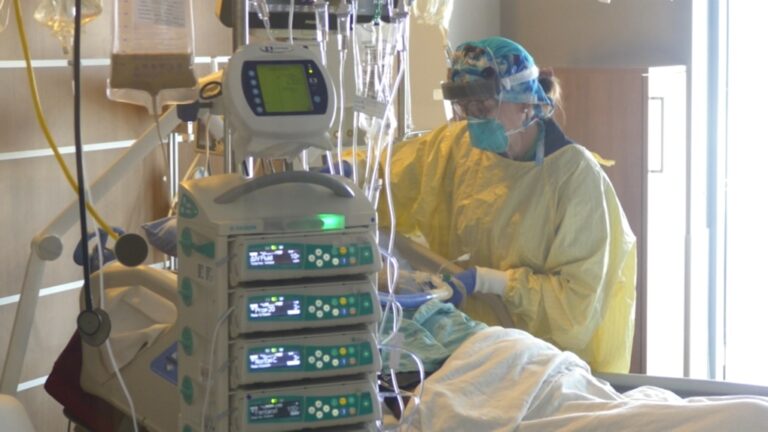
    Nursing staff at St. Paul’s Hospital in Saskatoon are calling on Saskatchewan Health Authority (SHA) to act on unsafe conditions in the emergency department.

    CTV News obtained a letter to SHA leaders signed by 118 emergency department staff at St. Paul’s addresses overcrowding, unsafe ratios of nurses to patients and the indignity experienced by patients treated in hallways because of the lack of space.

    Overcrowding leads to poorer patient outcomes, longer hospital stays and higher mortality rates, the letter says, and physicians have nowhere to properly assess people.

    “We have great concerns that someday soon something bad will happen in our waiting room despite our best efforts to work in this broken system.”

    With nowhere to treat new patients coming in, staff had to place people in hallway beds, “which are literally just stretchers in front of nursing desks and lined down hallways, with no safety equipment for the patients, call bells or oxygen.”

    On Wednesday, the Saskatoon Fire Department said hallway beds were obstructing exit doors in the hospital, in violation of national fire code requirements.

    “These deplorable conditions are leading to breaches in confidentiality, lack of dignity, and unsafe care provision due to no space with appropriate monitoring for care required,” the letter says.

    “Staff report tremendous moral injury due to the conditions patients are placed in. Pad changes in the hallways while staff try hold sheets around the bed, examinations in the waiting rooms, chest pain patients with no heart monitor to observe their heart, cancer diagnoses given without privacy in the waiting room, sexual assaults with no bed to examine them or provide privacy,” staff wrote.

    In an emailed statement, an SHA spokesperson told CTV News that a plan to deal with capacity pressure in Saskatoon’s hospitals is coming soon.

    “We acknowledge that current hospital capacity pressures create a difficult environment for patients who are seeking care in our emergency departments, and for staff and paramedics who have continued to provide excellent care,” the statement said.

    “Tomorrow, the Saskatchewan Health Authority will release the Saskatoon Capacity Pressure Action Plan, our plan to alleviate and address the immediate pressures facing hospital capacity in Saskatoon, while introducing measures to meet the current and future needs of Saskatchewan residents accessing health care services in Saskatoon.”

    In their letter to management, St. Paul’s nursing staff say their baseline bed assignments leave one nurse to care for four, five or sometimes six patients, while studies show safe ratios in emergency departments are closer to one nurse per three patients.

    They also point out a disparity in the number of security staff on duty compared to Royal University Hospital (RUH) — five per shift at St. Paul’s compared to 18 at RUH.

    Given the high rate of violent crime in the neighbourhood surrounding the hospital, they feel there should equal resources for security at St. Paul’s.

    “We work in an area of the city with high rates of violence and crime and frequently find weapons in our department,” the letter said. “Staff are very concerned about this, one even stating ‘I am seriously worried someone will be assaulted or killed one of these days.’ ”

    Given the high use of its emergency department, staff say non-acute care like diagnostic imaging should be moved to other facilities.

    They’re calling on upper managers to spend time in the emergency department and to hold regular meetings with frontline staff.

    “Show us you care and actually understand what is happening on the frontline.”                  
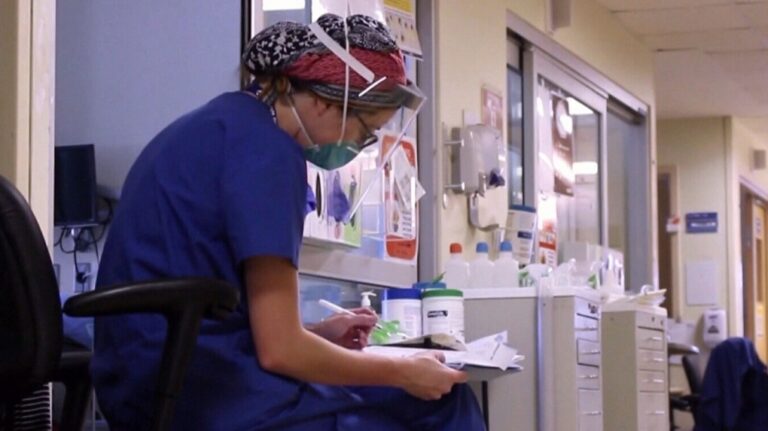
    Sask. nurses have clocked more than a million hours of overtime this year, union says

    0

    The Saskatchewan Union of Nurses said nurses have clocked more than a million hours of overtime this year as they face a shortage in their profession.

     “We’re so short-staffed like we have over a million hours of overtime so far clocked this year, (which would pay for) 720 full-time equivalents,” SUN president Tracy Zambory told CTV News.

     SEIU-West, the union representing St. Paul hospital workers, is also seeing staffing issues.

     “They don’t have the emotional, physical or mental ability to keep running at this level of crisis,” SEIU-West president Barbara Cape said.

     Zambory said the Saskatchewan Health Authority’s newly announced “action plan” to alleviate overcrowding in Saskatoon hospitals does not address core issues.

     “Unfortunately, we were not given the ability to have any sort of input in this plan,” she said.

     SHA CEO Andrew Will said staff and unions have been included in conversations.

    “We’ve had ongoing engagement with staff and with our union partners over the many initiatives that we have implemented,” Will said in a press conference on Tuesday.

     A letter to SHA leaders signed by 118 emergency department staff at St. Paul’s Hospital cited issues of overcrowding, unsafe ratios of nurses to patients and indignity experienced by patients treated in hallways.

    “I had the opportunity to be in the emergency department to speak with staff and physicians and we have included some of their ideas in this plan as well,” Will said.

    Zambory said out-of-province agency nurses at St. Paul’s hospital are being paid $120 an hour.

    “This is no way to run a healthcare system. We’re going to find ourselves bankrupt if we think this is a solution that we’re going to hang our hats on,” she said.

    Zambory said the union is renewing calls for a nursing task force to help find solutions for the ongoing health-care crisis.

    When asked by the opposition in the legislature on Thursday if the government plans to strike a task force, health minister Everett Hindley said the government has “had a number of opportunities to have engagement with the Saskatchewan Union of Nurses and with front-line health care providers.”

    “Not only hear from them directly as to what challenges and some of the pressures that they are facing on the front lines in our health care facilities, but also in addition to that, to work with them on solutions,” Hindley said.

    3 people died from flu in northwest Sask. in the last month

    0

    The Northern Inter-Tribal Health Authority (NITHA) says three people have died from the flu in northwestern Saskatchewan.

    The deaths involved people in their 30s, 50s and over 60-years-old, according to NITHA.

    “Three deaths within the space of two months, quite early in the season, is very concerning,” NITHA’s medical health officer, Dr. Nnamdi Ndubuka, tells CTV News.

    Ndubuka says all three people who died were hospitalized with severe influenza symptoms and had pre-existing medical conditions.

    NITHA is not disclosing the locations of the deaths, but says they happened on First Nations in northwestern Saskatchewan and involved influenza type A.

    Influenza cases in northern Saskatchewan have nearly doubled from last year, according to NITHA data.

    Since October, there have been 50 lab-confirmed cases of influenza, compared to 26 cases in the same period last year.

    Ndubuka says transmission is happening at schools and spreads more rapidly on First Nations where there is overcrowding in homes.

    “We see challenges around inadequate housing, and the risk of having increased transmission of respiratory illnesses within homes where you have overcrowding,” Ndubuka says.

    Ndubuka is urging people to get vaccinated against influenza and COVID-19.

    “We strongly encourage community members to stay protected by taking these vaccines. That is only way that we can keep communities safe,” Ndubuka says.

    NITHA is comprised of the Prince Albert Grand Council, Meadow Lake Tribal Council, Peter Ballantyne Cree Nation and Lac La Ronge Indian Band.

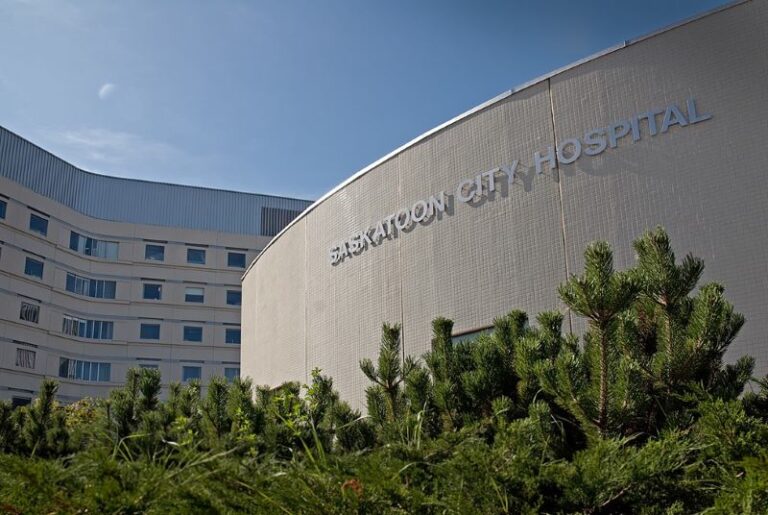
    Saskatoon City Hospital acute care expansion update

    0


    The Saskatchewan Health Authority (SHA) is committed to providing high-quality health services for the people of Saskatchewan, while supporting our health teams who deliver this care every day. As part of this commitment, the SHA is moving forward with a significant expansion of acute care capacity at Saskatoon City Hospital. This includes 109 new acute care beds supported by the recruitment of more than 500 additional staff and physicians. Once complete, this expansion will increase Saskatoon’s overall acute care capacity by 14 per cent, helping to reduce capacity pressures in Saskatoon’s hospitals and ensuring patients receive the right care in the right setting. 

    To make room for this additional capacity, select outpatient and continuing care services currently located at Saskatoon City Hospital will transition to other continuing care locations or community settings such as Market Mall. This ensures that patients will continue to access these services in the most appropriate environment while creating space for new acute care capacity within the hospital. Details regarding these transition plans to accommodate the 109 new acute care beds are included in the background section below. 

    Transition Plan Background: Saskatoon City Hospital Acute Expansion 

    The SHA will be adding 109 new acute care beds in Saskatoon City Hospital by relocating select outpatient and continuing care services currently located at Saskatoon City Hospital. The project completion date is currently anticipated for late 2026. 

    60 new Acute Medicine beds 

    • Saskatoon City Hospital space used: Former 30-bed Transitional Care Unit and 30-bed Convalescent Care Unit
    • Transition plan: Services in these units are being relocated to community based continuing care beds procured by the SHA.
    • Current status: 20 out of 60 acute medicine beds currently operational in Saskatoon City Hospital. An additional 20 acute medicine beds are being phased in by the end of October. 

    15 new High Acuity Unit beds 

    Saskatoon City Hospital space used: Former Surgical Pre-Admission Clinic space 

    Transition plan: Surgical Pre-Admission Clinic space relocating to Market Mall 

    Current status: Market Mall space procured and renovations commencing in coming weeks to accommodate new Surgical Pre-Admission Clinic 

    22 new Acute Rehabilitation beds and 12 new Acquired Brain Injury beds 

    • Saskatoon City Hospital space used: Former Geriatric Evaluation and Management Program
    • Transition plan: Geriatric Evaluation Management Program relocating to Market Mall
    • Current status: Market Mall space procured and renovations commencing in coming weeks to accommodate new Geriatric Evaluation and Management Program


    Source link

    Enhanced EMS care with new nurse triage system set to begin in Regina and Saskatoon

    0


    News Release

    Local

    Regina/Saskatoon

    Regina

    Saskatoon

    This month, the Saskatchewan Health Authority (SHA) is introducing a new Emergency Communication Nurse System (ECNS) to better assess non-emergent patients calling 911 in Regina and Saskatoon. 

    Through the ECNS, 911 dispatch will transfer callers assessed with non-urgent symptoms to specially trained nurses for further assessment. ECNS nurses will determine if transport to an emergency department is required or if the patient should be directed to an alternate care setting that would better meet their needs.

    “The new Emergency Communication Nurse System puts patients first by ensuring they receive timely and effective care while increasing EMS capacity to respond to other emergencies. This will also help to further reduce EMS offload delays at Emergency Departments,” Health Minister Jeremy Cockrill said. “We are thankful to our frontline health care staff for the important work they do to promptly respond to medical emergencies and ensure patients get the care they need.”

    This new triaging technology and personnel will improve emergency response and provide patients with alternatives that meet their care needs. Over time, the new system is expected to help ease Emergency Department capacity pressures, prioritize EMS response for patients requiring urgent intervention, improve EMS response to emergencies, and improve alignment between patient needs and care options.

    “This new system will help to reduce capacity pressure on emergency departments while also ensuring non-urgent patients are safely connected to the care they need when they need it,” said Rod MacKenzie, Executive Director, Provincial Clinical and Support Services – Community Care. “The Emergency Communication Nurse System will support better outcomes for patients who require emergency care while ensuring patients with less urgent needs receive more appropriate treatment in alternate settings.”

    The Government of Saskatchewan is investing approximately $405,000 in one-time funding to establish an ECNS in Regina and Saskatoon along with an estimated $957,000 in annual operational funding. ECNS RNs will be employed by the SHA in Regina and by Medavie Health Services-West under contract with the SHA in Saskatoon. 

    “Medavie Health Services West is proud to be part of this important initiative to improve access to care for residents of Saskatoon,” said Angela Sereda, Senior Operations Manager. “By integrating emergency communication nurses into the 911 system, we can better connect patients with the right level of care, ease pressure on our emergency departments, and allow our paramedics to focus on the most urgent emergencies. This is a significant step forward in building a more responsive patient-centred healthcare system across our community.”


    Source link

    Kangaroo care challenge supports compassionate care

    0


    In May 2025, the Prince Albert Neonatal Intensive Care Unit (NICU) held its first Kangaroo Care Challenge.

    “Kangaroo care” means a parent or caregiver holds a baby skin-to-skin. This helps moms make more milk and helps babies keep warm.

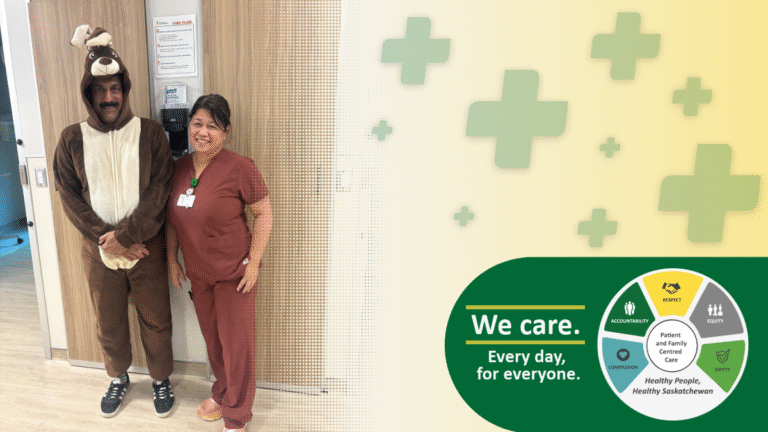
    During the challenge, nurses earned a sticker each time they helped a baby and caregiver with Kangaroo Care. At the end of the month, the nurse with the most stickers – Registered Nurse Vangie Cabilao – won a prize. She also got to choose a doctor to dress up as a kangaroo for the day, and she chose neonatologist, Dr. Parvez.

    The challenge showed how SHA staff live our CARES values: (compassion, accountability, respect, equity, and safety) every day. In this case, compassion stood out the most. 

    The challenge was a fun team building opportunity for staff, but the best part was that it helped babies and their families spend more time together and supported the health and wellbeing of our tiniest patients.


    Source link

    HealthLine 811 addressing growing need for mental health and addictions support

    0


    Story

    Mental Health and Addictions

    HealthLine 811 continues to be a trusted lifeline for Saskatchewan residents seeking mental health and addictions support. Thanks to a dedicated team of clinicians and an additional $6.6 million in funding from the Government of Saskatchewan, telephone support for people in crisis is available 24 hours a day, seven days a week.

    “Clinical staff answering the mental health and addiction services line play an integral role, providing immediate support to Saskatchewan residents without long waits or the need for referrals,” said Cara Maher, Provincial HealthLine 811 Manager – Clinical Operations, Saskatchewan Health Authority (SHA). “Our qualified team is available 24/7 to support and connect callers with resources available across the province.”

    In 2024-25, the mental health team responded to 6,375 calls, a 13 per cent increase from the previous year. In 2025-26, demand has grown, with the number of calls in the first quarter of 2025-26 rising nearly 40 per cent as compared to the same period last year.

    From anxiety and panic attacks to addictions, depression and risks of bodily harm, HealthLine 811 clinicians provide a supportive lifeline to people in difficult moments.

    HealthLine 811 does not offer long-term support; instead, callers’ unique needs are assessed, and individuals are directed to the appropriate care services in their communities.

    The growing demand for mental health and addictions support highlights the value of this service for the people of Saskatchewan.

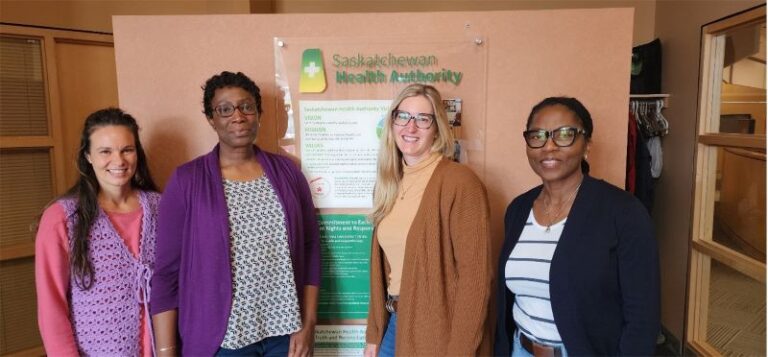
    (Left to right) Ashlyn Higgs, Jane Chukwujekwu, Kari Sveinbjornson and Nicole Naughton, senior assessor coordinators, are part of the HealthLine 811 team providing 24/7 mental health and addictions support to residents across the province.


    Source link

    Community partnerships changing lives

    0


    Story

    Mental Health and Addictions

    Moose Jaw

    Steven (name changed to protect his identity) lives with multiple chronic mental illnesses. Struggling with addictions, depression, anxiety and homelessness, Steven required more supports than traditional services, like counselling, could provide.

    After a hospital visit and an introduction to the Moose Jaw Mental Health and Addictions Transition Team, Steven’s life began to turn around.

    “Our team supported and advocated for Steven, working diligently and creatively to get his basic needs,” said Michael Seiferling, Saskatchewan Health Authority (SHA) Director of Mental Health and Addiction Services Southwest. “We connected with him wherever he felt comfortable – whether it was in a back alley or downtown.”

    Gradually, Steven connected with income support. Securing housing was a challenge, but with time and support, the Moose Jaw Housing Authority offered him an apartment if ongoing resources were in place to support him.

    Multiple community partners came together to help. Psychiatry professionals provided medication, outreach teams offered supports, and the Ministry of Social Services arranged daily pick up for odd jobs, meals and social outings. These connections were necessary for Steven’s treatment and recovery.

    Today, Steven lives independently in his own apartment, takes his medication and is engaged with support through numerous outreach services. He is proud to have a space to call his own.

    Steven’s story shows how, regardless of circumstances, compassion, respect and equitable opportunities for support can help people rebuild their lives — an example of the SHA CARES values in action.

    Members of the Moose Jaw Mental Health and Addictions Services Transition Team include Kody Morland, registered social worker, and Tracey Bennett, registered psychiatric nurse. The Moose Jaw Transition Team provides outreach services to support and advocate for clients living in the community.


    Source link

    Working together to protect Saskatchewan this fall

    0


    The SHA’s public health teams are hard at work preparing for the annual fall immunization campaign, with support from many others throughout the organization.

    “Immunization is an important and effective tool for preventing or minimizing disease complications. We highly recommend folks to get, and be up to date, with the vaccines available to them,” said Dr. David Torr, Medical Health Officer, Southwest Saskatchewan, and Area Department Lead – Rural for the SHA Department of Public Health and Preventive Medicine.

    “Saskatchewan has a large geographical area.

    In some places, it’s hard for folks to come to a centralized place to get immunizations.”

    “We have methods of reaching out to those populations so they can protect themselves from the diseases we have vaccines for, prevent complications and hospitalizations, and stay in the best of health.”

    Operational teams visit schools and communities throughout the province, offering immunizations and ensuring people are comfortable while receiving them.

    Occupational Health and Safety teams also go the extra mile, making immunizations available to SHA staff and physicians to ensure that they and their families, as well as the patients and residents they care for, are protected.

    This incredible collaborative effort is a true embodiment of the SHA CARES values, as everyone involved contributes to a crucial service that helps keep Saskatchewan residents healthy through the winter.

    SHA staff go the extra mile to immunize their colleagues, patients, residents and the public during respiratory illness season.


    Source link

    Enhancing Access to Primary Health Care Services in Yorkton

    0


    News Release

    Local

    Southeast

    Yorkton

    The Saskatchewan Health Authority (SHA) is pleased to announce the opening of a second primary health care clinic location in Yorkton.

    Beginning October 14, 2025, the Broadway Primary Health Care Clinic, located at 398 Broadway Street West in Yorkton, will be open Tuesday to Friday from 9 a.m. to 5 p.m.

    The new Broadway Primary Health Care Clinic offers the same primary health services as the existing Sunrise Health and Wellness Centre. 

    “The new Broadway Primary Health Care Clinic is a valuable addition, enhancing access to high quality care for families in the Yorkton area,” Health Minister Jeremy Cockrill said. “This is another step forward in our government’s commitment to ensure everyone in Saskatchewan has access to a primary care provider by the end of 2028”. 

    Five primary care providers and three clinic staff are relocating from the Sunrise Health and Wellness Centre to the new Broadway Primary Health Care Clinic. Patients of Dr. Hashem, Dr. Rosborough, Dr. Bernat and nurse practitioners Stephanie Monette and Andrea Litzenberger, will visit the new location for all appointments as of October 14. To make an appointment at Broadway Primary Health Care Clinic after October 14, call 1-306-782-8080.

    “Adding a second clinic will provide increased access to primary health care services in Yorkton and area,” said Jodie Yathon, Director of Primary Health Care, SHA. “Delivering a coordinated, team-based approach ensures patients are be seen by the right provider at the right time, and that providers and staff can work together seamlessly to provide the care each patient needs.” 

    The new Broadway Primary Health Care Clinic will enhance access to primary care services for residents of Yorkton and the surrounding area, ensuring that all providers in the region can continue delivering high-quality care. To inquire about providers taking new clients, please call either the Sunrise Health Wellness Centre at 1-306-786-6363 or the Broadway Primary Health Care Clinic.

    “The opening of this new clinic is an exciting step forward for Yorkton and the surrounding area,” MLA for Yorkton David Chan said. “Thanks to the dedication of our local health care providers, families will benefit from high-quality care delivered right here in our community.” 

    New positions have also been added to support the two primary health care clinics in Yorkton, thanks to a $559,000 investment from the Government of Saskatchewan. These include a primary health care Registered Nurse, a dietician, a primary health care counsellor, a part-time pharmacist, and additional clinic assist staff. Through the addition of these new positions, the Broadway Primary Health Care Clinic will offer a comprehensive team-based approach to patient care, including access to nursing, nutrition, and mental health support, as well as chronic illness management.

    Saskatchewan’s Health Human Resource Action Plan to recruit, train, incentivize and retain is seeing results. Fifteen health professionals have located to Yorkton under the rural and remote recruitment incentive program. This includes registered and licensed practical nurses, medical lab and radiation technicians and assistants. A recent government investment also created a new family medicine resident training seat to be placed in Yorkton. 


    Source link