spot_img
Saturday, February 28, 2026
More
    spot_img
    Home Blog Page 33

    Overdose Outreach Teams connecting clients to community supports

    0


    Story

    Mental Health and Addictions

    Regina and Saskatoon Overdose Outreach Teams (OOT) continue to help people reduce their risk of overdose and other drug-related harms. Teams include a counsellor from the Saskatchewan Health Authority (SHA) and a paramedic from Regina or Saskatoon Fire Services.

    OOTs unite those at risk with community supports. As one example, a person struggled with an opioid use disorder for several years. After having a dangerous overdose requiring life support, they openly spoke to their family and shared they wanted a change. Hospital staff then connected the family with OOT.

    “OOT assisted the client and their family by connecting them with Mental Health and Addiction Services (MHAS) and community organizations that could support their needs,” said Nicole Schumacher, SHA Director of MHAS. “This included referrals to detox and treatment, support to access medication, connections to income assistance services, and counselling.”

    OOT services are available through self-referral, and referrals from family and health professionals. Client consent is needed for the service. OOTs are not an emergency response team. If someone is experiencing an overdose and needs urgent assistance, please call 911.

    Visit the Government of Saskatchewan website for a referral form or call 306-510-3445 in Regina or 639-471-8335 in Saskatoon. Meet the teams on SHA’s Instagram.

    Regina Overdose Outreach Team members from left: Shannon J., Counsellor, SHA Mental Health Addiction Services; and Bryan L., Primary Care Paramedic, Regina Fire and Protective Services.


    Source link

    Saskatchewan Health Authority releases Saskatoon Capacity Pressure Action Plan

    0


    News Release

    Provincial

    Saskatoon

    Today, the Saskatchewan Health Authority (SHA) released the Saskatoon Capacity Pressure Action Plan (SCPAP). Designed by the SHA with support and collaboration from the Ministry of Health, the SCPAP outlines several concrete actions to alleviate and address the immediate pressures facing hospital capacity in Saskatoon, while introducing long-term measures to meet the current and future needs of Saskatchewan residents accessing health care services in Saskatoon.

    “We acknowledge that current hospital capacity pressures create a difficult environment for patients who are seeking care in our emergency departments, and for staff and paramedics who have continued to provide excellent care,” said Andrew Will, CEO of the Saskatchewan Health Authority. “With the release of this action plan, the SHA is committed to taking concrete action to address the immediate capacity pressures facing staff and patients, while also implementing long-term solutions to strengthen health services in Saskatoon.”

    Previous investments from the Government of Saskatchewan have enabled the SHA to take significant steps in adding capacity in Saskatoon, including an addition of 84 beds at Royal University Hospital, additional emergency staffing within St. Paul’s Emergency Department, and the addition of three 24/7 staffed ambulances in the community. Additional significant efforts underway in collaboration with the Government of Saskatchewan include the Health Human Resources Action Plan and the construction of the future Saskatoon Urgent Care Centre, both initiatives that will have a significant benefit to health service capacity in Saskatoon.

    To complement these previous initiatives, the SCPAP outlines several measures to provide immediate support to the hardworking health professionals providing tremendous patient care under difficult circumstances. The SCPAP contains a comprehensive list of actions that the SHA will undertake, categorized by actions that will be undertaken immediately, in the next 90-days, and in the next three to six months. Key actions throughout these time periods are specifically focused on ensuring patients are receiving appropriate care within the appropriate setting. This includes adding capacity through additional permanent and temporary acute care beds in hospital settings, and supplementing this capacity in community for patients requiring an alternative level of care that can be provided outside of hospital facilities. The SCPAP also provides measures for the temporary deployment of staffing to support this added capacity, while also providing dedicated staff supports to facilitate hospital discharges and care transitions for patients to receive the appropriate level of care in the appropriate care setting.  

    Anyone that needs medical care will continue to receive care despite these pressures. The SHA encourages all patients with urgent and emergent medical concerns to access emergency health services at a hospital emergency department or by dialing 911.

    Throughout the implementation of the Action Plan, the SHA commits to continued engagement with staff to hear their ideas, understand their needs and ensure we are working collaboratively to provide the best possible care to our patients.  SHA senior leadership will continue to visit front line care areas to ensure we can remove barriers and challenges as they occur and adapt the plan to ensure needs are well known and responded to.


    Source link

    Temporary Service Disruption for Inpatient and Emergency Room Services – Herbert & District Integrated Health Facility

    0


    News Release

    Local

    Southwest

    Herbert

    The Saskatchewan Health Authority (SHA) advises residents of Herbert and area of a temporary service disruption to inpatient and emergency room (ER) services at the Herbert & District Integrated Health Facility. 

    Effective Wednesday, November 15, 2023 until 7:00 a.m. Friday, November 24, inpatient and emergency room services will be unavailable. This service disruption is due to an unplanned physician shortage.

    Emergency services are available at Cypress Regional Hospital located in Swift Current. In the event of an emergency, call 9-1-1. Non-urgent health-related questions should be directed to HealthLine by calling 8-1-1.

    The SHA appreciates the patience and understanding of the residents of Herbert and surrounding areas as we manage this unexpected temporary service disruptions.


    Source link

    Free counselling expands to children and youth in Moose Jaw

    0


    Moose Jaw is the newest community to launch free, rapid access counselling to children and youth and their caregivers. The launch is part of the Government of Saskatchewan’s $1.7 million in new annual funding to Family Services Saskatchewan to expand its Rapid Access Counselling Program.

    Read the rest of the news release on the Government of Saskatchewan website.


    Source link

    Humboldt launches free counselling to children and youth

    0


    Free, rapid access counselling services are now available to children, youth and their caregivers in Humboldt. The launch is part of the Government of Saskatchewan’s $1.7 million in new annual funding to Family Service Saskatchewan to expand its Rapid Access Counselling Program.

    Read the full news release on the Government of Saskatchewan website.


    Source link

    Throne Speech 2023: Build And Protect

    0


    https://www.saskhealthauthority.ca/news-events/news/throne-speech-2023-build-and-protect


    Source link

    First Nations adults with disabilities living on reserve lack equal access to services, report finds

    0

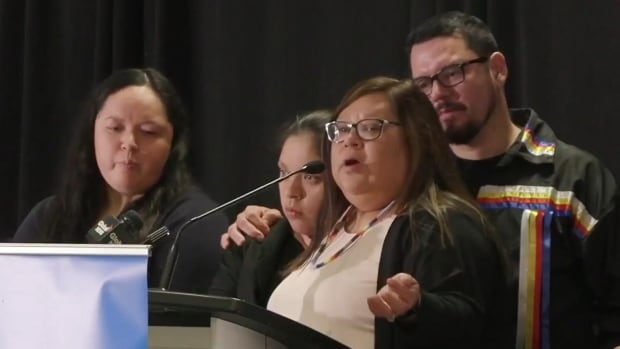
    Jennifer Bercier says “an invisible line with a huge barrier” separates Manitoba First Nations like hers from the rest of the province, after her daughter lost all of her disability support and services upon turning 18.

    The mother from Opaskwayak Cree Nation says the disability services that her 20-year-old daughter, Kaylie, received under Jordan’s Principle — a federal policy which ensures First Nations kids can swiftly access essential products and services — ended on her 18th birthday.

    “There are no transition services, so you face barriers again, even though your disability doesn’t leave you,” Bercier said at a Thursday news conference in Winnipeg.

    Kaylie’s story is one of 32 that informed a new report released Thursday by the First Nations Health and Social Secretariat of Manitoba, which found First Nation adults with disabilities in Manitoba aren’t provided supports and services they need, particularly on-reserve.

    The 117-page report, called Supporting the Gifts of First Nations Adults Living with Exceptionalities, makes 31 recommendations in several areas, including health care and social service systems, community infrastructure and resources, education, employment and caregiver support.

    Bercier said for people like her daughter, who lives with an intellectual disability, there are no occupational therapists or respite services available in Opaskwayak.

    Kaylie also does not have access to day programs or employment support services on the northern Manitoba First Nation, meaning Bercier or her husband will have to quit their job and stay home with their daughter once she ages out of school next June.

    “She’s a bright young girl,” said Bercier. “She wants to be part of the community, but there’s nowhere for her to go.”

    Though all First Nations adults with disabilities in Manitoba are eligible to receive assistance through the provincially operated Community Living DisAbility Services program, those living on reserve are not, the report states.

    Existing services for First Nations adults with disabilities living on reserve are “substantially underfunded, under-resourced and understaffed,” the report says, leaving their basic needs neglected and often forcing families to disconnect from their home communities.

    ‘We are Manitobans’: parent

    Since the long-term care of First Nations in Manitoba is a shared responsibility between the provincial and federal governments, the report recommends funding for a First Nations-led approach to resolve jurisdictional issues around who pays for services for First Nations adults with disabilities.

    “These recommendations are directed at the government of Canada,” Cathy Merrick, grand chief of the Assembly of Manitoba Chiefs, said at the Thursday news conference.

    First Nations people in Manitoba deserve care and supports that value their wellness, while addressing the root causes of the disparities they face, she says. That includes the effects of colonialism, intergenerational trauma and ongoing poverty.

    The report is a step toward creating a world where First Nations adults with disabilities “can survive, thrive and lead fulfilling lives,” Merrick said.

    “I expect that our treaty partner thoroughly examines these findings, and sincerely addresses the comprehensive needs of First Nations, to achieve and sustain genuine reconciliation.”

    Another recommendation from the report calls for the creation of a program for First Nations adults akin to Jordan’s Principle, which only applies to minors.

    Joni Wilson said a lack of disability support for her son, Aidan, forced her to move from Peguis First Nation to Winnipeg when he was younger — but Jordan’s Principle made it possible for them to move back.

    “However, we knew that once he turned 18, all services would end and we’d be right back to the same situation,” she said at the news conference.

    Wilson’s family is behind one of two human rights complaints filed against the federal government in 2021 regarding gaps in services for First Nation adults with disabilities living on reserve that allege systemic discrimination.

    “We are Manitobans, we are Canadians, and nowhere else would there ever be a denial of services for any other ethnic group,” she said. “This shouldn’t even be a thing in this day and age.”

    ‘Falling through the cracks’

    Joëlle Pastora Sala of Winnipeg’s Public Interest Law Centre, which funded the report, says the other complaint was filed by a coalition of 25 families with similar experiences to Bercier’s and Wilson’s.

    “Interestingly, Canada has not denied the allegations of discrimination, and it’s our understanding that the Canadian Human Rights Commission is continuing to consider the complaints,” she said, adding that an update to the complaints is expected in the next week.

    Pastora Sala says the federal government needs to create services and programs for First Nations adults with disabilities that promote inclusion and cultural connectivity throughout their lives.

    “We know that First Nations adults with disabilities are already falling through the cracks and living in the streets without any support and services,” she said.

    “Overall, the report is clear: disability-related supports are not available in the community of choice for First Nation adults with disabilities in Manitoba, including in First Nation communities.”


    Six senior executives out as new board shakes up Alberta Health Services

    0

    It didn’t take long for the new leaders at Alberta Health Services to put their stamp on the organization.

    Eight days after the appointment of a new board of directors was announced, AHS says that six senior executives are no longer in their roles.

    That list includes Mauro Chies, who was just appointed permanent president and CEO in March.

    AHS announced that Sean Chilton will be the new acting president and CEO. Chilton had been a vice-president and chief operating officer.

    Last week, Premier Danielle Smith announced sweeping changes to dismantle the province’s health-care delivery system, restructuring it into four new service delivery organizations reporting directly to Health Minister Adriana LaGrange.

    She appointed Lyle Oberg, a doctor and former Progressive Conservative cabinet minister, to chair the board of AHS, which will continue to operate in a diminished capacity within the new, restructured system.

    He said in a statement announcing the executive changes on Thursday that the transition over the next 18 months requires new ideas, voices and leadership.

    Two vice-presidents will no longer continue in their roles; Dr. François Bélanger, vice-president of quality and chief medical officer, and Colleen Purdy, vice-president of corporate services and chief financial officer.

    Also out are Tina Giesbrecht, the general counsel and corporate secretary, Geoffrey Pradella, the chief strategy officer, and Dean Olmstead, the chief program officer of capital management.

    When asked if any of the former senior leaders will remain at AHS in different capacities, a spokesperson emailed CBC News on Friday to say the six individuals are no longer with the organization.

    The spokesperson wasn’t able to give specific answers to questions about the estimated cost of severance pay.

    “Severance will be disclosed publicly as part of the annual compensation disclosure for 2023,” the spokesperson wrote.

    Chies’s contract, which is posted on the AHS website, says that “in consideration of the executive’s 35 years of continuous service with AHS and its predecessors,” Chies would receive a termination payment equal to slightly more than 24 months of his base salary. His 2023 salary, according to the contract, is $583,443.

    Lorian Hardcastle, an associate professor of health law at the University of Calgary, said she can’t comment on the specific individuals affected by Thursday’s announcement. 

    But she said the news, coming so quickly after last week’s structural changes, adds to the sense that there is a lack of stability in the delivery of health-care services in the province right now.   

    “The planned reforms risk adding a great deal of instability to the health-care system, which is only exacerbated by such a significant shakeup to the board’s composition,” Hardcastle said.

    Along with the appointment of Chilton, AHS also announced eight members of the executive team. Not included in that list is the name of the new chief medical officer, to replace Bélanger.

    Alberta Health Services did not respond to questions from CBC News about whether another chief medical officer will be appointed, or if the position would be changed or eliminated.

    ‘Staggering’ rise in global measles cases last year, say leading health organizations

    0

    There was a “staggering” annual rise in measles cases and deaths in 2022, according to a new report from the World Health Organization (WHO) and the U.S. Centers for Disease Control and Prevention (CDC).

    Cases jumped by 18 per cent to an estimated nine million, and deaths rose to 136,000 — mostly among children — the health agencies said in a joint statement on Thursday.

    There were large or disruptive outbreaks in 37 countries last year, the majority in Africa, compared with 22 in 2021.

    “The increase in measles outbreaks and deaths is staggering, but unfortunately not unexpected given the declining vaccination rates we’ve seen in the past few years,” said John Vertefeuille, director of the CDC’s global immunization division.

    The COVID-19 pandemic massively disrupted routine immunization efforts worldwide, and the bounce back has been slow.

    One of the most contagious viruses

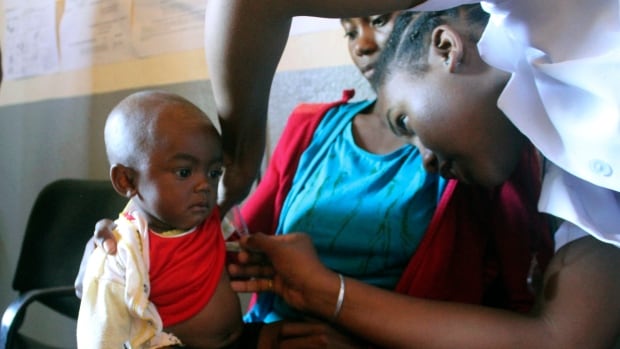
    Measles is one of the most contagious viruses in the world but is preventable by two doses of vaccine. However, 22 million children worldwide missed their first dose in 2022 and an additional 11 million their second dose, a slight improvement on the previous year.

    However, the situation has not recovered at all since the pandemic in low-income countries, where the risk of dying of measles is highest, WHO said. Coverage rates there are at 66 per cent on average, compared with the 95 per cent the United Nations agency says is needed to prevent outbreaks.

    That is an “alarm bell for action” for countries and all global health stakeholders, said WHO’s director of immunization, Kate O’Brien. 

    In Canada, there are only a handful of current active measles cases, and 10 cases in total have been reported so far in 2023, the latest federal data shows.

    However, the country also faced a drop in routine vaccinations during the COVID-19 pandemic, including immunizations for measles.

    Data from Ottawa Public Health, for example, showed that in that city alone, about 15,000 children missed receiving a dose of the MMR or MMR-V vaccine between 2020 and 2022.