
spot_img
Wednesday, April 15, 2026
More
    spot_img
    Home Blog Page 31

    Addictions treatment available

    0


    Adults struggling with drug or alcohol addiction have the option to receive outpatient treatment online through Edgewood Health Network (EHN) Canada. 

    Through an agreement between the Saskatchewan Health Authority (SHA) and ENH Canada, adults from anywhere in the province that are 18 years and older and have a valid Saskatchewan health card may be able to access addictions treatment online. This flexible online option means you should be able to continue meeting work, school, and family responsibilities and commitments while receiving treatment for addictions.

    Adults struggling with mild to moderate addictions can see if online outpatient treatment is right for them by referring themselves or through a referral from private mental health and addiction health care providers, SHA mental health and addictions providers, and physicians and nurse practitioners.

    The online addictions treatment program is eight weeks in total and is followed by 10 months of supportive aftercare. The program also includes access to education and support for families, support persons, and loved ones of program participants.  

    For more information or referrals, visit www.edgewoodhealthnetwork.com/iopsa-sask or call 647-430-1680.

    A new virtual treatment option is available for adults with mild to moderate addictions. Treatment is free of charge with a valid Saskatchewan health card. 


    Source link

    Regina Lutheran Home to remain open after controversial closing announcement

    0


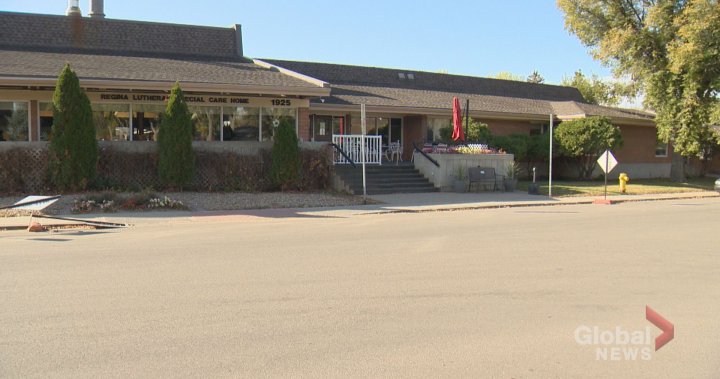
    The province is walking back its decision to close the Regina Lutheran Home, after it was announced the long-term care facility would be closing.

    62 families would have been forced to find a new place to live effective April 11, 2024, a decision met with anger from many in the community.

    On Friday, the Saskatchewan Health Authority (SHA) announced they reached an agreement with Eden Care Communities that will allow the home to remain open.

    Eden Care Communities will continue to operate the facility on a transitional basis while ownership of the facility is transferred to the SHA.

    The province said that residents who have already moved out will have the option to return.

    “After hearing from residents and families, I asked the Ministry of Health to work with the SHA to reconsider the viability of purchasing Regina Lutheran Home,” mental health and addictions, rural and remote heath and seniors minister Tim McLeod said.

    Story continues below advertisement

    The province did not say how long the transition will take.

    Sask. NDP Coronation Park MLA Noor Burki, said he is happy to see the home remain open.

    “I’ve pushed hard along with our team to keep the Lutheran Care Home open and I’m glad the government has finally come to its senses,” Burki said. “This is a big win for these families and our community.”

    &copy 2023 Global News, a division of Corus Entertainment Inc.


    Source link

    Police board seeks more action on ‘complex needs’ service gap

    0


    “Our community as a whole deserves better continuity here. It’s, to be quite frank, unacceptable,” said Coun. Hilary Gough.

    Article content

    Saskatoon’s board of police commissioners plans to send a new letter to the provincial government about the findings in the city police report that describes a lack of supports for people with “complex needs” enabling a cycle of rearrest and detention.

    The board on Thursday approved a slew of motions after a lengthy discussion about the report on police interactions with people who have “complex needs” — those who experience homelessness, mental health and/or addictions issues and are often hard to house.

    Advertisement 2

    Article content

    Article content

    The report found that police, when they detain people with “complex needs” for public intoxication, often don’t have anywhere besides their own detention unit to take people who are in a vulnerable state and unable to care for themselves if the Saskatchewan Health Authority-operated brief detox unit is full.

    It also found that when people are released, detention staff try to find them space at a shelter if available; otherwise they end up out on their own.

    “This is unacceptable for the City of Saskatoon,” board chair Jyotsna (Jo) Custead said.

    Police board member Coun. Hilary Gough made several motions, including offering to work with the province as it develops policies for the new “complex needs” facility to be opened in Saskatoon, and continuing to lobby for supportive social housing.

    “Our community as a whole deserves better continuity here. It’s, to be quite frank, unacceptable,” she said.

    In their assessment, police saw a gap in post-release services, Chief Troy Cooper told the StarPhoenix.

    “It’s necessary to keep people in care, whether that’s in a hospital or a jail cell or a complex needs facility. There’s a need to keep them for a period of time.”

    Article content

    Advertisement 3

    Article content

    Cooper said police want to find out if there’s a best practice used in other jurisdictions or a community partnership they can develop, where an agency would come in at the time of release to plan and provide supports so people aren’t returning to the same conditions that led their detention.

    Police found about a third of all arrests within Jan. 1, 2022 and Aug. 31, 2023 were only for public intoxication, and 52 per cent of those people were homeless. A majority of people arrested for intoxication were Indigenous men between 20 and 39 years of age.

    Board commissioner Shirley Greyeyes said the demographics are important. Indigenous people represent about nine per cent of Saskatoon’s overall population, she noted.

    “And then you look at these numbers. That should slap everybody in the face … the reality of what is happening to those people who have suffered for so long.”

    Cooper told the StarPhoenix the province is interested in learning from police experiences as it explores how to safely transition people from a complex needs facility into the community.

    “We certainly are interested in finding new partners if possible, or supporting partners that exist now that need more funding or more resources,” he said, giving the example of lobbying for funding for the Saskatoon Tribal Council-run Sawēyihotān program addressing homelessness.

    Advertisement 4

    Article content

    He said people look to police to find a solution to what they see in the community.

    “I think what the report today really clearly showed is that traditional policing methods of writing tickets and bringing people into custody temporarily is ineffective, that there’s a core group of people who just are not impacted by those traditional methods,” he said.

    “We need to, if we’re going to find a solution, it’s going to have to include more than just justice, more than just policing.”

    tjames@postmedia.com

    Related Stories

    With some online platforms blocking access to the journalism upon which you depend, our website is your destination for up-to-the-minute news, so make sure to bookmark TheStarPhoenix.com and sign up for our newsletters so we can keep you informed. Click here to subscribe.

    Article content

    Comments

    Postmedia is committed to maintaining a lively but civil forum for discussion and encourage all readers to share their views on our articles. Comments may take up to an hour for moderation before appearing on the site. We ask you to keep your comments relevant and respectful. We have enabled email notifications—you will now receive an email if you receive a reply to your comment, there is an update to a comment thread you follow or if a user you follow comments. Visit our Community Guidelines for more information and details on how to adjust your email settings.


    Source link

    Zamboni leaking carbon monoxide likely cause of hockey player illness

    0


    The rink in Wakaw, northeast of Saskatoon, was hosting an under-15 hockey tournament last weekend when players began to get ill.

    Article content

    WAKAW, Sask. — A Saskatchewan town has temporarily closed its hockey arena after carbon monoxide, likely from a Zamboni, left players sick.

    The rink in Wakaw, northeast of Saskatoon, was hosting an under-15 hockey tournament last weekend when players began to get ill.

    Article content

    “Nobody really connected the dots,” said Mayor Mike Markowski.

    “People thought it was potentially food poisoning or the flu going around.”

    Advertisement 2

    Article content

    Parents told CKOM News that players were initially getting headaches, but as the tournament progressed, they started getting worse. Some players vomited while on the bench.

    Markowski said the tournament wrapped up on Sunday and by that time it started to become clear that something bigger was going on. SaskEnergy was called in to investigate and the Crown corporation initially thought a furnace was the carbon monoxide culprit.

    The rink was shut down and the furnace was turned off on Monday.

    To be safe, Markowski said, the community also called in the Saskatchewan Health Authority, which did tests that traced the carbon monoxide to the arena’s ice resurfacing machine.

    The mayor said the rink will remain closed until the Zamboni is repaired. He said the town is also making sure furnaces are working properly.

    “It just goes to show you, right, how quickly something can happen,” Markowski said.

    “It’s a good eye opener for every community that has an arena, how things can happen.”

    Wakaw’s arena was built in the 1980s and it has carbon monoxide detectors, the mayor said. But they didn’t go off.

    Advertisement 3

    Article content

    The Zamboni also receives maintenance every summer when the hockey season is over, Markowski said.

    The Wakaw situation shows the importance of being vigilant, he added.

    “Fortunately nobody was hospitalized or anything to that extent.”

    Nearly 80 people were hospitalized in 2019 due to carbon monoxide exposure during a hockey tournament at a St. John’s, N.L., arena. That leak at the Bussey-Horwood Arena was also linked to the rink’s ice cleaning machine.

    Ninety-two people went to hospital in Wisconsin due to a carbon monoxide leak during a 2014 hockey tournament. An analysis published by the U.S. Centers for Disease Control and Prevention the following year confirmed the carbon monoxide poisoning also came from a faulty ice-resurfacing machine.

    Related Stories

    Bookmark our website and support our journalism: Don’t miss the news you need to know — add The StarPhoenix.com and LeaderPost.com to your bookmarks and sign up for our newsletters here.

    You can also support our journalism by becoming a digital subscriber: For just $4.75 a month, you can get unlimited online access to Saskatoon StarPhoenix, Regina Leader-Post, Financial Post, National Post and the entire Postmedia network as well as an electronic replica of the print edition to view on any device, share and comment on. Support us by subscribing today: Saskatoon StarPhoenix | Regina Leader-Post

    Article content

    Comments

    Postmedia is committed to maintaining a lively but civil forum for discussion and encourage all readers to share their views on our articles. Comments may take up to an hour for moderation before appearing on the site. We ask you to keep your comments relevant and respectful. We have enabled email notifications—you will now receive an email if you receive a reply to your comment, there is an update to a comment thread you follow or if a user you follow comments. Visit our Community Guidelines for more information and details on how to adjust your email settings.


    Source link

    Terminally ill Sask. woman finds family to take in 3 senior dogs once she passes

    0

    Susan Dickens feels at peace now that she knows her three dogs, Cisco, Booda and Olive, will remain together in a loving home after she is no longer here to take care of them.

    Dickens has late-stage cervical cancer. After her diagnosis, the Regina woman’s biggest fear was that the dogs would be split up or sent to a shelter after she died.

    It’s not easy to find people willing to take in three senior dogs. Dickens wasn’t having much luck with the search, so she began to share her story in the media. After months of looking — she found the perfect fit.

    “I just know in my heart I picked the right place.”

    Her dogs are 16, 15 and 13. Olive is an Australian Shepherd, Booda is a corgi mix and Cisco is a border collie lab mix. Dickens said Cisco became especially attached to her after her husband passed.

    When she went public with her wish to keep the dogs together, an overwhelming number of people reached out to her, offering words of encouragement or their homes.

    “I’m eternally grateful for all the animal lovers out there. It was incredible,” she said.

    “So many people reached out. It was so hard to even get back to everybody, and I felt bad for that because people are genuinely kind.”

    The people who will take in Dickens’s dogs told her they don’t want to participate in a news story, but she described them as loving people who are down to earth and care deeply for their own animals.

    She first began chatting with the family, who live a few hours from the city, on the phone. Then they drove to the city to pick up Dickens and her dogs so they could see the place first hand.

    She knew it was a good fit as soon as they pulled up and several animals ran up to greet them. Dickens and her dogs spent two days out on their property.

    “I got to know them a little bit more than just a quick visit. I got to see the layout of the land and I just know my dogs are going to be perfect. They have a couple of old dogs,” she said.

    “It’s wonderful. So much space to run around, more than my own home. More freedoms. Lots of other animals to interact with and they got along quite well with their animals. It was really a match made in heaven.”

    A border collie-lab dog smiles at the camera. The dog has light brown eyes and black hair with white and grey on his snout and eyebrows.
    Sue Dickens said is at peace now that she knows her dogs will be taken care of after she is gone. (Adam Bent/CBC)

    Dickens said her dogs were even cordial with the cats (aside from a few barks) — a big surprise to her.

    Sheyenne Runns, who said Dickens is like a mother to her, accompanied Dickens on the trip. She said the family members are animal lovers with dogs and cats, but also donkeys, goats, chickens and pigs. Runns said she is grateful they are opening their hearts and home to Dickens’s dogs.

    “Sue loves her dogs to death. They’re her world and her everything, and knowing that we found a good place for them makes us feel happy and generally thankful that these people reached out and wanted to take in them,” Runns said.

    “She loves her dogs. She treats them like her babies.”

    A composite photo showing an Australian Shepherd and a corgi mix.
    Sue Dickens has found someone who can take in all of her senior dogs after she is gone. (Adam Bent/CBC)

    Dickens said she wants to keep her dogs forever, but she knows that might not be possible given her diagnosis. The pups will stay with her as long as they can.

    Once Dickens passes, the family she has chosen will come and pick up the three dogs.

    “I’m doing really well, so I don’t know when that’ll be, but they’re quite OK to wait, and when the time comes, they’re going to come get them, so it’s perfect,” she said.

    “I’m so happy and I have peace of mind now.”

    Faulty Zamboni likely made teens ill at Sask. rink, health authority says

    0


    According to the Saskatchewan Health Authority (SHA) a faulty Zamboni was likely the source of a carbon monoxide leak that made numerous teens at a hockey tournament feel ill.


    A parent who attended the tournament told CTV News players on multiple teams experienced headaches, nausea, and in some cases, vomiting, during an under-15 tournament last Sunday in Wakaw, Sask.


    Workers from the province’s natural gas supplier SaskEnergy initially found an issue with two furnace units, which the town’s mayor said will be replaced.


    Upon further investigation, the SHA believes the Zamboni was likely the main cause of the symptoms experienced by the teen players.


    There were no reported hospitalizations in connection with the incident.


    Source link

    Deep sleep, memory formation go hand-in-hand. Scientists are also finding links to dementia

    0

    This story is part of CBC Health’s Second Opinion, a weekly analysis of health and medical science news emailed to subscribers on Saturday mornings. If you haven’t subscribed yet, you can do that by clicking here.


    Shift workers sleeping at erratic hours. Students pulling all-nighters. Menopausal women tossing and turning in bed from hot flashes.

    There are a host of reasons why people have periods of poor sleep. And anyone who’s endured back-to-back nights of sub-par slumber likely knows the result: Feelings of brain fog, grogginess or even memory issues.

    In the short-term, those cognitive hiccups are usually manageable. Take new parents for instance, says a sleep scientist affiliated with the Canadian Institutes of Health Research.

    “It can be a couple of years of pretty serious sleep loss, and they still push through,” said John Peever. “But whether or not they could sustain that over many years, I think the answer to that question would be no.”

    A growing body of research points to clear links between deep sleep and memory formation and, on the flip side, the possibility of dire consequences when someone’s sleep quality erodes over time.

    A new paper published in JAMA Neurology found even a one per cent reduction in deep sleep each year in individuals aged 60 and up was associated with a significantly higher risk of developing dementia. 

    The scientists looked at roughly 350 participants enrolled in the Framingham Heart Study — a long-term, multigenerational American research project — who completed two overnight sleep studies as part of the research.

    During nearly two decades of follow-up, the team identified 52 cases of dementia among the participants. The researchers adjusted for other factors such as age, sex and sleeping medication use, and still found each percentage decrease in deep sleep per year was linked to a 27 per cent higher dementia risk. 

    That data couldn’t say whether the sleep decline caused the dementia — or which came first — but we do know sleep matters for our mental functioning.

    “Good sleep seems to be involved in so many things that are important for a healthy and well-functioning brain,” noted lead researcher Matthew Pase, a sleep scientist from the Monash School of Psychological Sciences and the Turner Institute for Brain and Mental Health in Melbourne, Australia.

    WATCH | How lack of sleep could be impacting your memory: 

    How lack of sleep could be affecting your memory | In-Depth

    Featured VideoBack in 2005, Canadians averaged about eight hours of sleep a night. By 2013, that dropped to seven. Now about 40 per cent of Canadians are dealing with some kind of sleep disorder. Something about sleep keeps our bodies and minds from falling apart. The lack of it has been linked to obesity, heart disease, stroke, diabetes and depression. Researchers are now discovering some fascinating things about how important sleep is to the way our brains store memories and learn things.

    Research suggests poor sleep impacts cognition

    The link between sleep and memory is a thread scientists have tugged on for centuries.

    As far back as the mid-1700s, English philosopher David Hartley speculated that dream-filled sleep could be tied to the formation of memories inside the human brain. By the 1900s, modern researchers began to prove him right, showing how distinct sleep stages impact the process of memory development.

    “Evidence now suggests that sleep is important in the processing of newly acquired information and for the long-term storage of memory,” neuroscientist and sleep researcher Matthew Walker wrote in 2009.

    That evidence includes research from the last two decades suggesting just a day and a half without sleep is enough to disrupt someone’s ability to play a basic memory game, or slow down their reaction times. Another study involving American nurses found people who both under- or overslept — either five hours or less a night, or nine hours or more — showed worse performance on cognitive tests. The researchers estimated those groups were mentally two years older than their counterparts getting seven or eight hours of sleep each night.

    A sleep study subject, laying down in a big white machine, undergoes an MRI.
    Though sleep happens for most of us every night, it’s not easy or cheap to study and can involve participants sleeping at the lab. Here, a sleep study subject undergoes an MRI in December 2019 at the Royal Ottawa Institute for Mental Health Research. (Diane Grant/CBC)

    Some research even suggests sleep deprivation mimics the feeling of being drunk, with one Australian research team likening a single day of sleep deprivation with the mental impairment of a blood alcohol concentration of 0.10 per cent.

    By 2013, the U.S. Centers for Disease Control and Prevention declared that insufficient sleep was a “public health epidemic.”

    Yet the conversation around what constitutes a good night’s sleep — and how sleep impacts memory loss and formation — continues to shift. 

    While most people still get hung up on the total hours of shut-eye, modern sleep scientists say there’s growing consensus that the quality of your sleep matters even more. 

    Impact of ‘slow-wave sleep’

    Whether you typically sleep for six hours a night, or need nine hours of shut-eye, everyone’s body goes through a cycle of sleep stages. Once you doze off, your body enters a light sleep, which usually only lasts a few minutes. Then your heart rate and body temperature drop as you head into deeper sleep. 

    Eventually, you hit the restorative period that scientists call “slow-wave sleep.”


    That’s the specific sleep stage Pase’s team studied where people fall into the deepest slumber. It’s also thought to be a period when the brain repairs itself.

    Dr. Brian Murray, a professor of neurology at the University of Toronto and head of the neurology division at Sunnybrook Health Sciences Centre, said it’s a bit like rebooting a computer — giving it a chance to clear out stray signals. In the case of the human brain, that can mean removing “misfolded protein garbage” that builds up during waking hours.

    “This is critically important for neurodegenerative diseases, like Alzheimer’s [and] Parkinson’s,” he said.

    The connection between good quality sleep and that junk removal process has only recently been identified, added Murray.

    A white man with a medium-length salt-and-pepper beard sits on a hospital bed. He is wearing a dark suit with a patterned tie.
    Neurologist Brian Murray runs a sleep lab at Toronto’s Sunnybrook Hospital. He says sleep helps improve cognitive function and helps clear junk out of the brain. (Craig Chivers/CBC News)

    The latest findings from Pase and his team build on that, suggesting slow-wave sleep loss may be a dementia risk factor that people can actually try to mitigate. But Pase stressed his research doesn’t prove getting less slow-wave sleep can cause dementia.

    Aging and memory loss also go hand-in-hand with comorbidities — which can disrupt sleep — and might result in someone living long-term in environments that aren’t conducive to quality slumber like brightly-lit hospitals or care homes, he noted.

    “The question becomes: Is altered sleep the side effect of dementia itself? Or is altered sleep facilitating dementia?” echoed Peever, the Canadian sleep scientist. “So a ‘chicken and the egg’ story that is always almost impossible to unravel.” 

    Still, Peever said the paper offers another piece of the evolving puzzle.

    “What they’ve shown is, if you take all patients across time — those with dementia, and those without incident dementia — there is a decline in how much slow-wave sleep they experience,” he said. “But the decline in dementia patients was significantly greater.”

    Dr. Eric Zhou, an assistant professor in the division of sleep medicine at Harvard Medical School, agreed the study was rigorous and compelling. The findings also fit into broader research linking poor sleep quality to an array of health issues, from stroke to cancer to mental health conditions. 

    “You name the health problem,” Zhou said, “and chronically not getting enough sleep — or chronically not sleeping well — will accelerate your risk of developing it, or exacerbate the condition if you have it already.”

    WATCH | Why melatonin isn’t a quick fix for everyone’s sleep issues: 

    Melatonin won’t help everyone’s sleep issues, experts say

    Featured VideoThe use of melatonin as a sleep aid has significantly increased over the past two decades, but experts say it isn’t a cure-all, and taking too much can cause health problems.

    Challenges of studying sleep

    Yet researching sleep, and showing clear cause-and-effect on various health issues, remains a distinct challenge. Sleep studies are notoriously difficult to run, time-consuming and often prohibitively expensive, Zhou noted. Ethically, scientists can’t randomly assign healthy adults to “getting really miserable sleep,” he said. Sleep studies also require a cumbersome step for participants: Staying in a lab overnight. 

    “It’s not a blood draw,” Zhou continued. “It’s not one check of their pulse.”

    To really figure out the impacts of sleep on long-term memory loss, scientists also need a massive pool of people, and it’s almost impossible to gain funding to do complex sleep studies at a population level, Zhou said. Even decades-worth of data from hundreds of participants only gave Pase’s research team 52 dementia cases to analyze, he noted.

    Pase himself agreed, and said the dual nature of his research presented an additional challenge.

    “The thing about dementia is, although it’s common in a population, everyone’s chance of getting it at any given time is kind of low. So, it’s a difficult thing to study.”

    The bottom line is that emerging research linking sleep and memory loss may be persuasive, but it’s not conclusive, Peever stressed. It’s worth striving for better sleep, he added, but there’s also no reason to panic: The vast majority of the population experiences a deterioration in sleep quality over time for reasons scientists don’t fully understand.

    “So clearly, sleep quality — as it declines with age — is not causing dementia in everybody.”

    Justin Trudeau struggles to walk a very fine line on the Israel-Hamas war

    0

    The war between Israel and Hamas creates two challenges for Justin Trudeau, as it would for any Canadian prime minister.

    First, he must try to take and hold a principled position on a dire conflict. Second, he must try to hold together a country whose citizens are understandably agonized by the death and destruction.

    The strain of both those tasks only becomes more apparent with each passing day. Within 24 hours of Trudeau’s remarks on the conflict Tuesday, Trudeau was heckled by pro-Palestinian protesters inside a Vancouver restaurant for what he didn’t say — and scolded online by Israeli Prime Minister Benjamin Netanyahu for what he did say.

    WATCH | Trudeau shouted out of restaurant by protesters: 

    Trudeau shouted out of Vancouver restaurant by protesters

    Featured VideoFacing criticism from all sides for Canada’s position on the Israel-Hamas war, Prime Minister Justin Trudeau was shouted out of a Vancouver restaurant by pro-Palestinian protesters calling for a ceasefire. Meanwhile, Israeli Prime Minister Benjamin Netanyahu replied to Trudeau on social media after he sharpened his tone against Israel in a speech.

    Trudeau’s five-minute statement on Tuesday — delivered in the middle of an announcement of federal support for a new battery facility in British Columbia — began with comments and arguments he has offered before. The “human tragedy” unfolding in the Gaza Strip is “heart wrenching,” he said, and the “price of justice cannot be the continued suffering of all Palestinian civilians.”

    “Even wars have rules,” he added. “All innocent life is equal in worth — Israeli and Palestinian.”

    He later condemned Hamas’s use of human shields and called for the release of all hostages. He cited Hamas’s threat to launch repeated attacks like the one it carried out on Oct. 7.

    WATCH | Trudeau has held off calling for a ceasefire: 

    Protests add pressure on Trudeau to call for ceasefire

    Featured VideoAs the death toll in Gaza climbs, outcry in Canada is adding to the pressure on Prime Minister Justin Trudeau to call for a ceasefire.

    He called again for a “humanitarian pause” and unfettered access to humanitarian aid. He expressed a hope that a sustained pause would create the conditions for peace.

    He denounced recent incidents of antisemitic violence in Montreal and elsewhere. He called on Canadians to “remember who we are” and to be there for each other.

    But what seems to have drawn the ire of Netanyahu and others is a portion of Trudeau’s remarks that began with a call for Israel to exercise “maximum restraint.”

    “Because the world is watching,” the prime minister said. “On TV, on social media, we’re hearing the testimonies of doctors, family members, survivors, kids who’ve lost their parents. The world is witnessing this. The killing of women and children, of babies. This has to stop.”

    WATCH | Netanyahu pushes back on Trudeau’s comments about Israel-Hamas war: 

    Netanyahu rebuffs Trudeau’s call for ‘maximum restraint’ in Israel-Hamas war

    Featured VideoNov. 15, 2023 – ‘It is Hamas not Israel that should be held accountable,’ said Israeli Prime Minister Benjamin Netanyahu in a tweet to Prime Minister Justin Trudeau on Tuesday. Power & Politics speaks to a spokesperson for the Israel Defense Forces. Plus, no Canadians were on the list to leave Gaza today. Canada’s ambassador to Egypt responds to criticism about delays at the Rafah crossing.

    Though it’s hard to argue with anyone’s desire for an end to violence, Trudeau did not say how the violence should stop or under what terms. Some interpreted his comments as an attempt to blame Israel for the war. But Trudeau also could argue that he was merely saying things that are objectively true. Women and children are being killed. The world is watching. 

    Trudeau not alone in worrying about civilian deaths

    Some of Trudeau’s words resembled comments made by French President Emmanuel Macron four days earlier in an interview with the BBC. But Macron, who has called for a ceasefire, went further.

    “It’s impossible to explain, ‘We want to fight against terrorism by killing innocent people,'” the French leader said.

    Netanyahu was also unhappy with Macron’s comments. The next day, in conversations with other Israeli officials, Macron apparently “reiterated” Israel’s right to defend itself.

    Two men sit at opposite ends of a conference table.
    French President Emmanuel Macron, left, listens to Benny Gantz in Jerusalem on Oct. 24, 2023. (Christophe Ena/Associated Press)

    On Wednesday, it was Trudeau’s turn to talk with Benny Gantz, the Netanyahu rival and critic who joined Israel’s war cabinet after last month’s attack. According to the official account, Trudeau similarly “reaffirmed” Israel’s right to self-defence.

    Macron and Trudeau’s conversations with Gantz may have been about damage control. They also may have also gotten a point across — an important one.

    Israel’s allies might accept its right to defend itself and hold Hamas responsible for inciting this war and putting civilians in harm’s way. But how much death is acceptable, tolerable or justified, even in self-defence? That is the question that weighs on Israel and every country that calls it a friend.

    A man in a white shirt carries an injured child in his arms.
    Palestinians rescue survivors after an Israeli strike on Rafah in the Gaza Strip Friday. (Hatem Ali/The Associated Press)

    This isn’t merely a moral question — it’s also a strategic one. Ian Bremmer of the Eurasia Group argued this week that Israel’s response to Oct. 7 has played into Hamas’s hands.

    Opinion polling suggests there is significant support in Canada for some kind of ceasefire — either permanent or temporary. So Trudeau could argue his words are broadly in line with public sentiment. It’s at least as notable that Conservative Leader Pierre Poilievre was not among those condemning the prime minister’s comments this week.

    But this is not an issue that can be resolved with a simple poll. 

    ‘My job … is to help bring Canadians back together’

    When Trudeau was pressed on Tuesday to explain why he hasn’t called for a ceasefire, he pivoted and focused on the situation in Canada.

    The question to ask, he said, isn’t whether “this magic solution or that magic solution said by a Canadian prime minister [is] suddenly going to bring peace to the Middle East overnight.”

    Rather, he said, “this is about us remembering that when a kid feels scared to go to school in the morning because of their religion, because of their ethnicity,” it’s the responsibility of all Canadians to speak up.

    “My biggest concern is how we bring Canadians together,” Trudeau said.

    That effort starts, he said, “with listening to each other.”

    Trudeau has now offered extended comments on this theme several times over the past week and a half. The ideals of pluralism and multiculturalism have animated some of Trudeau’s most forceful statements — and his calls now to reject prejudice and overcome differences seem like an extension of that.

    Speaking to reporters at the APEC summit in San Francisco on Friday, Trudeau said his “job, as Canadian prime minister, is to help bring Canadians back together.

    “To understand that, if Canadians can’t figure out how to get along and remember to be compassionate and empathetic towards each other, then where in the world is there a solution for the conflict and the tensions in the Middle East going to come [from]?”

    Talk of bringing Canadians together can seem simplistic, trite or pro forma. But 44 years ago, former Progressive Conservative leader Robert Stanfield was dispatched to the Middle East on behalf of Joe Clark; among the recommendations he came back with was a simple call for more “dialogue.”

    “In Canada a dialogue between Jewish and Arab groups would be highly desirable,” Stanfield wrote. 

    In addition to promoting public understanding, he said, dialogue might create a “sounder and healthier foundation” for Canadian foreign policy. Stanfield conceded it would require “patience and willingness to persist” through possible “misunderstandings,” but “such a dialogue seems to me nevertheless to be an important contribution that these groups of Canadians can make to the Middle East and Canada.”

    Canada is not completely bereft of dialogue at the moment — consider the joint letter recently authored by Muslim and Jewish law students at the University of Ottawa.

    But if it’s fair to ask the government about its position on the war — and if it’s fair to expect that leaders condemn bigotry and protect Canadians from harm — it’s also fair to ask what can be done to promote the sort of dialogue and compassion both the world and Canada need more than ever now.

    WATCH | Canada and the war in the Middle East: 

    At Issue | Trudeau’s call for ‘maximum restraint’ from Israel

    Featured VideoPrime Minister Justin Trudeau ignites Israeli backlash after urging ‘maximum restraint’ in its war against Hamas. Plus, how worried should the Liberals be about low polling numbers? And is the national pharmacare plan in jeopardy?

    Justin Trudeau struggles to walk a very fine line on the Israel-Hamas war

    0

    The war between Israel and Hamas creates two challenges for Justin Trudeau, as it would for any Canadian prime minister.

    First, he must try to take and hold a principled position on a dire conflict. Second, he must try to hold together a country whose citizens are understandably agonized by the death and destruction.

    The strain of both those tasks only becomes more apparent with each passing day. Within 24 hours of Trudeau’s remarks on the conflict Tuesday, Trudeau was heckled by pro-Palestinian protesters inside a Vancouver restaurant for what he didn’t say — and scolded online by Israeli Prime Minister Benjamin Netanyahu for what he did say.

    WATCH | Trudeau shouted out of restaurant by protesters: 

    Trudeau shouted out of Vancouver restaurant by protesters

    Featured VideoFacing criticism from all sides for Canada’s position on the Israel-Hamas war, Prime Minister Justin Trudeau was shouted out of a Vancouver restaurant by pro-Palestinian protesters calling for a ceasefire. Meanwhile, Israeli Prime Minister Benjamin Netanyahu replied to Trudeau on social media after he sharpened his tone against Israel in a speech.

    Trudeau’s five-minute statement on Tuesday — delivered in the middle of an announcement of federal support for a new battery facility in British Columbia — began with comments and arguments he has offered before. The “human tragedy” unfolding in the Gaza Strip is “heart wrenching,” he said, and the “price of justice cannot be the continued suffering of all Palestinian civilians.”

    “Even wars have rules,” he added. “All innocent life is equal in worth — Israeli and Palestinian.”

    He later condemned Hamas’s use of human shields and called for the release of all hostages. He cited Hamas’s threat to launch repeated attacks like the one it carried out on Oct. 7.

    WATCH | Trudeau has held off calling for a ceasefire: 

    Protests add pressure on Trudeau to call for ceasefire

    Featured VideoAs the death toll in Gaza climbs, outcry in Canada is adding to the pressure on Prime Minister Justin Trudeau to call for a ceasefire.

    He called again for a “humanitarian pause” and unfettered access to humanitarian aid. He expressed a hope that a sustained pause would create the conditions for peace.

    He denounced recent incidents of antisemitic violence in Montreal and elsewhere. He called on Canadians to “remember who we are” and to be there for each other.

    But what seems to have drawn the ire of Netanyahu and others is a portion of Trudeau’s remarks that began with a call for Israel to exercise “maximum restraint.”

    “Because the world is watching,” the prime minister said. “On TV, on social media, we’re hearing the testimonies of doctors, family members, survivors, kids who’ve lost their parents. The world is witnessing this. The killing of women and children, of babies. This has to stop.”

    WATCH | Netanyahu pushes back on Trudeau’s comments about Israel-Hamas war: 

    Netanyahu rebuffs Trudeau’s call for ‘maximum restraint’ in Israel-Hamas war

    Featured VideoNov. 15, 2023 – ‘It is Hamas not Israel that should be held accountable,’ said Israeli Prime Minister Benjamin Netanyahu in a tweet to Prime Minister Justin Trudeau on Tuesday. Power & Politics speaks to a spokesperson for the Israel Defense Forces. Plus, no Canadians were on the list to leave Gaza today. Canada’s ambassador to Egypt responds to criticism about delays at the Rafah crossing.

    Though it’s hard to argue with anyone’s desire for an end to violence, Trudeau did not say how the violence should stop or under what terms. Some interpreted his comments as an attempt to blame Israel for the war. But Trudeau also could argue that he was merely saying things that are objectively true. Women and children are being killed. The world is watching. 

    Trudeau not alone in worrying about civilian deaths

    Some of Trudeau’s words resembled comments made by French President Emmanuel Macron four days earlier in an interview with the BBC. But Macron, who has called for a ceasefire, went further.

    “It’s impossible to explain, ‘We want to fight against terrorism by killing innocent people,'” the French leader said.

    Netanyahu was also unhappy with Macron’s comments. The next day, in conversations with other Israeli officials, Macron apparently “reiterated” Israel’s right to defend itself.

    Two men sit at opposite ends of a conference table.
    French President Emmanuel Macron, left, listens to Benny Gantz in Jerusalem on Oct. 24, 2023. (Christophe Ena/Associated Press)

    On Wednesday, it was Trudeau’s turn to talk with Benny Gantz, the Netanyahu rival and critic who joined Israel’s war cabinet after last month’s attack. According to the official account, Trudeau similarly “reaffirmed” Israel’s right to self-defence.

    Macron and Trudeau’s conversations with Gantz may have been about damage control. They also may have also gotten a point across — an important one.

    Israel’s allies might accept its right to defend itself and hold Hamas responsible for inciting this war and putting civilians in harm’s way. But how much death is acceptable, tolerable or justified, even in self-defence? That is the question that weighs on Israel and every country that calls it a friend.

    A man in a white shirt carries an injured child in his arms.
    Palestinians rescue survivors after an Israeli strike on Rafah in the Gaza Strip Friday. (Hatem Ali/The Associated Press)

    This isn’t merely a moral question — it’s also a strategic one. Ian Bremmer of the Eurasia Group argued this week that Israel’s response to Oct. 7 has played into Hamas’s hands.

    Opinion polling suggests there is significant support in Canada for some kind of ceasefire — either permanent or temporary. So Trudeau could argue his words are broadly in line with public sentiment. It’s at least as notable that Conservative Leader Pierre Poilievre was not among those condemning the prime minister’s comments this week.

    But this is not an issue that can be resolved with a simple poll. 

    ‘My job … is to help bring Canadians back together’

    When Trudeau was pressed on Tuesday to explain why he hasn’t called for a ceasefire, he pivoted and focused on the situation in Canada.

    The question to ask, he said, isn’t whether “this magic solution or that magic solution said by a Canadian prime minister [is] suddenly going to bring peace to the Middle East overnight.”

    Rather, he said, “this is about us remembering that when a kid feels scared to go to school in the morning because of their religion, because of their ethnicity,” it’s the responsibility of all Canadians to speak up.

    “My biggest concern is how we bring Canadians together,” Trudeau said.

    That effort starts, he said, “with listening to each other.”

    Trudeau has now offered extended comments on this theme several times over the past week and a half. The ideals of pluralism and multiculturalism have animated some of Trudeau’s most forceful statements — and his calls now to reject prejudice and overcome differences seem like an extension of that.

    Speaking to reporters at the APEC summit in San Francisco on Friday, Trudeau said his “job, as Canadian prime minister, is to help bring Canadians back together.

    “To understand that, if Canadians can’t figure out how to get along and remember to be compassionate and empathetic towards each other, then where in the world is there a solution for the conflict and the tensions in the Middle East going to come [from]?”

    Talk of bringing Canadians together can seem simplistic, trite or pro forma. But 44 years ago, former Progressive Conservative leader Robert Stanfield was dispatched to the Middle East on behalf of Joe Clark; among the recommendations he came back with was a simple call for more “dialogue.”

    “In Canada a dialogue between Jewish and Arab groups would be highly desirable,” Stanfield wrote. 

    In addition to promoting public understanding, he said, dialogue might create a “sounder and healthier foundation” for Canadian foreign policy. Stanfield conceded it would require “patience and willingness to persist” through possible “misunderstandings,” but “such a dialogue seems to me nevertheless to be an important contribution that these groups of Canadians can make to the Middle East and Canada.”

    Canada is not completely bereft of dialogue at the moment — consider the joint letter recently authored by Muslim and Jewish law students at the University of Ottawa.

    But if it’s fair to ask the government about its position on the war — and if it’s fair to expect that leaders condemn bigotry and protect Canadians from harm — it’s also fair to ask what can be done to promote the sort of dialogue and compassion both the world and Canada need more than ever now.

    WATCH | Canada and the war in the Middle East: 

    At Issue | Trudeau’s call for ‘maximum restraint’ from Israel

    Featured VideoPrime Minister Justin Trudeau ignites Israeli backlash after urging ‘maximum restraint’ in its war against Hamas. Plus, how worried should the Liberals be about low polling numbers? And is the national pharmacare plan in jeopardy?

    Justin Trudeau struggles to walk a very fine line on the Israel-Hamas war

    0

    The war between Israel and Hamas creates two challenges for Justin Trudeau, as it would for any Canadian prime minister.

    First, he must try to take and hold a principled position on a dire conflict. Second, he must try to hold together a country whose citizens are understandably agonized by the death and destruction.

    The strain of both those tasks only becomes more apparent with each passing day. Within 24 hours of Trudeau’s remarks on the conflict Tuesday, Trudeau was heckled by pro-Palestinian protesters inside a Vancouver restaurant for what he didn’t say — and scolded online by Israeli Prime Minister Benjamin Netanyahu for what he did say.

    WATCH | Trudeau shouted out of restaurant by protesters: 

    Trudeau shouted out of Vancouver restaurant by protesters

    Featured VideoFacing criticism from all sides for Canada’s position on the Israel-Hamas war, Prime Minister Justin Trudeau was shouted out of a Vancouver restaurant by pro-Palestinian protesters calling for a ceasefire. Meanwhile, Israeli Prime Minister Benjamin Netanyahu replied to Trudeau on social media after he sharpened his tone against Israel in a speech.

    Trudeau’s five-minute statement on Tuesday — delivered in the middle of an announcement of federal support for a new battery facility in British Columbia — began with comments and arguments he has offered before. The “human tragedy” unfolding in the Gaza Strip is “heart wrenching,” he said, and the “price of justice cannot be the continued suffering of all Palestinian civilians.”

    “Even wars have rules,” he added. “All innocent life is equal in worth — Israeli and Palestinian.”

    He later condemned Hamas’s use of human shields and called for the release of all hostages. He cited Hamas’s threat to launch repeated attacks like the one it carried out on Oct. 7.

    WATCH | Trudeau calls on Israel to use “maximum restraint’: 

    Trudeau says killing of innocents in Gaza must stop

    Featured VideoIsrael must use ‘maximum restraint’ to protect civilian life as it wages war on Hamas in the Gaza Strip, Prime Minister Justin Trudeau said Tuesday, saying ‘the price of justice cannot be the continued suffering of all Palestinian civilians.’ He also said Hamas must stop using civilians as human shields, and that all hostages taken from Israel must be released immediately and unconditionally.

    He called again for a “humanitarian pause” and unfettered access to humanitarian aid. He expressed a hope that a sustained pause would create the conditions for peace.

    He denounced recent incidents of antisemitic violence in Montreal and elsewhere. He called on Canadians to “remember who we are” and to be there for each other.

    But what seems to have drawn the ire of Netanyahu and others is a portion of Trudeau’s remarks that began with a call for Israel to exercise “maximum restraint.”

    “Because the world is watching,” the prime minister said. “On TV, on social media, we’re hearing the testimonies of doctors, family members, survivors, kids who’ve lost their parents. The world is witnessing this. The killing of women and children, of babies. This has to stop.”

    WATCH | Netanyahu pushes back on Trudeau’s comments about Israel-Hamas war: 

    Netanyahu rebuffs Trudeau’s call for ‘maximum restraint’ in Israel-Hamas war

    Featured VideoNov. 15, 2023 – ‘It is Hamas not Israel that should be held accountable,’ said Israeli Prime Minister Benjamin Netanyahu in a tweet to Prime Minister Justin Trudeau on Tuesday. Power & Politics speaks to a spokesperson for the Israel Defense Forces. Plus, no Canadians were on the list to leave Gaza today. Canada’s ambassador to Egypt responds to criticism about delays at the Rafah crossing.

    Though it’s hard to argue with anyone’s desire for an end to violence, Trudeau did not say how the violence should stop or under what terms. Some interpreted his comments as an attempt to blame Israel for the war. But Trudeau also could argue that he was merely saying things that are objectively true. Women and children are being killed. The world is watching. 

    Trudeau not alone in worrying about civilian deaths

    Some of Trudeau’s words resembled comments made by French President Emmanuel Macron four days earlier in an interview with the BBC. But Macron, who has called for a ceasefire, went further.

    “It’s impossible to explain, ‘We want to fight against terrorism by killing innocent people,'” the French leader said.

    Netanyahu was also unhappy with Macron’s comments. The next day, in conversations with other Israeli officials, Macron apparently “reiterated” Israel’s right to defend itself.

    Two men sit at opposite ends of a conference table.
    French President Emmanuel Macron, left, listens to Benny Gantz in Jerusalem on Oct. 24, 2023. (Christophe Ena/Associated Press)

    On Wednesday, it was Trudeau’s turn to talk with Benny Gantz, the Netanyahu rival and critic who joined Israel’s war cabinet after last month’s attack. According to the official account, Trudeau similarly “reaffirmed” Israel’s right to self-defence.

    Macron and Trudeau’s conversations with Gantz may have been about damage control. They also may have also gotten a point across — an important one.

    Israel’s allies might accept its right to defend itself and hold Hamas responsible for inciting this war and putting civilians in harm’s way. But how much death is acceptable, tolerable or justified, even in self-defence? That is the question that weighs on Israel and every country that calls it a friend.

    A man in a white shirt carries an injured child in his arms.
    Palestinians rescue survivors after an Israeli strike on Rafah in the Gaza Strip Friday. (Hatem Ali/The Associated Press)

    This isn’t merely a moral question — it’s also a strategic one. Ian Bremmer of the Eurasia Group argued this week that Israel’s response to Oct. 7 has played into Hamas’s hands.

    Opinion polling suggests there is significant support in Canada for some kind of ceasefire — either permanent or temporary. So Trudeau could argue his words are broadly in line with public sentiment. It’s at least as notable that Conservative Leader Pierre Poilievre was not among those condemning the prime minister’s comments this week.

    But this is not an issue that can be resolved with a simple poll. 

    ‘My job … is to help bring Canadians back together’

    When Trudeau was pressed on Tuesday to explain why he hasn’t called for a ceasefire, he pivoted and focused on the situation in Canada.

    The question to ask, he said, isn’t whether “this magic solution or that magic solution said by a Canadian prime minister [is] suddenly going to bring peace to the Middle East overnight.”

    Rather, he said, “this is about us remembering that when a kid feels scared to go to school in the morning because of their religion, because of their ethnicity,” it’s the responsibility of all Canadians to speak up.

    “My biggest concern is how we bring Canadians together,” Trudeau said.

    That effort starts, he said, “with listening to each other.”

    Trudeau has now offered extended comments on this theme several times over the past week and a half. The ideals of pluralism and multiculturalism have animated some of Trudeau’s most forceful statements — and his calls now to reject prejudice and overcome differences seem like an extension of that.

    Speaking to reporters at the APEC summit in San Francisco on Friday, Trudeau said his “job, as Canadian prime minister, is to help bring Canadians back together.

    “To understand that, if Canadians can’t figure out how to get along and remember to be compassionate and empathetic towards each other, then where in the world is there a solution for the conflict and the tensions in the Middle East going to come [from]?”

    Talk of bringing Canadians together can seem simplistic, trite or pro forma. But 44 years ago, former Progressive Conservative leader Robert Stanfield was dispatched to the Middle East on behalf of Joe Clark; among the recommendations he came back with was a simple call for more “dialogue.”

    “In Canada a dialogue between Jewish and Arab groups would be highly desirable,” Stanfield wrote. 

    In addition to promoting public understanding, he said, dialogue might create a “sounder and healthier foundation” for Canadian foreign policy. Stanfield conceded it would require “patience and willingness to persist” through possible “misunderstandings,” but “such a dialogue seems to me nevertheless to be an important contribution that these groups of Canadians can make to the Middle East and Canada.”

    Canada is not completely bereft of dialogue at the moment — consider the joint letter recently authored by Muslim and Jewish law students at the University of Ottawa.

    But if it’s fair to ask the government about its position on the war — and if it’s fair to expect that leaders condemn bigotry and protect Canadians from harm — it’s also fair to ask what can be done to promote the sort of dialogue and compassion both the world and Canada need more than ever now.

    WATCH | Canada and the war in the Middle East: 

    At Issue | Trudeau’s call for ‘maximum restraint’ from Israel

    Featured VideoPrime Minister Justin Trudeau ignites Israeli backlash after urging ‘maximum restraint’ in its war against Hamas. Plus, how worried should the Liberals be about low polling numbers? And is the national pharmacare plan in jeopardy?