Dr. Jennifer Hulme thought her COVID-19 infection was just “average.” She recovered in a matter of days and went back to work.
Several weeks later she was incapacitated.
“I woke up completely disabled, profoundly ill (and) completely changed from my previous self,” the Toronto emergency room doctor said.
The avid runner was now bedbound. She had difficulties focusing – barely able to remember her address.
“I wasn’t able to parent my child. I couldn’t do very basic things with him, (having severe) sensitivity to sound and noise,” she said.
“You can imagine how that affects your relationships.”
She caught COVID-19 in April 2022 and is still suffering from long COVID.
Story continues below advertisement
A new paper warns the condition, which affects millions of people globally, presents a burden to patients, health-care providers, governments and economies that is “unfathomable.”
The report, called “The Immunology of long COVID” and published by the science journal Nature on July 11, draws on other peer-reviewed articles to state the disease is “multi-organ (and) multisystem,” that even infections without symptoms can cause organ damage, that there is evidence it causes micro blood clots and that SARS-CoV-2, the that which causes COVID-19, can remain in a person’s body.
And besides the perhaps best-known symptoms like fatigue and brain fog, long COVID also appears to increase the risk of stroke, heart attacks and diabetes types 1 and 2.
“(Long COVID) really is very complex and very heterogeneous and very challenging,” the paper’s lead author Danny Altmann told Global News.
And this virus, he said, “seems to do more and more … ghastly things.”
Altmann is a professor of immunology at Imperial College London in London, U.K.
What does long COVID look like?
Canada, the U.K. and the World Health Organization, along with many other countries, use different definitions for long COVID, though they all recognize it as COVID-19 symptoms continuing weeks or months after a person becomes infected with the SARS-CoV-2 virus.
Story continues below advertisement
And while different studies around the world have found different findings, the general consensus, the paper states, is that 10 per cent of everyone who gets infected suffers from long COVID.
Health Matters: NACI recommends getting a fall COVID booster shot
That means 400 million people around the world need support, Altmann said.
“This has implications for our health-care planning, our health-care budget planning, our workforce planning, our employment law planning,” Altmann said.
“This is a disease of the entire planet and if anything, it’s a disease of socioeconomic deprivation rather than privilege because the socioeconomically deprived were most hit by COVID.”
The paper concludes by calling for more research and clinical trials – especially because researchers don’t know what factors lead to one person getting long COVID and not another or what symptoms will manifest.
Story continues below advertisement
University of Saskatchewan epidemiologist Nazeem Muhajarine said the oncoming burden comes as Canada’s health-care system is already at a “boiling point,” with staff burned out and leaving the profession — all while there is a backlog of patients.
He said Canada needs a long COVID patient registry to record what treatment options work best against what symptoms.
“We don’t have a real treatment (for long COVID),” he told Global News, saying that right now care amounts to addressing symptoms.
The information from a patient registry would go toward another very important aspect, he said.
“There are a lot of people (who have long COVID) who are not going to physicians because they have given up hope.”
Hulme said she believes she’s nearly recovered from long COVID — after seeking multiple kinds of treatments, including sessions in a hyperbaric chamber. And being able to walk again, she said, “feels like a miracle.”
But when her symptoms were severe, she told Global News she also suffered from a profound sense of loss because she couldn’t do the things she enjoyed or that give her a sense of purpose.
Drawing on her own search for answers and treatment, she said Canada needs to make health care, and specialist treatment, more accessible – ideally through virtual care.
Story continues below advertisement
She also said the country needs to get better at preventing people from getting sick and to increase support for people with disabilities, because long COVID could mean there will be many more in the future.
Facing a new diagnosis is intimidating, Hulme told Global News, adding that treatment and help need to be available.
“We really have to focus on what empowers people, on what to do when they do get sick,” she said.
The Saskatchewan government is offering training bursaries to incentivize individuals looking to become paramedics in the province.
One-time funding of $530,000 will offer approximately 58 bursaries ranging from $5,000 each in Regina and Saskatoon and $10,000 each for all other locations in the province.
Troy Davies with Medavie Health Services West said the bursaries are for both urban and rural paramedics.
“We are definitely struggling from a recruitment standpoint,” Davies said. “Having the ability to send staff back to school to become an Advanced Care Paramedic or someone who is struggling a bit and kind of on the fence about whether or not they want to go to school now has the opportunity to get this.”
To qualify for the bursaries, candidates need to be accepted to, or a new graduate of a Primary Care Paramedic and Advanced Care Paramedic Program.
Story continues below advertisement
Candidates also need to pass pre-employment screening and commit to working with a Saskatchewan EMS service for a minimum of two years.
“It’s a sign to us that the government and health authority sees the importance of paramedics in the province and are really investing into us the make sure the recruitment process in this province continues,” Davies noted.
Paramedics struggle to answer emergency calls amid staffing shortages
In an email statement, the province said these bursaries will nurture the next generation of health-care professionals.
“These bursaries demonstrate a strong commitment to the development of our health-care workforce and the provision of high-quality emergency medical services,” said Rod Mackenzie with the Saskatchewan Health Care Authority. “Paramedics are a crucial component to the health-care system and by investing in the education and training of paramedics, we are nurturing the next generation of dedicated health-care professionals who will play a vital role in delivering critical care to our communities.”
Story continues below advertisement
“Having stable and reliable emergency medical services that meet patients’ needs in our communities is a priority of our government,” Rural and Remote Health Minister Everett Hindley said. “This includes training more paramedics to work in the Saskatchewan EMS field and supporting them with incentives, especially in rural communities.”
Davies added Medavie West is also headed to Australia to recruit members.
“We have had a long partnership with an Australian paramedic school,” Davies explained. “We are sending a team down to Australia to meet with our folks and stakeholders down there to see if we can entice them to come back to Saskatchewan and maybe offer some free winter jackets to get them here.”
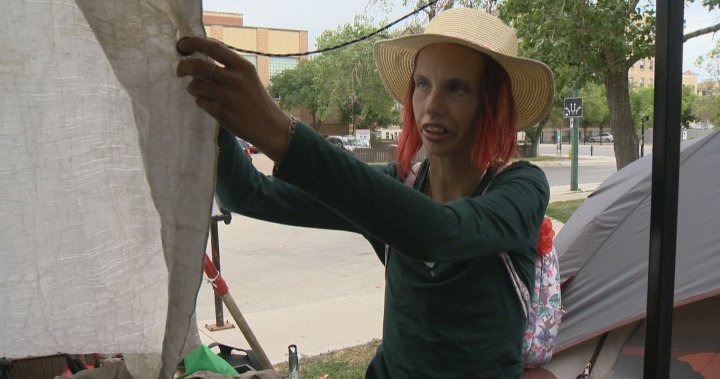
Nearly a month after the first tent went up in front of Regina city hall, more tents have appeared. What started as a movement to draw attention to the issue of homelessness has grown into an encampment, highlighting the need for support and housing.
A camp resident says the first week at camp was a breeze until cooler and wet weather conditions hit.
“It was nice … and then there’s a rainstorm. Then I woke up the next morning and there’s like makeshift tents all over the place,” said Pynk Mitton. “We don’t have the necessity to properly tie everything down with shoelaces or whatever we could find.”
Mitton said people have set up at the encampment for safety and shelter.
“This was mainly meant for the women to feel safer within the community,” said Mitton. “Some of us struggle with addiction. So, one of the major addictions is fentanyl.“
Story continues below advertisement
Mitton said the tent encampment is a safe area for residents to engage in their addiction but it’s also a place where people can strive for sobriety. Other resources come into the tent encampment to do wellness checks on the residents.
Camp residents had hoped to meet with the mayor and city council, but Mitton claims a group of them were escorted out during a city hall meeting where the public was welcomed to attend.
“Mayor has not responded … she does not care,” said Mitton. “I was floored.”
Mitton said camp residents are not asking for new houses to be built but to turn existing properties that are boarded up into shelters for the homeless.
“We don’t need new houses being built. That’s just more money out of the pocket of taxpayers,” Mitton said. “Open it up and do affordable housing, bring back rental supplement for everybody, not just people that aren’t on assistance.”
The residents of the encampment receive daily breakfast, lunch, supper and snacks in between. Wellness checks are provided every hour or so. Mitton said Narcan has been used several times and there have been zero fatalities.
“I’m not homeless. I’m just houseless because my home is wherever my heart is,” said Mitton.
Tents set up outside City Hall to push leaders to end homelessness
In an emailed statement, the City of Regina said they continue to monitor the encampment on the City Hall Courtyard and their priority is the health and safety of all residents.
Story continues below advertisement
“The City of Regina continues to collaborate with provincial government agencies and community-based organizations to connect residents experiencing houselessness in our community with services and supports they need,” the City said.
“The Saskatchewan Health Authority’s Street Project Team attends the encampment regularly to provide a needle exchange program. The Ministry of Social Services is on-site twice each week, the Regina Downtown Community Support Program engages with camp residents daily, and Saskatchewan Health Authority/RFPS Overdose Outreach Team responds as needed.”
According to the City’s statement, there are 72 tents in the Courtyard, and the Regina Fire and Protective Services conduct regular wellness checks of camp residents. To date, RFPS has recorded nine overdoses in the camp.
There are also public washrooms available in City Hall during business hours and a 24-hour temporary washroom was set up. Garbage removal occurs at the tent encampment frequently.
As more provinces mention parental rights when it comes to name and pronoun changes for kids in schools, nursing professor and author Martha Paynter says it’s “very discouraging.”
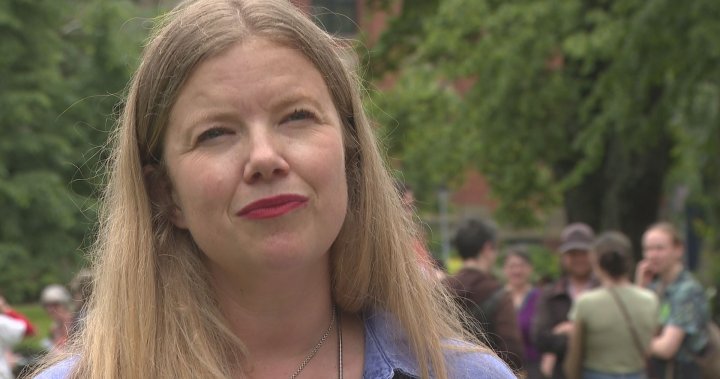
“We know that already LGBTQ youth are disproportionately likely to experience mental illness, homelessness, substance use disorders, and of course, most concerningly, suicidality,” Paytner, an assistant professor at the University of New Brunswick, says.
The premise of the arguments made by some provinces is the need to inform parents about changes to their child’s preferred names or pronouns.
On the surface, it makes sense for parents to have a high level of involvement in their child’s upbringing. But Paynter says we need to be cautious about those who don’t have a safe space.
“If a child is not telling their parents something, it’s because the child is afraid of the parent,” she says. “In this country, we do not have parental rights. You do not govern your child like you own a pet. Rather, we have children’s rights.”
Story continues below advertisement
Policy for ‘the absolute most marginalized and vulnerable’
New Brunswick and Saskatchewan are defending their policy changes, which require parental consent to change pronouns and preferred names, while Manitoba’s PC Party is looking to “enhance rights for parents and guardians.”
“It’s important to note that every school must be safe for every child,” Stephen Lecce said. “I think we understand, though, that parents must be fully involved and fully aware of what’s happening in the life of their children.
“I think we have to respect the rights of parents.”
But Paynter says policies need to be created with the most vulnerable in mind, “not with the idea that most of us have great relationships with our children and lots of trust, and we promote and affirm their gender.”
“That’s not how we have to build policy,” she says. “We have to build it considering the absolute most marginalized and vulnerable among us and make sure we protect them.”
Nova Scotia’s policy
Becky Druhan, Nova Scotia’s education minister, was not available for an interview Wednesday. But in a statement, she says, “We affirm our support for all members of the 2SLGBTQIA+ community.”
Story continues below advertisement
“Our guidelines have been in place since 2014. We have no plans to create policy in this area,” she says.
Those guidelines say that for primary through Grade 6 students who request “their preferred name, gender identity, and/or gender expression be used,” parental/guardian consent “will be requested.”
Parental or guardian consent isn’t required from grades 7 through 12 “if the student has capacity of consent.”
However, it gets more complicated.
The same document also says it is “important to have a student’s prior permission before disclosing their transgender or gender-nonconforming identity to their parent(s)/guardian(s).”
New Brunswick was the first province to make headlines when it announced a review of Policy 713 in May.
The original intent of the policy was “to make sure children feel safe and comfortable in their learning environment,” Paynter says.
But in June, the province made several revisions to its policy on sexual orientation and gender identity in schools, which has since prompted criticism from the LGBTQ2 community, advocacy groups and educators.
Story continues below advertisement
One of those changes requires children under 16 to have parental consent before they can officially change their preferred first names or pronouns at school.
Kelly Lamrock, New Brunswick’s child and youth advocate, said those changes violated the Charter.
“It’s important for a parent to have involvement in their child’s education,” Education Minister Bill Hogan said last week.
The minister said this rule only applies to students whose names are “attached to a different gender than what they’re identified with their parents” — not for students who would prefer a nickname, such as a child wishing to be called Bob instead of Robert.
“Otherwise, what we’re saying is that we’re keeping information from parents, and that’s not the role of the school,” he said.
Paynter says legal challenges will need to address the concerns.
“Appallingly, it isn’t enough to dissuade ministers in other provinces from following along this path,” Paynter says.
Province could fund legal challenge against itself
It’s become clear that New Brunswick’s Department of Education could fund a legal challenge against the policy.
Story continues below advertisement
Harry Doyle, the chair of the Anglophone East District Education Council, says that “doesn’t make any sense to me,” but that “what it means to me is that (the government is) softening their line.”
Global News asked the Department of Education why it would fund a legal challenge against government policy. In response, it pointed to another policy: Policy 126 — the “provision of legal advice to District Education Councils.”
“No fee will be charged to the school districts for legal services provided through the Province under section 6.3.1(a) or (b) when such are initiated in accordance with section 6.1 and 6.2 of this policy,” the document reads.
Doyle says a discussion will need to be had at a Council of DEC Chairs meeting in September to determine if they’d want to use government lawyers.
“We have hired lawyers already,” he says.
“I’m not against parents,” he says. “It’s just sometimes there’s kids that just can’t break this kind of thing to their parents or their grandparents.”
Doyle, who was a principal for more than one-third of his 35-year career in the education system, says he’s more concerned about student safety nowadays.
“I’m a lot more concerned now than when I was principal,” he says.
The Saskatchewan Advocate for Children and Youth, Lisa Broda, says she will be reviewing the Ministry of Education’s new policy to get parental consent when students under 16 want to change their pronouns or preferred first name.
“I just learned about this policy in the media and have not been privy or advised of these changes. I am deeply troubled by the impact this policy will have on the rights of children in Saskatchewan. Any new policy, legislation, law, or practice that may impact children and their rights compels me, under my legislative authority, to review and advise on such matters,” Broda said.
Sask. government introduces parental consent for sexual health education
“As the Advocate, I must ensure the voices of young people are heard and that their rights are being upheld.”
Story continues below advertisement
She said she will be looking to see if children’s rights have been properly considered, and if there is an opportunity for discretion for children under the age of 16.
This new policy will be reviewed against the backdrop of children’s rights under the United Nations Convention on the Rights of Children, but will also be examined along with concepts like the Supreme Court of Canada’s mature minor doctrine, which says youth under the age of 16 have the right to demonstrate whether they have mature and independent judgement in decision-making.
“If a mature minor can make significant decisions related to their medical care under the age of 16, it would stand to reason that they could make a determination as to whether they wish to be referred to by a different pronoun, without undue interference.”
Broda said she will be looking to make sure children feel safe and supported in their school environment.
Saskatchewan’s new education policy allows parents to opt out of sex-ed, choose their child’s pronouns
“There is no question that there are significant risks to the mental and physical safety of gender and sexually diverse youth who are not supported to express their authentic selves and their safety and well-being needs to be at the fore of any policy.”
Story continues below advertisement
Education Minister Dustin Duncan followed up with the policy announcement Tuesday, saying the government was looking to standardize policies across Saskatchewan’s school divisions.
“We want to ensure there’s a consistent policy to say, if a child does express an interest that they want to formally change their name and gender, that if they’re under the age of 16 that their parents will provide consent, or there will be a plan to support that student so that they can get to a place where they can tell their parents,” Duncan said Tuesday.
He said if a parent did not consent, teachers would be required to still use the original name or pronouns of the child.
Saskatchewan education minister defends GSCS’s statements on leaked ‘rainbow tent’ email
“What I’m trying to keep in mind is we’re talking about children, we’re not talking about small versions of adults. We’re talking about children who don’t have the life experience that you or I have yet, whose brains are still being formed, who are struggling with all sorts of things like puberty and impulse control.”
Story continues below advertisement
The announcement was hit with several groups and organizations showing concern about the move, with the Saskatchewan Teachers’ Federation (STF) decrying the decision, saying it was made without meaningful consultation with experts in the education sector.
“The government has introduced a policy driven by political ideology, which will harm 2SLGBTQIA+ students. Similar policies in other provinces have been analyzed by child advocates and deemed to be unconstitutional. This policy raises questions of human rights and is in opposition to the United Nations Convention on the Rights of the Child,” the STF release read.
STF president Samantha Becotte called the policy “a political response to a government losing support in a by-election to a far-right party, following an isolated incident.”
“Once again, as with this government’s recent advertising campaign on teacher salaries, we are seeing education issues being tossed around like political footballs,” Becotte said.
Fran Forsberg is an advocate for the 2SLGBTQIA+ community in Saskatoon and described the new policy from the provincial government as “ridiculous and very archaic.”
“It’s like I’m in a time machine going backwards,” Forsberg said.
She said they’ve been fighting for recognition of gender expression and preferred names and pronouns for the past eight or nine years.
Forsberg addressed the parental consent portion of the new policy, saying she knows many kids who don’t have that kind of support at home.
Story continues below advertisement
She said of course parents will be concerned about what their child is learning in school, but said the onus should be on the parents to get involved in their child’s life and for the parents to educate themselves.
Education council calling on N.B. government to adopt Policy 713 recommendations
“If you’re not aware of gender and sexual diversity in children and youth, you don’t want to know, because it’s out there for you to educate yourself.”
OUTSaskatoon, an organization that advocates for the 2SLGBTQIA+ community in Saskatoon, sent a statement to Global News saying the policy statement from Duncan was disappointing.
“Gender minorities in Canada remain at increased risk for a myriad of negative outcomes throughout their lifespan, including forced-gender conformity, suicide, sexual and physical violence, criminalization, and poor health outcomes,” reads the statement.
While the intent of recognizing the important role of parents supporting their child seems well-intentioned, this policy is not supportive to students who may be struggling as they question their own identity, it continues
Story continues below advertisement
“For some children, school may be the only safe space they have, and this policy may force some children to come out to their families.”
OUTSaskatoon also addressed another part of the policy that bars third-party organizations from presenting sexual health materials in schools. They said teachers often depend on organizations like OUTSaskatoon to offer that kind of material, adding the organization received almost 100 requests to present in schools in May and June.
“Current information needs to be readily available both in and outside of schools. OUTSaskatoon encourages third party organizations to continue to build sexual health education materials for schools but for outside use as well, as there WILL be children looking for information outside of their schools.”
Saskatchewan government appoints administrator for private schools in wake of abuse allegations
The Regina and Area Sexual Assault Centre also noted their disappointment with the province.
Story continues below advertisement
“The Minister’s decision displays a shocking ignorance of the challenges and risk that have been created,” read the sexual assault centre’s release.
The organization said their work doesn’t delve into sexual health, but they’ve received signals that their presentations at school won’t resume in the fall until administrators work through the details.
It said they’ve offered dozens of presentations within the last year in classrooms focusing on consent, healthy relationships and abuse prevention.
“Not once have we received negative feedback or concerns from schools or parents. This work now appears to be at risk and it is heartbreaking.”
“Minister Duncan has suggested that teachers have the information and are equipped to teach this in classrooms – we would suggest, based on our own experiences, that many teachers are uncomfortable with these topics. Many teachers also have their own personal experiences with abuse, which makes teaching it even more difficult and sometimes retraumatizing,” the release added.
Tamara Hinz is a child and adolescent psychiatrist and an assistant professor at USask, and said nobody that she knows in her field was part of any sort of consultation regarding the province’s new policy.
She called this a shocking departure from current practices in most schools, especially regarding children’s preferred names and pronouns.
Some parents concerned as N.B. government reviews school gender identity policy
“Kids and teenagers, literally the developmental task of that age group is figuring out who they are as a person.”
Story continues below advertisement
She said sexuality and gender identity are a big part of that, noting it can be a fluid process or a very fixed one.
Hinz said clinically, best practices often mean following the kid’s lead, accepting that child where they are at.
“Sometimes they go by one name at one appointment and another name at another appointment and I try to go with the flow. I find that a lot of kids will test out those waters with their peers at school, sometimes before bringing that home to their families.”
She fears that schools may no longer be a safe space for kids who may not feel safe or comfortable discussing gender issues with their parents before they are ready.
Hinz worries that the policy might be too simplistic or unrealistic, noting extreme cases do exist.
“In extreme cases, some families are not going to be a safe place for those kids to come out. I’ve got patients who’ve been threatened that they’ll be kicked out, that they’ll be disowned. There’s a serious risk of abuse if some of these issues are disclosed at home.”
She said even in less extreme circumstances, Hinz worries that the best interest of the child is not centred here.
“These are sensitive topics that should be led by the child, those timelines should be led by the child.”
Story continues below advertisement
Kseniah Pidskalny is the coordinator for the USask Student Union Pride Centre and said the news of the new policy was frustrating.
“It seems to be this ongoing struggle in terms of what it means to be trans in this province, and this fear that’s surrounding the idea that it’s somehow indoctrinating kids, when it’s really not the case at all,” Pidskalny said.
She said these policies continue to isolate queer youth.
Pidskalny gave an example of a high school student who came by the centre and did not have a home that was accepting of a different preferred name or pronouns. She said the centre and that student’s school were the only safe spaces for them, and Pidskalny wondered what would happen to that kid.
“Do the teachers now need to get permission to continue to call that student by their proper name?”
She worries this will increase the chances of kids like that struggling with their mental health, or further isolating themselves.
Pidskalny said this policy unnecessarily involves the provincial government and the education system.
“Kids are fully capable of figuring this stuff out by themselves. We don’t give children enough credit, by all means they know who they are.”
Story continues below advertisement
Global News reached out to the Ministry of Education to see what specific organizations and individuals were consulted in regards to the new parental inclusion and consent policies and received a statement.
“Over the course of the summer, the Ministry of Education, the Minister of Education, and MLA’s heard from concerned parents and guardians across the province regarding sexual health education, including many parents and guardians of school-aged children,” reads the statement.
“The Ministry of Education regularly has discussions with various groups and organizations about a wide range of topics related to education.”
A new shelter facility in Saskatoon would be one of the most successful solutions for people with complex needs, Saskatoon Tribal Chief Mark Arcand said at a Wellness Centre event on Wednesday.
“We have to change up the format,” Arcand said. “We need a facility for complex needs. It’s a priority. Offsite, it needs to be somewhere different.”
Arcand spoke Wednesday at the Emergency Wellness Centre during a BBQ hosted by the Saskatchewan Indian Gaming Authority for the residents currently calling the shelter home.
“Our community is coming for a tough file in our city that needs to be addressed really, really quick because winter is coming,” Arcand said.
Police commissioners’ letter to province states ‘urgent need’ for help
He noted that the Wellness Centre has been at full capacity since the day the shelter opened last year.
Story continues below advertisement
“There is more that 106 people in need in our city. The system is going to fail. We are just wasting money if it is not properly funded.”
Arcand recalled when the shelters were located in downtown Saskatoon and didn’t have the proper peacekeepers or staff in place.
“Inadequate staff resulted in tons and tons of police calls,” Arcand said.
His request supports a recent letter from Saskatoon’s board of police commissioners calling for more solutions for people with complex needs in the community.
A 2022 annual report showed that in 2022, calls for outreach assistance surpassed all other calls for service, prompting the letter to the provincial government in July.
The outreach calls included housing issues, wellbeing checks, counselling, public safety, mental health, and medical assistance.
The police letter told Saskatchewan Minister of Health Paul Merriman, Minister of Mental Health and Addictions Everett Hindley and Minister of Social Services Gene Makowsky that there is an urgent need for facilities and supports for people with complex needs in Saskatoon.
In response, Hindley and Makowsky said they were committed to finding solutions to address those issues with partners.
The majority of the response consisted of the province talking about the work and funding already designated to help address homelessness and mental health issues.
“We are lacking treatment facilities. We are lacking detox beds. When somebody says I’m done doing this stuff, what do we do? There is nowhere to take them,” Arcand said. “People that are continuing to use drugs, needles, crystal meth that choose not to quite are the ones that are causing problem throughout our city and I think we have to find a solution to that. We don’t have the staff to deal with those individuals who are here.”
Arcand said that approximately 30 to 40 individuals at the Wellness Centre would be considered to have complex needs.
“We are turning people away because they are committing acts of violence here, so they are getting pushed away because they are disrupting the facility, they are threatening staff, they are being very aggressive.”
He said that most of these individuals are using drugs and are later committing crimes throughout the city.
At a Saskatoon conference in June, Mayor Charlie Clark noted that the city needs 100 beds that are require 24-hour care.
He said the community needs to work with the city to find places where that kind of housing would succeed, suggesting that they need to be spread across the city in different neighbourhoods, and that they need to be established soon.
While providing those would require investment, Clark added they would be much cheaper than sending people to emergency rooms or jail.
Story continues below advertisement
“We just need a facility,” Arcand said. “Then we put a hiring note there. We have a good model here.”
Arcand mentioned that the Saskatoon Tribal Council doesn’t have the funds to purchase capital projects such as a new facility.
While temperatures continue to rise in Saskatchewan, proper measures are being put in place for Regina to help residents beat the heat.
Regina Fire and Protective Services said the public should take precautions by staying hydrated, taking breaks in the shade, and dressing appropriately. Regina Fire is offering cooling stations at every fire hall throughout the city.
“Part of our extreme weather strategy, when we see these heat warnings come in, our stations actively start setting out water,” said Fire Chief Gord Hewitt. “We know one of the best ways to beat or avoid heat emergencies is by staying hydrated.”
At seven fire stations throughout Regina, buckets of water and along with water bottles are placed outside the stations so people are free to pick some up to stay hydrated.
“Our firefighters are kind of monitoring throughout the day. As they start to get low, they start to fill them up,” Chief Hewitt said. “Those water bottles are free and available for the public to take any time.”
Story continues below advertisement
Regina Fire sees that at station one, people take advantage of the water supply as the area has a lot of foot traffic. About two to three times a day, firefighters are refilling the bucket with water.
“That’s great to see that people are taking advantage of it and staying hydrated during the heat wave,” he said.
Regina Fire said there are some drinking fountains that have clean and potable water in them, including Victoria Park, Buffalo Meadows Park, and the Core Community Park. The water fountains have little spots on them designated for animals as well.
City residents are encouraged to look out for signs of heat exhaustion in both themselves and those around them. The Regina Transit superintendent says transit drivers are also on the watch for pedestrians who are feeling the effects of the summer heat.
“The operators have been provided training … to look out for what somebody might be in distress,” said Byrce McCulloch. “A person would have their hands out in front of them, palms facing the bus, and they will recognize that as a signal that somebody is in need of help, and they’ll pull over and contact 911.”
The Safe Bus program is free for anybody and can be utilized in any other urgent crisis, a lost child or if someone is in medical distress.
Story continues below advertisement
According to the Saskatchewan Health Authority website, symptoms of heat exhaustion include fatigue, weakness, headache, dizziness, and nausea. This can sometimes cause fainting and in severe cases, heatstroke where medical attention would be required.
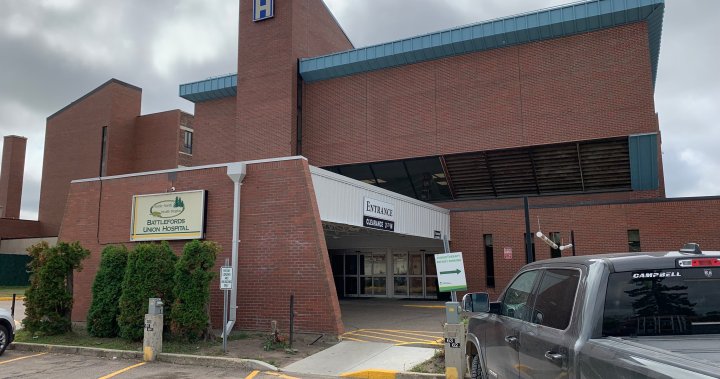
Just weeks after a leaked document showed an ICU bed in Regina was closed, another document has revealed that the ICU at the Union Hospital in the Battlefords has been closed for weeks.
The document outlines the intensive care unit was shut down on July 13 and will remain closed until Aug. 3rd.
This means anyone seeking intensive care will have to be transported to another facility.
The closure is not listed on the Saskatchewan Health Authority’s (SHA) service disruptions page, and the Sask. NDP say most people who have found out about the closures have done so through community-run Facebook pages.
NDP Leader Carla Beck said doctors she has talked to are scared of more closures.
“Health care workers are telling us they are terrified someone is going to show up at their hospital, at their facility and not know if their services are suspended for a time or indefinitely,” Beck said.
Story continues below advertisement
Rural and Remote Health Critic Matt Love said the fact that health care workers are being driven to leak memos to tell the public is concerning to see, and said the government needs to be more transparent.
“We’re now regularly getting leaked information from front-line health-care workers across the province,” love said. “You can’t fix a problem if you aren’t willing to admit it exists. Rather than working to fix these problems, the Sask. Party is spending more time working to cover them up from the public.”
In a statement from the Ministry of Health, they said the ICU has been closed due to staffing issues in the summer.
“Whenever a staffing shortage is identified, the SHA acts to replace those staff appropriately and as quickly as possible before any pauses or reductions are considered,” the statement read. “However, ICU nurses are specially-trained and there can be challenges staffing these shifts in summer.”
The province said when beds are not available at an existing adult ICU site due to capacity or bypass, the patient will be transferred to one of the other ICU sites where their care needs can be met. As of July 27, the total adult ICU occupancy is at 75 percent.
“The SHA is in the process of adding 250 new and enhanced permanent, full-time health care positions in rural and remote locations across the province,” the statement read.
Story continues below advertisement
“To date, nearly 160 of these new or expanded positions have been filled, with work ongoing to fill all the remaining positions.
In the 2023-24 budget, $630,000 was allocated to enhancing staffing capacities at the Yorkton Regional Hospital and the Battlefords Union Hospital. Work is also currently underway on major capital infrastructure improvements to the Battlefords Union Hospital operating room to improve patient care.
In less than two weeks, classes will resume for students across the province. While it can be an exciting time full of fresh starts, it’s become challenging for North Battleford teacher Jackie Kroczynski.
“You always want to improve on the year before. You always want to do better, but sometimes it feels like you’re just plugging holes,” she added.
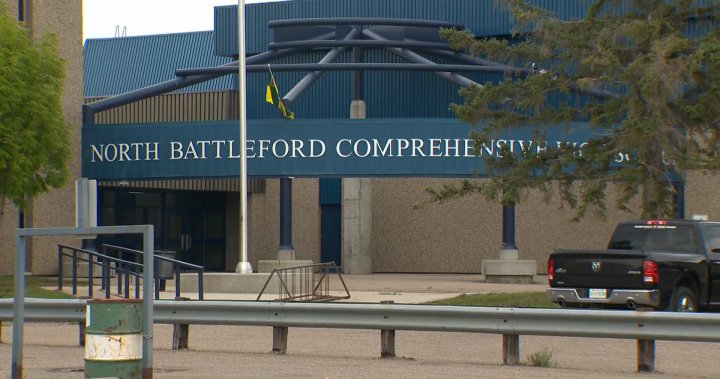
Jackie Kroczynski has been teaching for 26 years, 10 of them at North Battleford Comprehensive High School.
Since returning to the classroom from COVID-19 pandemic restrictions, she said she noticed an increase in violent altercations.
“There have been several, a little more high-profile incidents of violence, including a stabbing that took place last September,” she explained.
“There are routine fights. There are routine incidents with students coming to school intoxicated. There are routine incidents with things like bear mace. There have been a couple of incidents with students coming to school with false weapons, pretend weapons,” she explained.
Story continues below advertisement
Kroczynski appreciates the efforts of the school administration in responding immediately and diligently to the incidents.
She believes there aren’t enough supports available for students navigating classrooms in a post-pandemic world. She is asking the provincial government to pay close attention to what transpires in classrooms.
“Part of it has to do with difficulties with socialization. Kids are not used to being around other kids. Becoming accustomed to that again,” Kroczynski explained.
In addition to a rise in violent incidents, the school has also been navigating mental health challenges.
Global News has learned that in 2017 some students attending the school died by suicide with the most recent incident earlier this month.
Living Sky School Division, which oversees North Battleford Comprehensive High School, confirmed in a statement:
“We believe that mental health is an important and complex issue and want to begin by expressing our deepest sympathies to the family and friends affected by the recent passing of one of our students. Supports are being made available for both staff and students affected by this tragedy at the school upon their return,” the statement read.
“In the past there was a period of extreme tragedy in The Battlefords where a number of students took their own lives. These tragedies were not solely related to our division and affected the whole community. Mental health is a multi-ministerial issue and Living Sky School Division is committed to working with local and provincial partners to support students in all areas of their lives. School is just one piece of a much larger puzzle.”
Story continues below advertisement
The statement explained further about trauma-informed training provided to staff to understand students or coworkers who may be struggling.
“In our largest school, North Battleford Comprehensive High School, we have a mental health capacity building program with two dedicated staff members onsite that also offer support,” the statement read.
For Kroczynski, noticing signs is one factor but providing support has become difficult with larger class sizes.
“Our school works really hard at working to build those relationships with students and staff. And when you have classrooms that have really high numbers … 35, 36, 37 students in a classroom, there are lots of kids that sort of get left behind,” she said.
“This is not the students’ fault. This is not the teacher’s fault. This is the fault of a system that is not adequately supported,” Becotte said.
“They’re working their way through how they can express those emotions and sometimes they come out in the wrong way. And violence is one of those reactions. So we need to ensure that all students have the right support starting from a very young age where they can build in the strategies that help them cope,” Becotte added.
Story continues below advertisement
Becotte explained that the federation provides professional development sessions for teachers to be able to give students the tools to navigate mental health crises.
She said the province needs to allocate more funding to violent prevention and mental health programming in schools.
“The Government of Saskatchewan is committed to the safety and mental well-being of Saskatchewan students. School divisions are responsible for the day-to-day safety and well-being of students within schools. Schools work closely with local authorities such as the RCMP regarding violent incidents,” the statement read.
The statement continued by explaining its assistance in accessing Mental Health First Aid Training, Kids Help Phone, Respect in Schools online training, and the ‘Be Kind Online’ grants and resources. Plus, the endorsement of the Violence Threat Risk Assessment which all school division administrators are trained under.
“The Ministry of Education will continue to work with our school division partners to improve the mental health and well-being of students across Saskatchewan,” the statement ended.
Despite the challenge, Krocynski remains hopeful.
“One of the great things about being a teacher is the beginning of the school year always offers an opportunity for a new beginning,” Jackie Krocynski said.
With the arrival of the latest COVID-19 variants within the country and the looming flu season on the horizon, many Canadians may be wondering if they should get their booster shot immediately or wait until the newest vaccine formulations arrive.
The updated booster shots are expected to roll out in the fall but are still pending approval by Health Canada. The new vaccines are also tailored to the dominant XBB.1.5 Omicron subvariants that are currently circulating in the country.
Although bivalent COVID-19 vaccines are currently available in Canada, the National Advisory Committee on Immunization (NACI) previously said in July that the fall boosters will target more recent, immune‑evasive SARS-CoV-2 variants.
Some health experts say you might be better off waiting until the updated vaccines are available, while others say not to wait. This leaves Canadians grappling with a crucial decision: whether to get their booster shot immediately or hold off.
Story continues below advertisement
COVID-19 cases are starting to rise as students return to school
“It is it is well and truly confusing,” Kerry Bowman, a professor of bioethics and global health at the University of Toronto, said. “I think we’re getting an incredible lack of clarity as to what should occur. I wish we had stronger guidelines from public health. I feel like we’re on our own on this one.”
Adding to the confusion, he said, is the fact that some people have said they will get both shots, one now and the reformulated version when it becomes available. However, this approach is discouraged, Bowman said, emphasizing that it is advisable to wait at least six months between vaccine shots.
Here’s what health officials are saying about the fall booster shot.
In its latest guidance on July 11, “NACI recommends a dose of the new formulation of COVID-19 vaccine for people in the authorized age groups who have previously received a COVID-19 vaccine, if it has been at least 6 months since the last COVID-19 vaccine dose or known SARS-CoV-2 infection (whichever is later).”
Story continues below advertisement
It noted the new formulations expected this fall should provide a better immune response to the dominant subvariants. It did not specify whether Canadians should get the current formulation of the booster if the updated version was not available by fall.
“Booster doses in the fall will be formulations updated to target more recent, immune‑evasive SARS-CoV-2 variants,” NACI said in its updated vaccine recommendations.
“Individuals vaccinated with the updated formulation are expected to benefit from a better immune response against these variants compared to current vaccines.”
It emphasized is particularly important for those at increased risk of COVID-19 infection or severe disease including those 65 and over, long-term care residents, people who are pregnant and those with underlying conditions, to get immunized.
What Health Canada is saying
In an email to Global News on Monday, a spokesperson from Health Canada said it encourages “all Canadians to make sure that their COVID-19 vaccination is up to date.”
Story continues below advertisement
“Vaccination is one of the most effective ways to protect against COVID-19. All approved COVID-19 vaccines used in Canada continue to be very effective at protecting against severe illness, hospitalization and death from COVID-19.”
The health agency did not specify in its response whether Canadians should wait until the updated formulations become available.
The health department’s website is in line with NACI’s guidance, stating that COVID-19 booster doses may be offered at an interval of six months after a previous COVID-19 vaccine dose (after completion of the primary series or previous booster dose) or SARS-CoV-2 infection, regardless of the product offered.
Bivalent vaccines are the preferred vaccine for booster doses among individuals in the authorized age groups, Health Canada stated on its website, in addition to containing mRNA that encodes the spike protein of the original strain, they contain mRNA that encodes the spike protein of strains of the Omicron variant of concern.
NACI’s updated guidelines have not been added to the Health Canada website.
The World Health Organization on Thursday said it recommends getting a booster or additional dose within six to 12 months, depending on your risk category.
Story continues below advertisement
Those who are most at risk should get their booster right away if they are due for one, said Dr. Maria Van Kerkhove, the WHO technical lead on the COVID-19 response, during a WHO question and answer session on social media.
For those who are most at risk, it is “very critical that you get a booster, and don’t wait,” she stressed. “The big message I have for you is don’t wait for the next round of vaccines.”
WHO urges strengthened surveillance amid COVID-19 spike in northern hemisphere
Previously, on March 28, the WHO said it no longer “routinely recommends” additional COVID-19 vaccine boosters for medium or low-risk people.
The WHO recommended additional booster doses for high-priority groups such as older people, immunocompromised people of all ages, front-line health workers and pregnant people. But for those who fall under the low and medium-risk group, WHO did not recommend additional COVID-19 boosters, citing “low public health returns.”
Because of this, Bowman said part of the confusion surrounding the COVID-19 fall booster is “understandable.”
“This is a very different pandemic profile than what we’ve been dealing with in the past, and whether to get a booster now or later could depend on the risks that that you are facing,” he explained. “So the short answer is, if you have risk factors, go ahead and get it now. ”
But there’s a lot of grey area.
For example, he said if someone is a healthy 25-year-old, but is living with a person who has advanced cancer and is going through chemotherapy, this creates uncertainty.
Story continues below advertisement
“We’re getting an incredible lack of clarity as to what should occur,” he said, adding that because there are new variants circulating, the level of risk and appropriate precautions have become even more challenging to determine.
With so much uncertainty, Bowman argued now is not the time for public health to go quiet, but instead, it’s a time for more guidance.
“I think most of us understand it’s no longer one size fits all, but we still need a lot more help with it than what we’re getting,” he said.
Dawn Bowdish, an immunologist at McMaster University in Hamilton, told the Canadian Press the mutating virus puts vulnerable populations, including the elderly, most at risk of infection.
Anyone starting chemotherapy or having major surgery may consider getting a booster before the reformulated vaccines are available but it’s otherwise best to wait, Bowdish stressed.
However, for most people, “waiting for that new formulation of a booster dose in the fall will be the way to go because they already have enough immunity by having COVID-19 or having all of their complete vaccine doses and they’re otherwise healthy,” explained University of Saskatchewan epidemiologist Dr. Nazeem Muhajarine.
For those who are at higher risk, he said to get a booster shot as soon as possible.
Dr. Gerald Evans, an infectious disease specialist at Queen’s University in Kingston, Ont., said it would be ideal if XBB vaccines were available now before the flu season began.
“It would be great to have it as early as possible,” he said. “Once Health Canada says ‘yes we approve,’ then the manufacturer is the part that creates a bit of a delay. My hope is that delay will be extremely short-lived as there are a lot of people who are due for boosters now, including young, healthy people, where we say just get it once a year.”
He added that if “we can get those out and into people’s arms in September,” it could potentially help curb the ongoing surge in COVID-19 cases.
What is the status of the fall COVID-19 booster?
Health Canada is currently reviewing three new vaccine vaccines containing the XBB.1.5 Omicron subvariant, for those six months and older. It is reviewing submissions from Pfizer-BioNtech, Moderna and Novavax.
Story continues below advertisement
While no specific rollout date has been established, it is anticipated that Pfizer and Moderna vaccines will likely receive approval in the fall, with the Novavax shot following at a later date, Health Canada said in an email Monday.
“The authorization and availability of new vaccines will depend on many factors including the submission date, the review timelines, the acceptability of the information submitted and the supply of the vaccine by the manufacturer. If authorized, Canada will have ample supply of the new formulation of mRNA vaccines available in Fall 2023,” the spokesperson stated.
Health Matters: NACI recommends getting a fall COVID booster shot
Canada will also have access to non-mRNA vaccine (Novavax) for those who are unwilling or unable to receive an mRNA shot, Health Canada said.
“We are anticipating it will be available later this year, pending a submission to, and authorization by, Health Canada.”
Story continues below advertisement
Public Services and Procurement Canada told Global News in an email Monday that it has agreements in place to procure the latest COVID-19 vaccines, ensuring Canada has the right quantity of doses it needs for 2023 to 2024.
“This includes agreements with Pfizer, Moderna and Novavax, currently allowing for up to 33 million doses that will be manufactured from their respective off-shore facilities and delivered in the fall/winter 2023, pending Health Canada regulatory approvals,” the spokesperson said.
Where do other countries stand on COVID-19 boosters?
Like Canada, the rollout of the COVID-19 booster shots in the United States is expected in the fall, according to the U.S. Food and Drug Administration (FDA).
The updated booster is expected to be cleared by the FDA ahead of a Centers for Disease Control and Prevention (CDC) vaccine advisory panel, which is scheduled to meet on Sept. 12 to vote on whether to recommend the updated vaccines, NBC News reported.
Story continues below advertisement
In England health officials on Wednesday said vaccinations will be available starting Sept. 11 (rather than the original October release date) as a precautionary measure intended to protect the most vulnerable as the winter months approach.