Nnamdi Ndubuka, medical health officer with Northern Inter-Tribal Health Authority, said there was an 87 per cent increase in gonorrhea between 2020 and 2022, and a 25 per jump in chlamydia between 2021 and 2022.
He said there’s a wide variety of reasons for the increase in sexually transmitted and blood-borne infections.
Poverty, the impacts of residential schools, systemic racism and the lack of access to quality health-care in the northern part of the province all factor into the increased numbers, Ndubuka said.
Concerning spike in Alberta’s STI numbers
He said people having unprotected sex and having multiple partners increase their exposure to gonorrhea, chlamydia and other STIs.
Story continues below advertisement
Ndubuka noted they are working on a number of initiatives to combat this rise in infections.
“Number one is increasing education and awareness about the nature of the disease and how it could be acquired or transmitted,” Nbuduka said.
They’ve been working with partners like the Prince Albert Grand Council to build targeted messaging for the population through mediums like social media and radio stations to educate the public.
Training and education are also being offered to health-care providers.
“Not just only (to) screen or do symptom inquiry, but also offer treatment in a timely fashion.”
Ndubuka said they are trying to increase access to testing for these infections as well, noting that could help prevent further spread.
New campaign targets STI transmission among seniors
He said they are facing challenges, noting the number of cases they are seeing doesn’t balance out with the number of staff available to do the work needed to combat this.
Story continues below advertisement
“For each case that’s reported, there is a need for contact tracing investigation to be conducted in a very meticulous way, and that requires work.”
He said it can also be tough to track down patients, saying they can often move around from place to place.
The World Health Organization noted that sexually transmitted infections are on the rise globally, adding that some strains of gonorrhea are highly resistant to some treatments, and cases are being found in countries like Canada, Australia and Denmark.
Safe sex misconceptions: Here are things you should know about STIs
Saskatchewan’s health ministry gave some statistics regarding sexually transmitted and blood-borne infections across the province, noting the numbers were estimates based on preliminary data:
There were 6,445 cases of chlamydia in 2022 and as of March 31, 2023, there have been 1,770 cases.
There were 2,784 gonococcal infections in 2022 and 607 so far in 2023.
Looking at infectious syphilis, there were 2,059 cases in 2022 and 443 so far this year.
HIV, based on the diagnosis year, had 223 cases in 2022 and 68 so far in 2023.
And Hepatitis C, based on the reported year, had 424 cases in 2022 and 108 in 2023 as of March 31.
Story continues below advertisement
26 per cent of young Canadian women say they’ve ‘never’ used a condom: survey
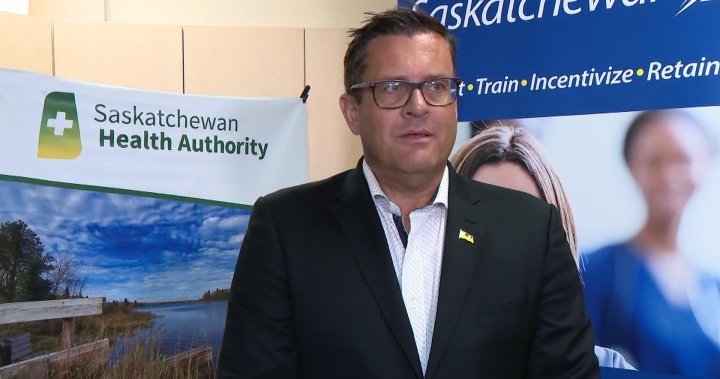
The Warman Primary Health Centre will be open next week with the Saskatchewan government marking the occasion.
The Saskatchewan Health Authority said health services at the centre will be offered by nurse practitioners, and will include things like:
general health assessments, physical examinations and ordering of diagnostic tests
diagnosis and treatment of common acute illnesses and injuries
chronic disease management, including diabetes, hypertension and asthma
immunizations and vaccinations for both children and adults
prescribing medications and prescription renewals
women’s health services, including exams and family planning
health promotion and disease prevention counselling
mental health support and counselling
referrals to specialists and other healthcare providers
“This new primary care centre will provide the community with additional options close to home, resulting in continuous and timely access to a range of health services,” said Terry Jenson, MLA for Martensville-Warman said.
“Our government made a commitment to expanding health services in Warman and the opening of this facility is a major step forward in fulfilling that promise.”
Story continues below advertisement
Appointments at the centre can be booked by calling the clinic at 306-844-4380, beginning Aug. 4 at 9 a.m.
“This health centre aligns with our key priorities and commitment in ensuring Saskatchewan residents receive the best health care as close to home as possible,” said Andrew Will, chief executive of Saskatchewan Health Authority.
“Residents in Warman and the surrounding area will have expanded access to treatment and diagnosis, as well as have ongoing monitoring and support from their local care team.”
The clinic will have limited appointments available, with availability building over the coming months.
Minister of Health Paul Merriman said this centre will offer additional options for primary care, adding a strong health care system is a collaborative effort on several fronts.
He said this standalone facility for nurse practitioners was needed in the areas of Warman and Martensville, because it’s been challenging to recruit physicians.
“We had to come up with a unique solution for both Warman and Martensville,” Merriman said.
He said that the government secured the empty clinic for the nurse practitioners, and that they didn’t need to do any major renovations.
Merriman said they will be watching this clinic to see how it works for patients.
Story continues below advertisement
Saskatchewan health minister says province is working to develop strategies to bring out-of-work nurse back to field
“The Nurse Practitioners’ Association has put a proposal forward to us for some other options, we’re working that out through the Ministry of Health and Saskatchewan Health Authority to see if it’s functional in some communities. These ones were ready to go.”
While he was at the facility, Merriman spoke about the nurses they were hiring in the province. Saskatchewan has been able to hire 550 nurses through the province’s nursing program since December.
He said the province has had many nurses come back from semi-retirement and retirement as well.
Merriman was asked if the incentives for foreign nurses not being made available to those already in the province looking to recertify discourages them from recertifying.
“No,” he replied, explaining the government is working with Advanced Education and the College of Medicine to make sure that any qualified person returning from either retirement or semi-retirement can be accommodated.
Story continues below advertisement
“I don’t see it as a determining factor, but we’re always continuing to adapt our programs to make sure that if there is somebody out there who has the skills in our health-care system that we can integrate them as fast as possible,” Merriman said.
Merriman talked about the incentives for nurses in rural areas and new graduates, saying the government had those specific areas targeted due to chronic vacancies.
He said Saskatchewan is targeting several health care positions, noting many are specific to certain communities.
The Regina General Hospital is temporarily closing an intensive care bed, following months of staff shortages.
According to an internal Saskatchewan Health Authority (SHA) memo released Wednesday by the Sask. NDP, one ICU bed was closed as of June 30 and won’t reopen until Sept. 5.
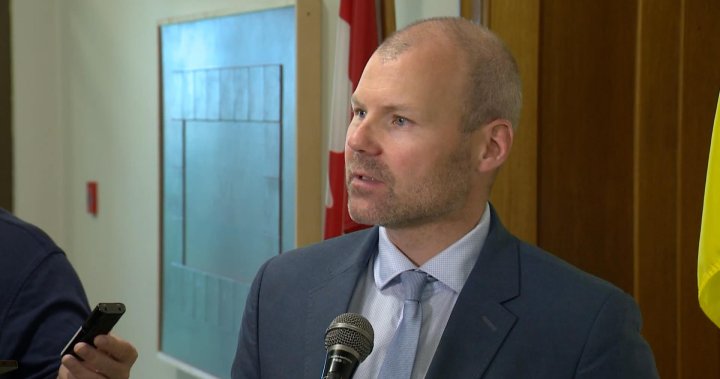
“This government has broken our health care system,” health critic Vicki Mowat said. “We know their current plan is not working when we see ICU beds closing at the Regina General Hospital. Intensive care is not optional. We’re talking about life and death.”
The memo says employee shortages have made it difficult to staff the unit. It outlines the hospital has instead relied on contracts for staff, but a number have been cancelled at the last minute.
“They (the government) have relied on these contractors, but as they’ve said, it’s a temporary solution,” Mowat said. “But we don’t see them coming up with a long-term solution.”
Story continues below advertisement
And while Mowat outlined there are benefits to having contract nurses, it is concerning to see so many contracts being turned away and that they are paid higher than full-time employees for the same amount of work.
NDP Leader Carla Beck said it shows that the Sask. Party government has been saying one thing publicly about health care, while something different is going on behind the scenes.
“What have we heard from Scott Moe and this health minister? We hear that everything is just fine, that they’ve got a plan and that their plan is working. The fact is their plan is not working — far from it,” said Beck.
Beck said the government needs to do a better job of retaining current health care workers already in the system and needs to work with nurses to find a solution.
“What we hear time and time again from health care workers in this province is the government shows no interest in getting to the table with them,” Beck said. “(They) seem more interested in providing a tag line ‘the most ambitious plan ever,’ and repeating it while our wait times get longer and longer and we lose more health-care workers from the system.”
In a statement from the Ministry of Health, they said the temporary closure of the bed won’t impact patient care, as the bed wasn’t being used.
Story continues below advertisement
“(The) Medicine Intensive Care Unit (MICU) occupancy at Regina General Hospital is currently 7/9 beds or 78% occupancy,” the statement read. “This is an average occupancy rate for this unit and it is anticipated that the closure of one MICU bed will not impact patient care.”
In terms of contracted staffing, the Ministry of Health said they are used in situations where there are prolonged vacancies at any of the facilities in the province.
Since December 2022, the SHA has hired nearly 490 grad nurses from the province and across Canada.
“New grad nurses are working across the province with many being hired in rural and remote locations, which helps stabilize staffing in communities experiencing service disruptions and reduces pressures on major centres,” the province said.
The province said of the 250 new full-time permanent positions created in the province, almost 160 have been filled.
“In late August, Saskatchewan will implement an accelerated, streamlined pathway for internationally educated nurses that shortens licensure timeframes from months to 14 weeks,” the statment read. “To date, the SHA has recruited nearly 400 RNs from the Philippines that are currently at various stages of the RN Pathway.”
Saskatchewan schools need to inform parents about the sexual healtheducation curriculum and parents will now have the option to decline their children’s participation.
This announcement was made by the Ministry of Education Tuesday morning, adding that schools will also need permission from parents or guardians to change preferred names or pronouns of students under the age of 16.
Sask. policies raises red flags for 2SLGBTQ+ advocates
School boards in Saskatchewan will also need to pause their involvement with third party organizations connected to sexual health education as the province reviews educational resources.
Story continues below advertisement
“Our government has heard the concerns raised by Saskatchewan parents about needing to be notified and included in their children’s education in these important areas,” Education Minister Dustin Duncan said.
Only teachers will be able to present sexual health material to students, except for professionals employed by government ministries or the Saskatchewan Health Authority.
Saskatchewan education minister defends GSCS’s statements on leaked ‘rainbow tent’ email
“We also determined that while all of Saskatchewan’s school divisions had policies dealing with these matters, those policies varied from one division to another, so it was important to standardize these policies and ensure consistency of parental inclusion, no matter where your child goes to school.”
“Parent/guardian involvement is critical in every student’s education,” Duncan said. “Schools will continue to ensure safe learning environments where all students feel included, protected and respected.”
The ministry suspended Planned Parenthood back in June from presenting in schools after a student got a hold of a pamphlet separately from a classroom presentation that was described to have graphic sexual vocabulary.
Story continues below advertisement
The pamphlet hadn’t been approved by the school, and the executive director for Planned Parenthood had said they normally don’t carry material that teachers weren’t already familiar with and had contacted the school as soon as they had learned about the situation.
“We let them know how to handle questions about it and making sure that they had the tools to talk about it, knowing they would likely get some phone calls from parents,” said Planned Parenthood executive director Julian Wotherspoon.
Planned Parenthood shocked after being suspended from Saskatchewan schools
Duncan said the family is the first line of support for kids, noting parents have a fundamental right and responsibility to nurture and raise their kids.
He said this announcement comes with the goal of having consistency among school divisions, pointing out that some divisions had been working to implement administrative policies that would mean parents wouldn’t notified if kids wanted to change their name or gender at school.
Story continues below advertisement
Duncan likened this to parents giving consent for kids to go on school trips, adding parental consent was needed for several things already.
When asked if teachers would be required to notify parents if a child went by different names or pronouns but didn’t directly say so to a teacher, Duncan said they would be working through that with school divisions.
He claimed this policy looked to help children in that instance, saying certain policies that some school divisions have in place would put teachers in a difficult position to develop a relationship with parents.
Duncan also said Saskatchewan has relatively smaller schools, so the likelihood of parents finding out through other means that a child was going by a different name or pronouns would be higher.
“We want to ensure there’s a consistent policy to say, if a child does express an interest that they want to formally change their name and gender, that if they’re under the age of 16 that their parents will provide consent, or there will be a plan to support that student so that they can get to a place where they can tell their parents.”
He said if a parent did not consent, teachers would be required to still use the original name or pronouns of the child.
When asked if school divisions would be penalized if parents did not support or give consent to a preferred name or pronouns change, but the school continued to support the student, Duncan said they weren’t talking about penalizing teachers.
Story continues below advertisement
Saskatchewan breaks ground on new francophone elementary school
“The direction will be that the teachers will not acquiesce to the wishes of the child unless the parents consent if they’re under the age of 16.”
He said these were very complex issues, noting that parent involvement should be higher in these cases.
“This is not about outing anyone.”
Duncan said supports need to be put in place to find out why a child feels like they can’t tell their parents.
When asked if the ministry has spoken with a single trans person about this policy, Duncan claims the ministry has had discussions with “a number of groups and organizations.”
“What I’m trying to keep in mind is we’re talking about children, we’re not talking about small versions of adults. We’re talking about children who don’t have the life experience that you or I have yet, whose brains are still being formed, who are struggling with all sorts of things like puberty and impulse control.”
Story continues below advertisement
He said he wants to be sensitive to this, but he’s heard from parents that they want schools to “get back to the basics” and that parents want to be informed.
The Canadian Civil Liberties Association (CCLA) sent a statement regarding the province’s announcement, saying this puts 2SLGBTQIA+ students in more danger in Saskatchewan.
“The new policy violates the rights and dignity of 2SLGBTQIA+ young people and is not in the best interest of students. We have seen all too often what happens when students are outed at home. Some unsupportive families have kicked their kids out of the house or resorted to physical violence,” read the statement.
“Shredding the rights of students is repulsive. Implementing policy that could result in increased harm to vulnerable youth is disgraceful. The CCLA will support and take the legal measures necessary to protect the rights of students in Saskatchewan.”
Saskatchewan Federation of Labour president Lori Johb also sent a statement.
“Outing children as part of a political gamble is violent and despicable,” Johb said.
NDP opposition leader Carla Beck said school divisions and local governments are in the best position to be connected with parents and make those decisions themselves.
“For the Minister to suggest that he knows best, that a few folks in Regina should be making policy for the whole province, I think people will see right through that,” Beck said.
Story continues below advertisement
She called the new policy changes divisive and cynical.
“It actually puts kids who are already vulnerable at greater risk, and I think inexcusable.”
Beck said during their door knocking they’ve heard that people are frustrated with all levels of government, but added they are also fed up with the divisive type of politics that was brought forth today.
“You hope it would be the case for every child that their home is safe, and school is a safe place for them, but unfortunately in some homes that’s not necessarily the case that home is a safe place for them.”
“It’s a benefit for kids to have places where they can freely be supported to be themselves. It’s actually written right into the objectives of the Ministry of Education, is to ensure all schools are inclusive and welcoming and provides a place where kids can learn,” Beck added.
She worries this might signal to some kids that they may have lost one of the only safe places that they have.
Beck said this was a clearly politically motivated decision and kids have been put at risk because of it.
She said this wasn’t responsible leadership, saying Saskatchewan has three times the national average for teenage pregnancies and the leader of sexually transmitted infections.
Story continues below advertisement
“The government has seen fit to suggest that more information is the problem here.”
Saskatoon’s board of police commissioners is calling for support from the provincial government, saying there is an urgent need for facilities and supports for people with complex needs.
The matter will be discussed during Thursday’s board of police commissioners meeting, along with the response the board received from the province.
A letter was sent from the board on June 8 to Minister of Health Paul Merriman, Minister of Mental Health and Addictions Everett Hindley and Minister of Social Services Gene Makowsky, noting a 2022 annual report showed a concerning trend in the city.
Saskatoon footing the bill on homelessness with ministry slow to act
“In 2022, calls for outreach assistance surpassed all other calls for service. Outreach requests include housing issues, wellbeing checks, counselling, public safety, mental health, and medical assistance,” the letter read.
Story continues below advertisement
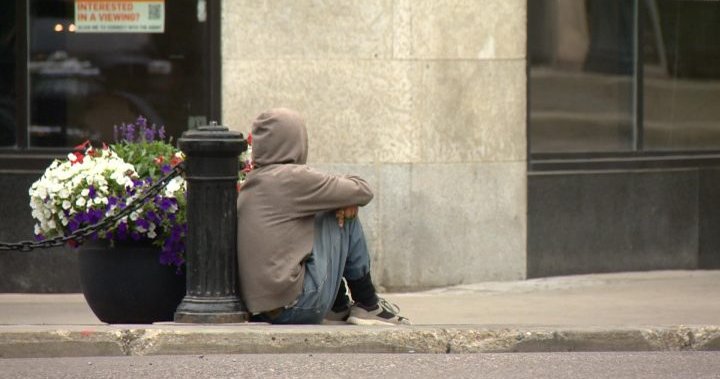
It said the Community Support Program (CSP) has seen a “significant increase” in the number of people sleeping in encampments, parks, building vestibules and public sidewalks.
The CSP is made up of five community support officers and one supervisor, but the letter said 14 per cent of the total calls (which was 2,630 calls involving 3,105 people) required the help of the Saskatoon Police Service.
The board said police resources are being used to address complex needs, but officers often don’t have any place to take people and end up releasing these people back into the community without any support.
Saskatoon City Council hears from first responders on challenges facing unhoused population
It recognized that there are discussions underway between the City of Saskatoon and the province to try and find solutions and create a co-ordinated approach, but said they needed to stress the urgency of this work.
“Our community immediately requires additional stabilization beds. Alongside these facilities we need permanent supports to address the complex needs that so many individuals, children and families in our community are experiencing. We are concerned that another winter without these supports will further escalate these issues in our community.”
Hindley and Makowsky responded to the letter with their own on July 19, saying they were committed to finding solutions to address those issues with partners.
The province said addressing addictions, mental health and homelessness is complex, noting that it often takes several ministries and organizations working together to make sure people receive services when and where they need them.
Saskatoon mayor joins colleagues in experiencing 36-hour challenge related to homelessness
The majority of the letter consisted of the province talking about the work and funding already designated to help address homelessness and mental health issues.
Story continues below advertisement
“In partnership between the Ministry of Health and the Saskatchewan Health Authority, efforts are underway to add more than 150 addictions treatment spaces that include virtual outpatient services, day treatment, detox/withdrawal management, inpatient addictions treatment and recovery services,” the province’s response read.
It noted that there is more to do, and that the province will work with the board and other partners.
Students are set to return to Saskatchewan classrooms as early as this week and parents are being reminded to make sure their children maintain proper hygiene and good infection control practices to prevent any illnesses at school.
Dr. David Torr, a medical health officer with the Saskatchewan Health Authority, says back to school always presents challenges because it brings people into a congregated environment and makes it easier for contagious illnesses to be transmitted.
“Washing their hands, not sharing bottles to drink, you know all those kinds of things are really important,” Torr said.
He added children should be kept up to date with immunizations, as they protect from many infectious diseases. SHA says outbreaks of whooping cough have hit the province, which is more severe than the common cold.
“Unfortunately, many of the kids who have been affected by whooping cough here are either not up to date with their immunizations, or have not had any immunizations at all,” Torr said.
Story continues below advertisement
Symptoms of whooping cough include longer fits of coughing, exhaustion and vomiting, and Torr said the illness could last more than a month or two without proper treatment.
Torr stressed the best way to stop illnesses spreading in schools is to have your kids stay home when they are sick.
“We’ve got to try and prevent the spread of illnesses so if you’re sick, you’re not in any shape to even be in school.”
Saskatoon public schools are anticipating rates of illnesses to be higher than previous years once school is back in session, and are anticipating cases of influenza to rise once flu season starts in November.
“The influenza virus is a very smart one; it keeps changing its dynamics,” Torr said, adding to the importance of getting the annual flu vaccine.
Lastly, Torr explained viruses thrive in cold environments, so having children properly dressed and hydrated will aide in preventing the spread of illnesses when kids are in school.
“When it’s extremely cold, and for example, in Saskatchewan we have a dry cold, so your mucous membranes dry up especially if you’re not hydrated, and when they’re dry, that’s a protective layer that is now missing, and the viruses have easy access. It’s like having a border with no border patrol.”
The highly anticipated parkade at the Regina General Hospital is officially moving forward, with construction slated to begin this fall.
Following years of safety concerns and complaints about lack of parking from both hospital staff and the public, the decision to go ahead with the project was made in 2022.
The parkade will include a total of 1,005 stalls – 873 stalls in the parkade and 132 surface stalls.
The province said the facility increases parking around the hospital by a total of 686 spots.
“We have heard the concerns of staff and visitors to the hospital,” Health Minister Everett Hindley said in a news release. “This parkade will provide a safe, convenient option for parking for years to come. “
Regina-based firm Link Developments Ltd. will build the parkade, having recently completed projects such as the Eastgate Centre – Medical Professional Building, the University of Saskatchewan stadium Parkade and the Avenue P Medical office building in Saskatoon.
“The Saskatchewan Health Authority (SHA) is pleased that the construction of the parkade at the RGH is moving forward,” Michelle Mula, interim vice-president, quality, safety and chief information officer of the SHA, said. “With safety at the forefront of our decision making, the parkade aims to provide additional safe and accessible parking at RGH for staff, patients and visitors.”
Construction is set to begin this month and be finished by the end of 2024.
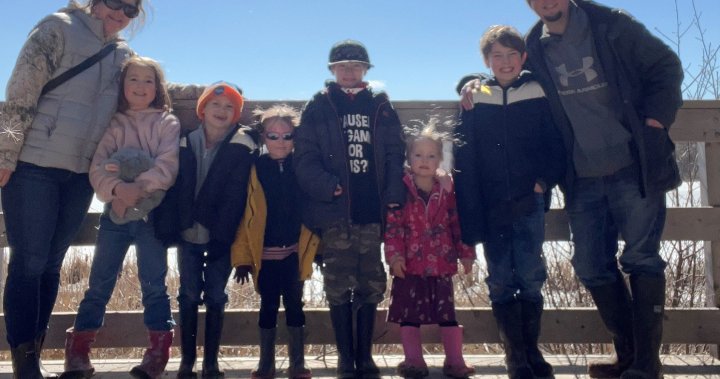
Brittany Tomlinson, 32, is on the hunt to find early morning child care for her six children, but if she isn’t able to find it in the next few months, she says she may have to quit her job.
Tomlinson’s family grew to six after she took in three of her sister’s children last year. She and her husband, who live in Oxford, N.S., have juggled looking after their kids in the morning since going back to work in September.
When she started her job, she tried tracking down daycare, private home child care and babysitters to help watch her kids before school started.
“I began looking for child care through Facebook mostly and it was really unsuccessful,” she said. “A few months ago, I probably messaged over 40 different people in my town … and no leads.”
Story continues below advertisement
While they continue to wait to find morning child care, she said her husband has had to take time off or call into work late.
Brittany Tomlison and her family. Tomlison went back to work in September 2022 and has had difficulty finding before-school child care.
Brittany Tomlison
“So he stays home with the kids in the morning on the days that I work so that I don’t miss work,” she said, adding that this schedule is not sustainable.
“I will probably have to quit,” she said. “And I don’t want to, because I work in a long-term care facility, so there’s people who rely on me,” she said.
Tomlison isn’t alone. With the introduction of $10-a-day child-care programs sweeping across Canada, more parents are able to access daycare as it becomes more affordable. However, a significant hurdle remains: the glaring shortage of available spaces across the country.
That’s according to a report published Tuesday by the Canadian Centre for Policy Alternatives (CCPA), which found almost half of younger Canadian children (defined as not yet attending kindergarten) live in a child-care desert, meaning a postal code that has more than three children for every licensed space.
Story continues below advertisement
“When we look at the big trends in terms of what the new national plan for child care was meant to do, one was to address child-care fees. And it has absolutely been doing that with fees dropping across the country,” said David Macdonald, co-author of the study and senior economist at CCPA.
“The next big challenge is trying to increase the number of spaces so that parents can actually access these lower fees and don’t have to sit on long wait lists.”
Tomlison’s family grew to six after she took in three of her sister’s children last year.
In 2023, Canada had around 759,000 full-time licensed spaces for younger children in daycare centres and family child-care homes, the report stated. However, out of the 1.97 million younger children who may need these spaces, 48 per cent per cent live in child-care deserts.
The report called ‘Not done yet: $10-a-day child care requires addressing Canada’s child-care deserts,’ found that small towns, like the one Tomlison lives in, suffer the most from child-care shortages.
Story continues below advertisement
The report highlights that rural areas have greater difficulty locating child-care centres or even family daycare homes close to where children live. The main reason for this challenge is the wide dispersion of children in need of child-care services in these communities.
“We have always had a child-care issue in our little town, which is why for years I chose to watch children,” Tomlison said. “Our town only has three child-care facilities, and one is closed. We have zero before-school care, nothing for shift workers or health-care workers.”
The report looked at child-care deserts across all provinces and found that Saskatchewan, Newfoundland and Labrador and Manitoba had among the highest proportion of children living in child-care deserts.
Meanwhile, provinces such as Prince Edward Island, Quebec and New Brunswick have the lowest proportion.
“This means that many more children are living in child-care deserts in Saskatchewan than Quebec, even though Quebec has four times the child population,” the report stated.
Story continues below advertisement
In terms of spaces available, the report also found that infant spots were the hardest for parents to find.
Most Canadian cities had coverage rates below 20 per cent, meaning that in those cities, there are at least five infants for every licensed infant space. St. John’s, Newfoundland and Labrador, the Ontario cities of Barrie, Guelph, Hamilton and Brampton, and Saskatoon had the lowest availability of infant spaces compared to their population of infants. In those cities, there is less than one licensed space for every 10 infants, the report stated.
The findings of the report come as no surprise to Marni Flaherty, CEO of the Canadian Child Care Federation.
“The country has just started expanding child care in Canada and really we are in the first two years of a five-year plan,” she said. “There have been wait lists for child care for 40 years, we have a lot of work to do.”
Story continues below advertisement
In the 2021 federal budget, the government pledged to bring child-care fees down to an average of $10 per day in regulated childcare centres by 2025-26. To make this happen, the feds said they will spend $30 billion over five years, with an annual injection of up to $9.2 billion permanently.
The authors of the report state that although reducing fees was a necessary first step, it also bumped up the demand for child care, meaning the challenges need to be addressed.
New report calls Manitoba a child care ‘desert’ with extreme shortage of available spaces
The first barrier to a shortage of child care is adequate staffing.
“Child care jobs are low pay, it’s often part-time, the quality of employment isn’t great, even if folks really love working with children and working in a child-care centre, they often don’t stick around,” Macdonald told Global News.
Story continues below advertisement
“And so it’s a challenge of training to some degree, but in reality, it’s a challenge of retention that’s going to be required.”
While physical spaces for child care may exist, without offering higher wages and improving the work environment, there will be a shortage of employees to staff these facilities, he added.
A second challenge to expanding the supply of child-care spaces is the services have mostly been treated as a private responsibility in Canada, the authors state. They argue, like the school system, child care should be tackled as a public approach.
The surprising economic impact of a national child care program
“If we just leave it up to the market, you’ll end up with a lot more spaces in big cities. You’ll end up with a lot more spaces in downtown cores, but you’ll retain a situation where smaller centres are largely abandoned,” Macdonald told Global News.
Story continues below advertisement
This stands in sharp contrast to the approach taken in the public school system, the authors note. Unlike schools, which are typically located based on the students’ geographical distribution, child-care facilities have traditionally been established without considering the actual needs and convenience of the children, they argue.
Flaherty agreed.
“It’s been a market-driven environment. We wouldn’t plan our school system like that. We wouldn’t plan our hospital system like that,” she said. “So expansion (of child care) requires public management planning and financing.”
Across the country, there has been a growing dispute within the Métis Nation over who is, and isn’t, Métis.
“The Red River Métis and the historic Métis Nation need to stand up for what we actually are,” said Will Goodon of the Manitoba Métis Federation. “We’re not just a mixture, we are an actual, distinct Indigenous nation.”
Infighting amongst Métis got so bad that the Manitoba Métis Federation left the Métis National Council in 2021 saying the national body wasn’t doing enough to sanction the Métis Nation of Ontario (MNO) — the representative body of Métis people in Ontario — over identity and claims to territory.
The Métis debate has reached a boiling point in Ontario as First Nations Chiefs have begun to weigh in.
At issue is the location of historic Métis communities and the power that comes with signing a self-government agreement that may impact First Nations.
A self-government agreement typically sets up new funding agreements and transfers jurisdiction over decisions like governance, social and economic development, education, health, and lands, as well as authority over the delivery of programs and services.
Prior to signing their self-government agreement, the MNO conducted research to identify historic Métis communities in Ontario. In 2017 six were co-announced with the province, most of which overlay Treaty territory.
First Nations are concerned that the MNO will exercise its jurisdiction on their land without consultation. As the Métis Nation of Alberta and Métis Nation of Saskatchewan have also signed self-government agreements with the federal government this issue could have far-reaching impacts.
Ottawa signs self-government agreements with Metis Nation in Alberta, Saskatchewan, Ontario
Numerous First Nations organizations across Northwestern Ontario have rejected the MNO’s self-government agreement and claims of historic Métis communities.
The Chiefs of Ontario joined in saying; “MNO’s recognition of these aforementioned communities relies on changing the identities of First Nations individuals into Métis, simply because they are mixed-race, and not because they identified with an existing Métis community. Mixed-race does not mean that someone is Métis.”
Grand Council Treaty #3 has also rejected the MNO’s claims and self-government agreement. Even some Métis organizations outside the province agree.
“With the First Nations in Ontario having this really ‘come to Jesus’ moment … I think it underlines what we’ve been saying for so many years that the Ontario Métis — outside of the little part (around Kenora, Ont.) — is very much not us,” says Goodon. “They are not part of the historic Métis nation.”
12
In 2018, the Métis National Council released this map with the purpose of defining who the citizens of the Métis Nation are.
Métis National Council
22
In 2019, the Métis Nation of Ontario released this map detailing its traditional harvesting territories across Ontario.
Métis Nation of Ontario
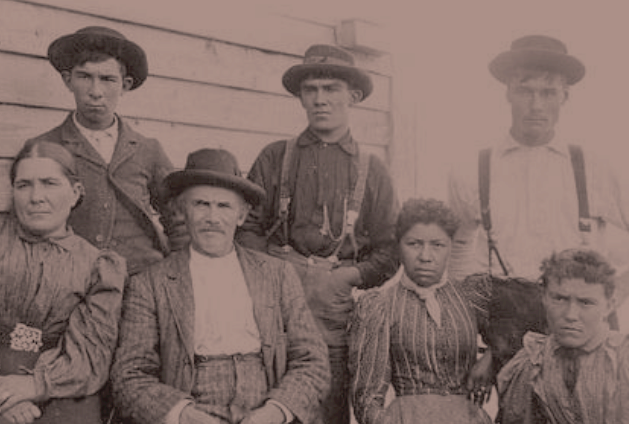
Some in Temagami and Teme-Augama Anishnabai communities, near Surbury, Ont. even allege MNO is using their ancestor’s as their own to prove presence in the area.
Story continues below advertisement
“They used a picture of mine and (Temagami First Nation Chief) Shelly’s great-great-grandparents,” said Teme-Augama Anishnabai Second Chief John Turner.
“It seems to us a case of identity theft of our ancestors, our family portraits are being used to convey a sense there’s some legitimacy behind their claims.”
“What they are doing essentially is just claiming these identities through censuses, erasing stories, erasing our oral history,” adds Temagami Chief Shelly Moore-Frappier.
“There are no Métis in our territory, in our homeland … If you’re an Indigenous person in N’dakimenan (their word for the region) … you are Teme-Augama Anishnabai. You are not Métis.”
First Nations are also upset that they weren’t consulted by the provincial and federal governments before the signing of MNO’s self-government agreement.
According to the Temagami and Teme-Augama Anishnabai, a member of the MNO even built a cabin on their territory.
“The notion of the research being flawed to me became clear because we were telling the province, like, what? What’s the nature of this claim or this asserted Métis (homeland)?” said Turner.
“They claim that the gentleman was supported by the leadership at the MNO and they sent us a link (to the MNO website) to just where his claim was justified.”
Story continues below advertisement
An archival photo of Temagami First Nation Anishinaabe ancestors the community says the MNO is claiming as their own.
Temagami First Nation
MNO president Margaret Froh says it shouldn’t shock anyone that First Nations and Métis share ancestors.
“It’s troubling and disappointing but at the same time I think we still have a lot of education to do within this country including with our First Nations kin,” said Froh. Adding that the Supreme Court of Canada affirmed 20 years ago with the Powley hunting rights case that Métis do exist in Ontario.
She believes there is likely some confusion around what the self-government agreement and federal recognition and implementation actually entail. “This is not about lands. It’s all about recognizing our right as Métis to govern ourselves.“
Like many Métis organizations to the west, Froh defines Métis as a distinct people who are descendants of historic Métis communities that were here before Canada. “That’s why we as Métis people are recognized within Section 35 of Canada’s Constitution Act,” she said.
Story continues below advertisement
“The MNO has always positioned ourselves as the eastern border,” Froh adds. “We do not recognize Métis in Quebec, we do not recognize Métis in Eastern Canada … there are a lot of groups (there) that are popping up that oftentimes are there, I think, to undermine First Nation rights, which we find appalling.”
Métis in Canada granted right for self-governance
Goodon, a self-described historic Métis Nation protector, says the situation in Ontario needs to be handled swiftly before bad blood spreads.
“When we look at this idea of the ancestors that MNO is recreating … they’re looking at folks who are trying to assert that they’re Métis today, then they go back in time, find this ancestor, rebrand this person as Métis because of some document that they have found, and then they are able to again assert that the present-day person is Métis,” he said.
Story continues below advertisement
Adding, “(outside) academics have found no connection to the historic Métis nation (in certain parts of Ontario) and the connections that they have are actually connected to the First Nation. So where does that leave these so-called new communities that MNO has created? In my opinion, it leaves them nowhere.”
After going into cardiac arrest and being brought back four times, Darren Mathieu is picking up the pieces of his life. To say his multiple brushes with death have changed him would be an understatement.
After suffering severe pancreas damage, Mathieu went into cardiac arrest four times and fell into coma three times. Doctors were convinced he was not going to make it, but he pulled through. He is still recovering and struggling to get his life back on track.
Before everything, Mathieu was living in Prince Albert taking care of his 10-year-old daughter (who wishes not to be named) and dying mother. He was managing fine until the tragic day his mother died in 2020.
“She didn’t let on how sick she was, so when she passed it came as a massive shock. She was my world and when that stability disappeared, I just went off the rails. I don’t remember what happened between the day my mother died and the day I woke up in the hospital,” Mathieu recounted.
Story continues below advertisement
Unable to handle the grief of losing his mom, Mathieu started neglecting taking his diabetes medication. Everything he knows from that period was told to him by his daughter.
“I quit my meds. Everything I should have been doing, I quit. Eventually I did not have any insulin left. I was told that my daughter actually called 911 and they rushed me to the hospital.”
Mathieu got admitted to the hospital in Prince Albert around Oct. 10, 2020. He was administered because his pancreas was failing, causing his kidneys to also fail. During his two-day stay in the Prince Albert hospital, his heart would stop twice, and medical staff would bring him back every time.
It was then decided to transfer him to St Paul’s Hospital in Saskatoon.
“I decided to make the helicopter transfer more entertaining by passing away during the flight. They had to save my life mid-air. That was the third time I died.”
After getting to Saskatoon Mathieu was in a coma for three weeks. Doctors gave a DNR form (Do Not Resuscitate) to his brother, because they were convinced he was not going to make it. His brother refused to sign the form.
Shahab comments on COVID-19 warnings to provincial government
Mathieu remembers finally waking up from the coma.
Story continues below advertisement
“I remember my doctor had the most beautiful blue eyes. Those were the first thing I saw when I woke up from my coma. In that moment, I can probably say that I loved the man more than my brother, because I knew I was in a lot of trouble, and I knew this person was there to help me,” he said.
Medical staff would tell Mathieu afterwards that him waking up was a miracle. However, Mathieu’s recovery did not go smoothly.
“I had this big tube down my throat, I could not eat, I could not go to the washroom, I could barely move. Doctors told me they had to cut me open and manually clean my insides. My doctor described it as ‘scrapping out pails of green gunk’.”
When everything looked to be going a little bit better, his body shut off again and Mathieu went into cardiac arrest a fourth time.
“The thing that was different about the fourth time is: I remember what happened after I died. That is when I found out it is all true what they say about dying. At some point I lost consciousness and when I woke up I was in this very large white field, where I was floating, and there were shadow figures all around me,” Mathieu said.
“When I looked towards the end there was a tunnel where everyone was floating towards. I went ‘sure why not’ and started floating along. The whole scene was tranquil and very peaceful. All of sudden someone, I don’t know who, told me to turn around. When I looked back I saw these hands coming towards me. It made me stop. I looked at the hands and said ‘I’m not done yet’ and I reached out for the hands.
Story continues below advertisement
“The second I grabbed them, I was back in the ICU.”
Ever since his near-death experience, Mathieu has slowly been recovering, but two-and-a-half years later he is still suffering from long-term effects. He lives with only a third of his pancreas, his memory is no longer the same and he occasionally has balance issues so severe he knocks into walls. Even now, he has trouble walking around, doing housework or digesting food.
During his ordeal Mathieu lost a ton of weight.
“I was always a big guy. I almost hit 300 pounds (136 kilograms) at one point, but I brought it down. Before going to the hospital I was about 280 pounds (127 kilograms). During my stay in the hospital, I went down to only 136 pounds (62 kilograms). It is the most harrowing weight loss plan I ever did and I don’t recommend it to anyone.”
Mathieu hopes he can get to a point where he is healthy enough to go back work, but he is very unsure if he actually can.
“I will never be able to do the hard labour I used to do. I used to work construction and I was a cleaner in the hospital. I was recently denied disability by the Saskatchewan Health Authority. I don’t know what is going on there, because if I am not disabled, I don’t know who is anymore.”
Story continues below advertisement
Because he was denied disability and he only receives a small amount of money from social services, Mathieu has been struggling to find stable housing. He recently turned to GoFundMe, asking people for support. He plans to use the money to provide a stable home for his, now 13-year-old, daughter while he focuses on getting healthy. He says his only goal in life right now is getting his daughter to 18.
“Once I get healthy, if that ever happens, I can actually start providing for my daughter again. I will probably be limited to a desk job, but I am fighter and I will not give up.”
Mathieu is determined to keep fighting for himself and his daughter. Even something as small as dying four times will not deter him.